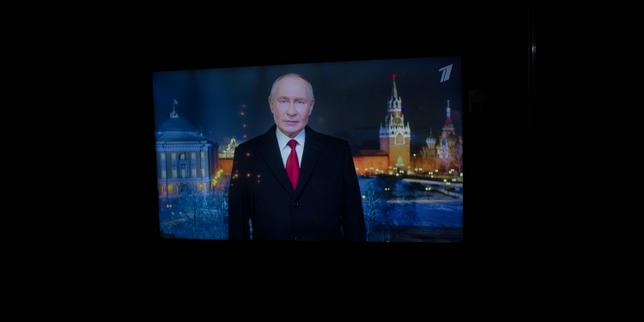
We often look at the Kremlin and see a cartoon villain. We see an isolated ruler sitting at the end of an absurdly long table, completely cut off from reality. Western commentators love to talk about how Vladimir Putin lost his mind during the pandemic, or how he's surrounded by yes-men who are afraid to tell him the truth. That's a comforting story. It makes his choices look like the erratic blunders of a single madman.
But it's completely wrong. Meanwhile, you can find similar stories here: Why Typhoon Bavi Is Testing China Extreme Weather Limits.
Putin's isolation isn't a medical condition or a recent accident of history. It's something much deeper. It's the logical, inevitable result of a specific psychological blueprint that was engineered decades ago. It's the loneliness of the Homo sovieticus—the Soviet man.
When the Soviet Union collapsed in 1991, Western observers assumed that the people living under it would instantly become liberal capitalists. They thought that once you removed the totalitarian state, people would naturally default to Western ideas of freedom, individuality, and open markets. They didn't realize that seventy years of social engineering had permanently altered the cultural DNA. The system didn't just build factories and missiles. It built a specific type of human being designed entirely for survival within an authoritarian hierarchy. To understand the complete picture, check out the excellent article by The New York Times.
Putin didn't invent this mindset. He's simply its ultimate manifestation, and now he's trapped inside it.
The psychological trap inside the Kremlin
To understand why the Russian regime acts the way it does today, you have to look past the military parades and the oil revenues. You have to look at the internal architecture of the people running the show. The term Homo sovieticus wasn't invented by Western historians. It was popularized by the Soviet writer and dissident Alexander Zinoviev in his 1982 book of the same name. Zinoviev wasn't just being cynical. He was describing a real, highly adaptable creature that thrived on a unique mix of state dependence, deep cynicism, and aggressive conformity.
The Soviet man is defined by a few core traits. First, there's a total reliance on a paternalistic state. The state gives you your job, your apartment, and your worldview. In exchange, you give up your agency. Second, there's a profound suspicion of any individual initiative or grassroots organization. Anything that happens outside the control of the state is seen as dangerous, a threat to the collective order.
When Putin took power at the turn of the millennium, he didn't try to build something new. He looked at a population that was disoriented, broke, and humiliated by the chaotic capitalism of the 1990s. He gave them exactly what their internal wiring craved. He brought back the old melodies of the Stalinist national anthem. He declared the collapse of the USSR the greatest geopolitical catastrophe of the century. He rebuilt the power vertical.
The tragedy is that this strategy worked too well. By resurrecting the ghost of the Soviet man to consolidate his rule, Putin also resurrected the terminal flaws of that system. The biggest flaw is absolute, systemic distrust. In a world where everyone assumes everyone else is lying, true alliances are impossible. You end up completely alone.
Where the Soviet man actually came from
The creation of this social archetype wasn't an accident. It was the result of a brutal, negative selection process that spanned generations. Think about what happened to Russian society between 1917 and 1953. The independent thinkers, the successful farmers, the creative intellectuals, and the principled politicians were systematically eliminated. They were shot in prison basements, starved in forced labor camps, or driven into exile.
The people who survived were the ones who learned how to keep their heads down. They learned to never say what they were actually thinking. They learned to view the world as a zero-sum game where resources are always scarce and the state is a capricious, violent god that must be placated.
Yuri Levada, the legendary sociologist who founded Russia's first independent polling organization in the late 1980s, spent years studying this phenomenon. He originally thought that the Homo sovieticus was a dying breed. He believed that as the older generation passed away and a new, globalized generation grew up with internet access and foreign travel, the old authoritarian habits would vanish.
He was wrong, and he admitted it before he died. His successor at the Levada Center, Lev Gudkov, documented something terrifying in the 2000s and 2010s. The Soviet man hadn't died out. He had successfully reproduced himself in his children.
The institutional framework of Russia never changed. The schools still taught obedience. The courts still served the state instead of the law. The police remained an instrument of terror rather than protection. When the state institutions stay totalitarian, the people inside them adapt accordingly. The modern Russian citizen might wear Italian shoes, drive a German car, and holiday in Dubai, but when the state demands conformity, they fall right back into the old survival patterns.
Doublethink as a tool for survival
The most critical psychological mechanism of the Soviet man is doublethink. This isn't just a literary invention from George Orwell. It's a daily, practical necessity for millions of people. It's the ability to hold two completely contradictory beliefs in your head at the same time without your brain exploding.
In the safety of their kitchens, Russians have always cracked jokes about their leaders, grumbled about corruption, and acknowledged that the state media is full of blatant lies. But the second they step out into the public sphere, or when a pollster calls them on the phone, they repeat the official slogans with perfect sincerity. They don't feel like hypocrites when they do this. To them, these are simply two different tracks of reality that never cross.
This explains why so many people in Russia support the war in Ukraine while simultaneously trying to protect their own sons from the military draft. They can believe that Russia is a glorious empire fighting a holy war against Western decadence, and at the exact same time, they know that the local military recruitment office is a meat grinder run by corrupt bureaucrats who don't care if their kids live or die.
This doublethink makes society completely unpredictable. It creates a surface-level illusion of total unity and stability. But underneath that surface, there's no real substance. It's a society built on quicksand. Putin looks out at his country and sees high approval ratings, but he knows better than anyone that those numbers mean absolutely nothing. They represent submission, not loyalty. If the regime crumbles tomorrow, the very same people cheering for him today will quietly tear his portraits off the wall and pretend they never liked him anyway. They did it to Stalin. They did it to Khrushchev. They did it to the entire Soviet apparatus.
The illusion of absolute power
This brings us back to the core issue of Putin's isolation. When you build a system where survival depends on telling the person above you exactly what they want to hear, you destroy your own intelligence apparatus.
The vertical of power is an echo chamber. A regional governor wants to look good, so he inflates the economic numbers. A military commander wants to please the defense minister, so he reports that his troops are fully equipped and eager to fight. The defense minister wants to secure his budget, so he tells the president that the military strategy is flawless. By the time the information reaches the top of the pyramid, it has been stripped of any relationship to reality.
Putin is a victim of his own creation. He's trapped in the ultimate manifestation of the Soviet bureaucratic nightmare. He cannot trust his ministers, because he knows they're playing the same survival games he played when he was a young KGB officer in Dresden. He cannot trust his oligarchs, because he knows their loyalty is rented, not owned. He cannot trust the public, because he knows their support is just a product of fear and doublethink.
This isn't just political isolation. It's an existential loneliness. The Homo sovieticus views human relationships through a lens of extreme cynicism. Kindness is seen as weakness. Compromise is seen as a defeat. Trust is a vulnerability that will get you killed. When you live your entire life by those rules, you eventually push away everyone who could actually help you. You end up in a fortified room, obsessing over historical grievances, convinced that the entire world is out to get you.
How the world should read Russia today
Western policymakers keep making the mistake of treating Russia like a rational, modern state with some bad leaders. They think that if they apply enough economic pressure, or if they offer the right diplomatic off-ramps, they can find a peaceful equilibrium. They don't understand that the current regime doesn't operate on modern geopolitical logic. It operates on the logic of Soviet survival.
When you deal with an elite group that has internalized the traits of the Homo sovieticus, you have to throw out the standard diplomatic playbook. You need to understand three hard truths about how this mindset operates.
First, stop looking for a popular uprising. Western sanctions were designed to make life miserable for the Russian middle class so they would pressure the government to change course. That strategy completely misunderstands the population. The Soviet man doesn't react to hardship by protesting. He reacts by adapting, cutting consumption, and retreating further into his private shell. Hardship simply reinforces his belief that the outside world is hostile and that he must rely even more on the paternalistic state for survival.
Second, realize that negotiations are useless unless they're backed by overwhelming, unyielding force. In the Soviet mindset, the world is divided into those who command and those who obey. If you offer a compromise early in a conflict, it isn't seen as a gesture of goodwill. It's seen as proof that you're weak, tired, and ready to capitulate. The only thing that commands respect in this framework is a hard, physical boundary that cannot be bypassed or negotiated away.
Third, look at what's happening to the younger generation right now. The Kremlin is currently rewriting history textbooks, introducing mandatory military training in high schools, and crushing the last remnants of independent cultural spaces. They're actively engineering a new iteration of the Soviet man. This isn't a temporary political phase that will end when Putin leaves the stage. The psychological infrastructure is being laid down for decades to come.
If you want to understand where Russia is heading, look at the institutions shaping its children today. The country is moving backward, digging deep into its twentieth-century vault to pull out the old tools of isolation, paranoia, and ideological conformity. The table in the Kremlin isn't getting any shorter. The isolation isn't going away. It's expanding outwards, swallowing the entire country, and turning an entire nation into a monument to a past that should have stayed dead.