The federal government is spending $46 billion on a massive boundary project, but it isn’t the concrete slab you might be imagining. Instead, the current reality of the southern border is a high-tech dragnet that relies as much on software as it does on steel. Since President Donald Trump returned to office, the rush to construct this smart wall has hit hyperdrive, scattering autonomous towers, thermal cameras, and floating river barriers across thousands of miles.
Many critics and supporters miss the true scale of what is happening. This isn't just about physical enforcement. It is an overhaul of how the United States monitors its territory, turning vast stretches of wilderness into a digital eye. Congress supplied the cash through the One Big Beautiful Bill Act in July 2025, and the money is moving through federal channels at a staggering pace.
Understanding this system requires looking past the political talking points. You need to look at the contracts, the physical hardware, and the communities caught in the crosshairs of this massive infrastructure push.
The Reality of the Forty-Six Billion Dollar Smart Wall
The term smart wall sounds like marketing fluff. It isn't. According to Customs and Border Protection, the system combines 30-foot-tall steel bollard fencing with an interconnected network of surveillance tools. If you look at the official data, the goal is total visibility over the 1,954-mile border between the US and Mexico.
The administration isn't building a physical barrier everywhere. They can't. There are roughly 535 miles of rugged, mountainous terrain where building a massive steel fence is practically impossible. In those remote canyons and rocky cliffs, the government uses technology to plug the gaps.
CBP is putting up miles of steel where it can, but they are also going back to older, existing fences built during previous administrations. They are adding lighting, building patrol roads, and installing sensor packages. The objective is what border officials call an enforcement zone. It is designed to slow down anyone trying to cross illegally so that agents have time to intercept them.
Speed and Scope of Current Construction
The pace of construction is faster than most people realize. Under Homeland Security Secretary Markwayne Mullin and CBP Commissioner Rodney Scott, the agency is erecting about 6 miles of wall every single week. By mid-June 2026, crews had already put up 74 miles of brand-new barrier system since the start of the second term.
The money flows from a $46.5 billion congressional appropriation. Defense and construction contractors are signing multi-billion dollar agreements to keep the steel moving and the machinery running. Mullin recently stated that a major preliminary phase of the network will wrap up by mid-2027.
Look at how the work breaks down across different states. In the flat deserts of Arizona and the river valleys of Texas, heavy machinery operates day and night. Where the land meets the water along the Rio Grande, the approach shifts entirely. The government is deploying 12- to 15-foot-long cylinder-shaped buoys directly into the river. These floating barriers are meant to physically block migrants and smugglers from swimming across, serving as a wet extension of the steel bollards on land.
How the Artificial Intelligence Network Operates
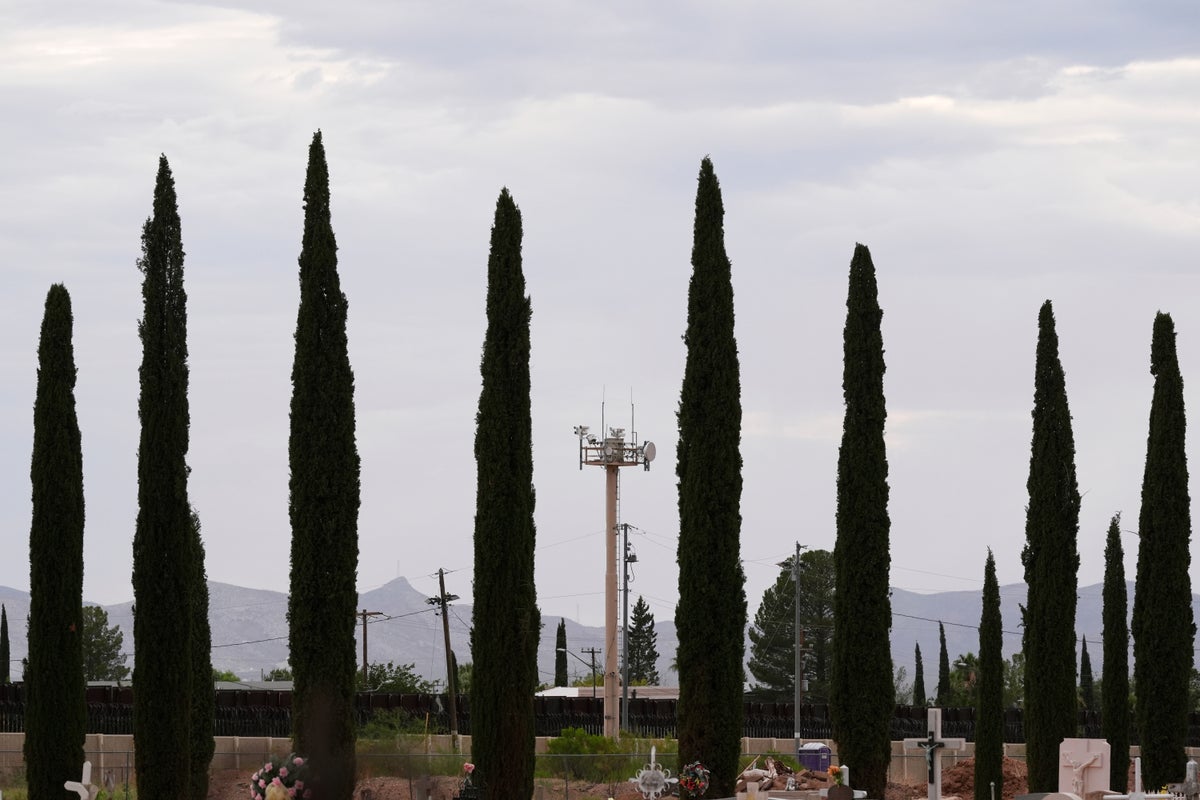
The real core of the project sits on top of hundreds of steel towers scattered across the desert. These aren't simple radio towers. They are autonomous surveillance platforms equipped with video cameras, infrared night vision, and radar systems that scan the horizon for up to 8 miles.
The system relies heavily on automated processing. In the past, Border Patrol agents had to sit in dark rooms staring at banks of video monitors, waiting for something to move. The new autonomous towers do that job themselves. They scan the desert, detect movement, and use artificial intelligence to determine if that movement is a human, an animal, or a vehicle.
Once the software flags a suspicious target, it pings an alert directly to agents out in the field. Proponents argue this keeps personnel where they are needed most. It cuts down on wasted hours. However, civil liberties groups are raising major alarms about putting so much automated decision-making power in the hands of unproven software.
Lessons from Past Failures
This isn't the first time Washington tried to build a high-tech solution on the border. History shows it is incredibly difficult to get right.
Back in 2011, during the Obama administration, Homeland Security Secretary Janet Napolitano killed a project known as the virtual wall. That initiative tried to link radars, cameras, and sensors into a single network. It failed completely. The project ran massively over budget, suffered from constant software glitches, and missed every deadline.
Watchdog groups like Taxpayers for Common Sense are pointing to that failure today. They argue that throwing tens of billions of dollars at defense tech companies doesn't guarantee security. Without intense oversight, the current project could easily repeat the mistakes of fifteen years ago, leaving taxpayers with an incredibly expensive collection of broken cameras and useless sensors.
Local Impact and the Civil Liberties Backlash
The people who actually live along the border are experiencing this buildup in ways that urban voters rarely consider. Landowners are finding government surveillance gear installed directly on their private property.
Nayda Alvarez, a resident who owns land along the Rio Grande in Texas, recently discovered surveillance cameras tucked away on her family's property. She also spotted a massive automated tower constructed just a quarter-mile down the river from her home. The physical presence of federal power is reshaping the daily life of border communities.
Local coalitions are fighting back on multiple fronts.
- Environmental Damage: Construction crews are carving roads through fragile desert ecosystems.
- Light Pollution: In places like the Big Bend region of Texas, famous for its dark skies and stargazing, massive security lights threaten to ruin the natural environment.
- Privacy Concerns: Human rights groups note that these systems capture data on everyone in the area, not just migrants.
Dave Maass from the Electronic Frontier Foundation argues that the combination of physical steel and persistent digital tracking creates a hostile environment for local citizens. The Southern Border Communities Coalition has stated that the expansion of this surveillance network harms the social fabric of these towns. The borderlands are becoming some of the most monitored spaces on earth.
Next Steps to Track This Policy
If you want to understand how this massive project will unfold over the next year, you should keep an eye on a few critical indicators. Do not just rely on political speeches.
First, watch the official Customs and Border Protection Smart Wall Map. The agency updates this tracker weekly to show exactly where contracts are being awarded and where new steel is going into the ground.
Second, follow the upcoming congressional budget hearings. Watch how lawmakers handle oversight for the $46.5 billion allocation. Look for reports on technical glitches or contract delays. That is where you will see whether this system actually functions as promised or collapses under its own financial weight.