Don't fall for the oversimplified headlines.
If you've been reading the mainstream coverage about Gibraltar tearing down its 118-year-old border controls with Spain, you're probably getting a highly sanitized version of reality. Yes, physical barriers are disappearing. Yes, the daily grind for 15,000 cross-border workers is changing overnight.
But this isn't a simple story of a border vanishing into thin air. It's a calculated, high-stakes bureaucratic reshuffle that fundamentally alters how British sovereignty, European security, and local commerce interact on a tiny, 2.6-square-mile limestone rock.
The land frontier between Gibraltar and Spain—historically known as La Verja—is undergoing its most radical transformation since the Treaty of Utrecht in 1713. Starting July 15, 2026, the land checkpoints are gone. No routine passport queues. No endless idling in the Mediterranean heat.
Instead, the border is moving. It's moving to the airport and the seaport. It's shifting from physical concrete to digital databases. If you think this means the UK just handed the keys of the Rock over to Madrid, or that Spain walked away empty-handed, you've missed the entire plot.
The Illusion of a Borderless Rock
Let's look at what's actually happening on the ground right now. Laborers are dismantling the physical booths. Royal Gibraltar Police inspection stations are coming down. To the casual observer, it looks like a total merging of territories.
It's not.
Gibraltar is not joining the Schengen zone. Europe Minister Stephen Doughty made this crystal clear in his statement to the House of Commons. Immigration, policing, and justice remain under the strict jurisdiction of the Gibraltar authorities.
What the 1,018-page treaty actually does is create a unique, highly specific alignment. To keep the land border completely fluid, the external Schengen border controls are being pushed to Gibraltar’s airport and seaport.
If you land in Gibraltar on a flight from London, you'll first clear Gibraltar entry controls run by British and Gibraltarian officials. Then, right after, you'll face Schengen area entry checks. Who is running those Schengen checks? Spanish border authorities.
That is the compromise. Spain gets the final say on who enters the Schengen zone via the Rock. They even hold veto power over the issuance and renewal of local residence permits. But the UK retains full, uncompromised control over its strategic military facilities, including the RAF base, which is explicitly locked out of the treaty’s scope.
The Digital Gotcha of the 90-Day Rule
Here’s the massive catch that tourists and ex-pats are completely overlooking.
For decades, people used Gibraltar as a loophole to reset their Schengen clock. You stay in Spain for a while, pop over the border to Gibraltar, and hope the lack of digital tracking keeps you under the radar.
Those days are finished.
The EU rolled out its long-awaited Entry/Exit System (EES). It relies on facial scans and biometric fingerprints instead of ink passport stamps. The new Gibraltar treaty specifically states that EES will not apply at the land border. That's a massive victory for the 15,000 frontier workers who cross daily from La Línea to work in Gibraltar's finance and gaming sectors.
But if you fly or sail into the Rock, you're locked into the digital net. Because Gibraltar's air and sea entry points now act as Schengen entry zones, your time spent on the Rock counts directly toward your 90-day Schengen limit.
The Reality Check: You can only spend 90 out of every 180 days in the Schengen zone. Under this new deal, a holiday in Gibraltar is legally no different from a holiday in Marbella when it comes to your European time budget.
To make things even tighter, when the European Travel Information and Authorization System (ETIAS) launches later this year, visa-exempt travelers flying into Gibraltar will need active ETIAS authorization just to step off the plane.
The High Price of Free Trade
Spain didn't agree to dismantle La Verja out of pure neighborly goodwill. The economic concessions extracted from Gibraltar are staggering, and they'll change the financial dynamic of the Rock forever.
Gibraltar has long been a low-tax haven, famous for cheap alcohol, electronics, and tobacco. This price disparity created a booming secondary industry—and a massive smuggling headache for Spanish customs. To secure a fluid border, Gibraltar had to agree to an unprecedented level of tax convergence.
- The New Sales Tax: Gibraltar is introducing a VAT-style indirect tax on goods. It starts at a baseline of 15% and will fully converge with EU frameworks within three years.
- Tobacco Price Hikes: Tobacco prices on the Rock must now align much more closely with Spanish rates, effectively killing off the casual smuggling market.
- Spanish Customs Control: The vast majority of goods destined for commercial sale in Gibraltar will now be cleared by EU customs offices located inside Spain before they even arrive.
Local businesses are scrambling. Traders now have to register for a Spanish NIF (tax identification number) and an EORI number to move commercial assets across the zone. The Gibraltar government insists this doesn't create Spanish tax liability for local firms, but the administrative burden is a tough pill to swallow for a territory that prided itself on being a nimble, low-tax jurisdiction.
What to Do If You're Traveling or Doing Business
If you live in, visit, or run a business near the Rock, you need to adapt to this system immediately. Stop relying on outdated Brexit-era travel advice.
If you are a daily frontier worker, make sure your employment registration is fully updated with both the Gibraltar and Spanish social security databases. The treaty includes dedicated financial mechanisms to protect your cross-border social rights, but the paperwork must be flawless.
If you are a tourist staying in southern Spain, take advantage of the change. You can now plan a day trip to the Rock from Marbella or Estepona without factoring in a three-hour border queue. Just walk right through the old La Verja site.
If you are flying directly into Gibraltar International Airport, treat the arrival exactly as if you were landing in mainland Europe. Have your biometric documents ready, know your Schengen day-count, and ensure you comply with the upcoming ETIAS requirements. The physical fence is gone, but the digital perimeter is more rigid than it has ever been.
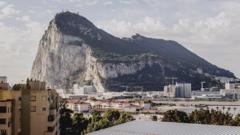
For more visual context on how these border dynamics look on the ground, check out this overview of the Spain-Gibraltar border environment. It provides an excellent look at how the physical demarcation operates.