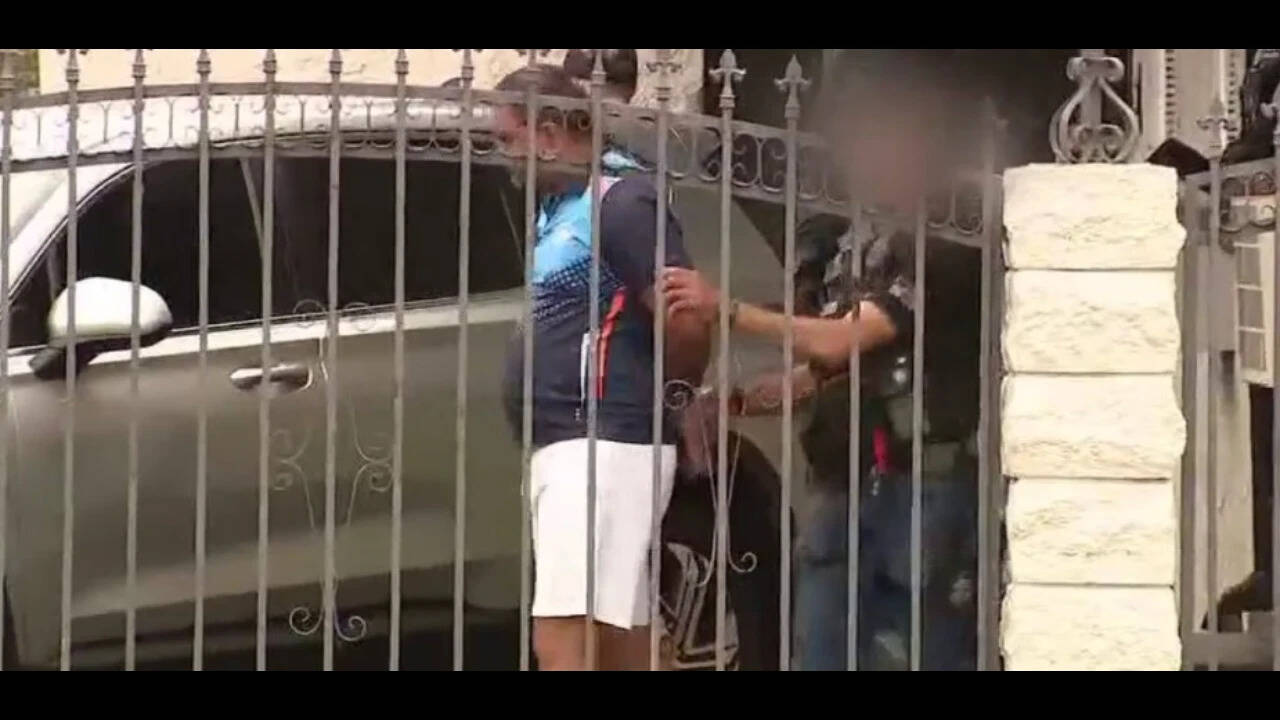
When federal agents swarmed the Stadium Inn & Spas on South Vermont Avenue in Los Angeles, they weren't just looking for street-level pimps. They were looking for the infrastructure that keeps human trafficking alive. The arrest of the motel's 45-year-old manager, Mukeshkumar Rambhai Ahir, blew open a conversation that most people in the hospitality business want to avoid. It's the uncomfortable reality of how budget motels become the operational headquarters for street gangs.
Most people think human trafficking happens in dark, hidden corners or overseas shipping containers. That's a myth. In reality, it happens right down the street, under the flickering neon signs of local motels along notorious strips like South LA's Figueroa Corridor. The recent federal sweep that netted Ahir along with members of the Hoover Criminal Gang proves that traffickers can't operate in a vacuum. They need physical space. They need a roof, a door that locks, and a management team that looks the other way or actively helps wash the cash.
The Stadium Inn Arrest Explains the Money Trail
Federal prosecutors aren't calling Ahir a pimp or a recruiter. He wasn't out on the street corner. According to the 65-count superseding indictment unsealed by the U.S. Attorney's Office for the Central District of California, his role was purely financial. Between September 2024 and January 2026, Ahir allegedly deposited $64,581 into bank accounts. He knew this money came directly from the commercial sexual exploitation of children and adults.
Federal financial crimes investigators note that the money told the story. Ahir didn't just accept the cash; he structured the deposits. In federal banking terms, structuring means splitting large amounts of illicit cash into smaller, bite-sized deposits to fly under the radar of the $10,000 threshold that triggers an automatic bank report to the government.
This is where the business side of crime comes into play. Gangs generate massive amounts of cash daily. They can't just walk into a major bank with grocery bags full of twenty-dollar bills without raising immediate red flags. By utilizing a motel manager who handles daily cash flows anyway, the criminal enterprise finds a built-in laundering system. The manager blends the dirty cash with legitimate room rentals, or uses separate accounts to siphon the money into the financial system.
Inside the Hoover Criminal Gang Operations
To understand why this specific arrest matters, you have to look at who else was picked up in the sweep. The operation targeted the Hoover Criminal Gang, an organization that authorities say has largely controlled prostitution and trafficking along the Figueroa Corridor for years. The indictment lists a staggering 51 victims. Some of these victims were just 14 years old.
The gang's tactics are brutal and calculated. They don't just find random people on the street. They intentionally target the most vulnerable populations imaginable, specifically minor girls and young women in the foster care system, runaways, or those dealing with severe financial and emotional distress.
They use a predictable cycle to trap these victims:
- The Hook: Recruiters approach girls online via social media or in person, promising a luxurious lifestyle, security, and affection.
- The Trap: Once the victim is isolated, the gang introduces heavy drugs like oxycodone and amphetamines to create a physical addiction, ensuring complete dependence.
- The Control: Violence is used instantly if a victim tries to leave or fails to meet financial quotas.
First Assistant U.S. Attorney Bill Essayli shared horrifying details during a briefing on the case. He described victims being beaten severely, with one victim physically bitten down to the cartilage of her cheek. Another girl was forced to have an abortion and then made to work the streets that very same night. The sheer brutality shows that this isn't a victimless vice crime. It's violent slavery hidden in plain sight.
Why Motels Are the Perfect Infrastructure
You might wonder why a motel manager would risk a federal prison sentence for a few thousand dollars a month. It comes down to low margins and high volume. Budget motels operate on razor-thin profit lines. When a local gang offers guaranteed, consistent room rentals paid in cash, some operators see it as an easy way to keep occupancy high.
Traffickers prefer these locations because they provide total anonymity. Guests check in and out constantly. Cash transactions are common. Rooms are rented by the hour or the day, and multiple people can move in and out of a single room without drawing immediate suspicion from casual observers.
The gang members monitored the victims constantly, rented the rooms, arranged transportation, and even posted online advertisements from inside these properties. They used mobile payment apps to move funds internally, but the physical cash still had to go somewhere. That's where the partnership with compliant motel staff becomes essential. Without a safe place to harbor victims and process clients, the business model falls apart.
The Legal Hammer of Federal RICO Law
The federal government isn't treating these cases like simple local prostitution arrests anymore. They are using the Racketeer Influenced and Corrupt Organizations Act, commonly known as RICO. This is the same legal tool historically used to dismantle the Mafia.
By applying RICO laws to street gangs running trafficking rings, prosecutors can charge everyone involved in the enterprise, from the guy standing on the corner to the motel manager processing the money. Under federal law, if you participate in or profit from a criminal enterprise that affects interstate commerce, you face massive mandatory minimum sentences.
For the defendants in this sweep, the stakes are incredibly high. Some face a mandatory minimum of 15 years in federal prison, and maximum sentences that top out at life imprisonment. The IRS Criminal Investigation unit and the FBI are increasingly focusing on the real estate and hospitality sectors because cutting off the physical and financial infrastructure is the fastest way to kill a trafficking network.
Practical Steps to Identify Trafficking in Your Community
We can't just leave this to federal sweeps. Communities, hospitality workers, and everyday citizens need to know what to look for. If you run a business, manage a property, or frequently travel, recognizing the warning signs can save a life.
Monitor Cash Fluctuation and Room Turnover
Look closely at properties that have an unusually high volume of foot traffic to specific rooms, especially during late-night hours. If individuals are constantly renting multiple rooms under different names but paying with the same cash supply, it deserves scrutiny.
Watch for Signs of Coercion and Control
Victims rarely travel alone. They are almost always accompanied by a controller or pimp who holds their identification, manages all the money, and speaks on their behalf during check-in. Watch for individuals who show signs of physical abuse, malnutrition, or extreme anxiety.
Recognize the Digital footprint
Traffickers heavily rely on local online classifieds and social media to advertise. If a specific local budget motel constantly pops up as the background location in suspicious online ads, local management is either completely oblivious or actively complicit.
If you suspect human trafficking activity in your area, do not attempt to intervene directly. Contact the National Human Trafficking Hotline at 1-888-373-7888 or text "HELP" or "INFO" to 233733. You can also file an immediate report with local law enforcement.

:max_bytes(150000):strip_icc()/TAL-nassau-bahamas-BEAUTCARIB0323-4fbfce903e5a4418b895e03717e3de0d.jpg)