The United States Department of Justice just dropped a bombshell that completely flips the script on international diplomacy. For nearly three years, a fierce geopolitical standoff gripped Ottawa and New Delhi. The spark was the June 2023 assassination of Khalistan separatist Hardeep Singh Nijjar outside a Sikh temple in British Columbia. Back then, political leaders pointed fingers directly at state actors.
The unsealing of a federal indictment in Los Angeles changes everything. Meanwhile, you can find related events here: Why The Tragic Loss Of Gaza World Cup Organizer Mohamed Al-wahidi Matters To The World.
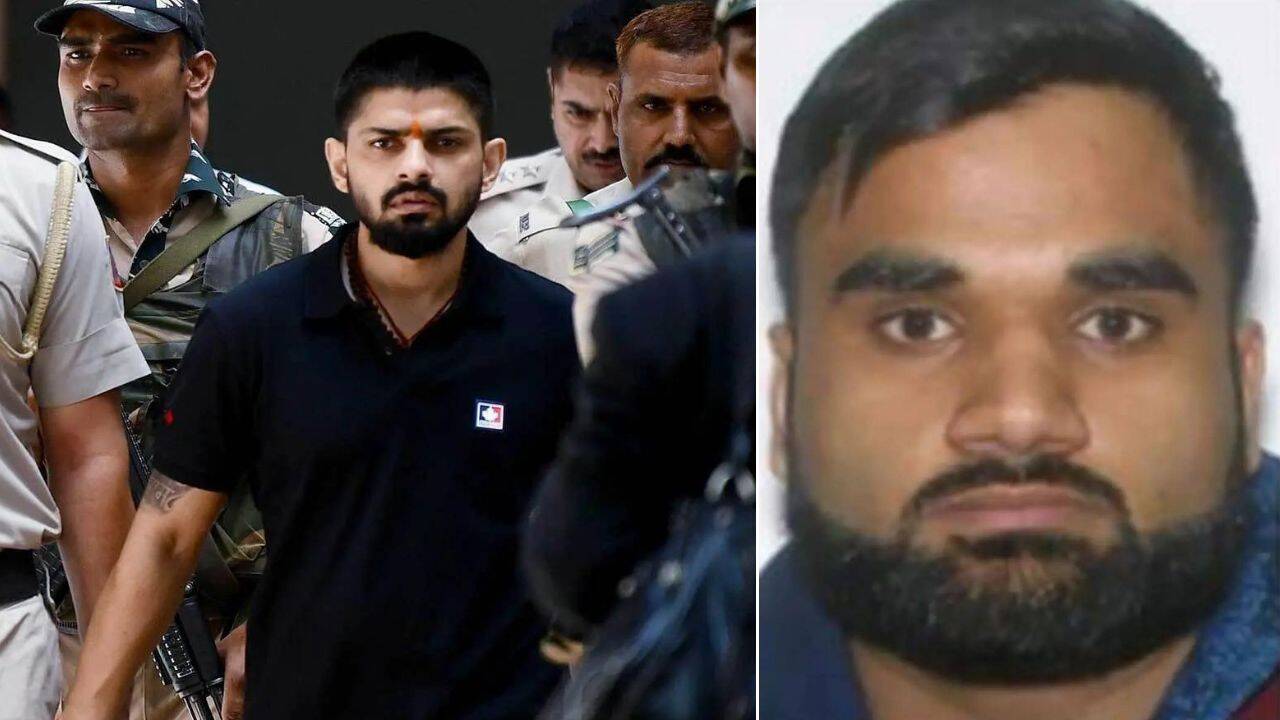
Under a massive, multi-agency sweep called Operation Hard Ball, US federal prosecutors charged imprisoned Indian gangster Lawrence Bishnoi and his North American lieutenant Satinderjeet Singh, better known as Goldy Brar, with ordering the hit on Nijjar.
Look closely at the paperwork. You will notice something striking. The US government stopped completely short of accusing India. To see the full picture, we recommend the detailed analysis by USA Today.
This isn't just a regular true-crime update. It is a masterclass in legal tightrope walking that tells us exactly how transnational syndicates operate under the noses of global superpowers.
Gangsters in the Dock Instead of Governments
The immediate takeaway from Operation Hard Ball is a profound shift in legal accountability. When the assassination occurred, Canadian leadership publicly claimed there was credible intelligence linking Indian government agents to the murder. New Delhi shot back instantly. They called the allegations absurd and politically motivated. The entire diplomatic machinery between the two Commonwealth nations ground to a halt. Visas were suspended. Diplomats were expelled.
The unsealed US indictment moves the target away from government hallways. It places seasoned criminals squarely at the center of the conspiracy.
By focusing purely on the criminal syndicate, US prosecutors managed to address a brutal murder on North American soil without triggering a catastrophic diplomatic break with a key Indo-Pacific ally. For those backing the official stance of New Delhi, this looks like a clear vindication. The FBI, the Royal Canadian Mounted Police, and European agencies ran a years-long investigation and chose to prosecute thugs, not politicians.
But don't assume this clears up the underlying geopolitical friction. The indictment describes an incredibly embarrassing reality for domestic security apparatuses. It portrays Lawrence Bishnoi as a mastermind running a global, multimillion-dollar criminal enterprise from inside a maximum-security Indian prison cell.
How to Run a Transnational Hit From a Prison Cell
You might wonder how someone sitting in an Indian jail since 2015 manages to coordinate a targeted assassination in a Vancouver suburb. The court documents lay out the mechanics plainly. It comes down to smuggled mobile phones, encrypted internet applications, and a highly disciplined corporate structure.
Bishnoi didn't need to step outside his cell to orchestrate the violence. The indictment alleges he used contraband devices to transmit photographs and multiple addresses of Hardeep Singh Nijjar directly to ground operatives. He didn't work alone. He relied on a distinct division of labor across continents.
- The North American Commander: Satinderjeet Singh, alias Goldy Brar, ran the show across the United States and Canada. The FBI just placed a fifty-thousand-dollar bounty on his head. He handled real-time logistics and ground crews.
- The European Overseer: Rohit Godara, a thirty-seven-year-old operating out of Rajasthan and Europe, coordinated regional operations and expanded the syndicate's reach across Western borders.
- The Financial Engine: Sukhraj Singh Kang managed the broader logistics that kept the enterprise liquid.
This wasn't a loose band of street criminals. It functioned like a multinational corporation. They specialized in cross-border narcotics trafficking, extortion, and contract killings. The indictment reveals the group regularly financed its high-profile hits by stealing massive cocaine shipments from rival cartels and smuggling bulk quantities across the US-Canada border. During the raids, law enforcement seized approximately one thousand kilograms of cocaine and a dozen firearms.
The gang used social media to build a specific brand. Bishnoi purposefully projected an image of himself as a religious nationalist and a patriot. The DOJ notes he used this specific persona to recruit impressionable young men across the Indian diaspora, turning local street crews into international foot soldiers.
The Evidence Trail That Keeps the Debate Alive
While the legal text avoids naming Indian officials, critics and separatist advocacy groups argue the case is far from closed. Gurpatwant Singh Pannun, the general counsel for the US-based group Sikhs For Justice, publicly stated that the Bishnoi indictment cannot be viewed in isolation.
To understand their argument, you have to look at another parallel federal case in New York. The US previously charged a former Indian intelligence officer, Vikash Yadav, in connection with a foiled murder-for-hire plot targeting Pannun on American soil.
This creates two wildly different interpretations of the exact same event.
One side looks at the Los Angeles indictments and sees a textbook organized crime problem. They argue that Nijjar's death stemmed from fierce rivalries over temple finances, local influence, or deep-seated Punjabi underworld feuds. To them, the lack of state-level accusations in Operation Hard Ball proves the gang acted independently for its own financial and reputational gains.
The opposing side looks at the two cases together and sees a pattern. They believe transnational gangs are acting as subcontractors for larger political objectives. They point out that the US prosecutors openly expressed concern over how easily these gangsters operate, extort victims, and order hits while supposedly under state custody.
What Happens Next on the Legal Battlefield
The immediate fallout of Operation Hard Ball is a massive game of international hide-and-seek. Across three separate indictments, thirty-seven defendants face charges. Law enforcement successfully arrested twenty-four individuals. Eleven were picked up in California, one in Indiana, one in Georgia, three in Canada, and one in Spain.
The focus now shifts to the ten fugitives still on the run. Seven are believed to be hiding out inside the United States, two are in India, and one is somewhere in Europe.
The most complicated legal battle will involve extradition. First Assistant US Attorney Bill Essayli confirmed that the United States intends to bring Lawrence Bishnoi to an American federal courtroom. He stated clearly that when these individuals enter a US federal prison, they will no longer be able to exploit or terrorize communities from behind bars.
Getting Bishnoi out of an Indian prison and onto a flight to Los Angeles is going to take months, if not years, of intense legal maneuvering. If convicted, many of these defendants face mandatory minimum sentences ranging from ten years to life in federal prison.
Steps to Take to Understand Global Crime Networks
If you want to track how this case develops without getting caught up in sensationalized media spin, you need to look at the primary sources.
First, read the official press releases from the United States Department of Justice Central District of California. They provide the exact breakdowns of the thirty-seven individuals charged without the political commentary.
Second, monitor the upcoming federal court appearances in Los Angeles. The initial hearings for the individuals arrested in California will reveal the specific encrypted apps, message logs, and financial trails the FBI used to crack the gang's communication network.
Third, watch the diplomatic responses from Ottawa and New Delhi over the coming weeks. The shifting language used by diplomats will tell you exactly how much breathing room this organized crime framing has given both governments to repair their broken relationship.
The era of localized gang violence is completely over. When a man in an Indian prison cell can order a shooting in Canada using a phone connected to a California server, domestic law enforcement has to change completely. Operation Hard Ball proved that western agencies can map these networks out. Whether they can successfully extradite and dismantle the leadership remains an open question.

:max_bytes(150000):strip_icc()/TAL-nassau-bahamas-BEAUTCARIB0323-4fbfce903e5a4418b895e03717e3de0d.jpg)