Governments aren't usually known for being sharp venture capitalists. They move slowly. They hate risk. They drown good ideas in endless oceans of red tape.
When Hong Kong announced it was putting together its own state-backed investment vehicle, a lot of people in the financial community rolled their eyes. They figured it would be another bureaucratic fund that parked money in safe, boring projects or got bogged down in political posturing.
They were wrong.
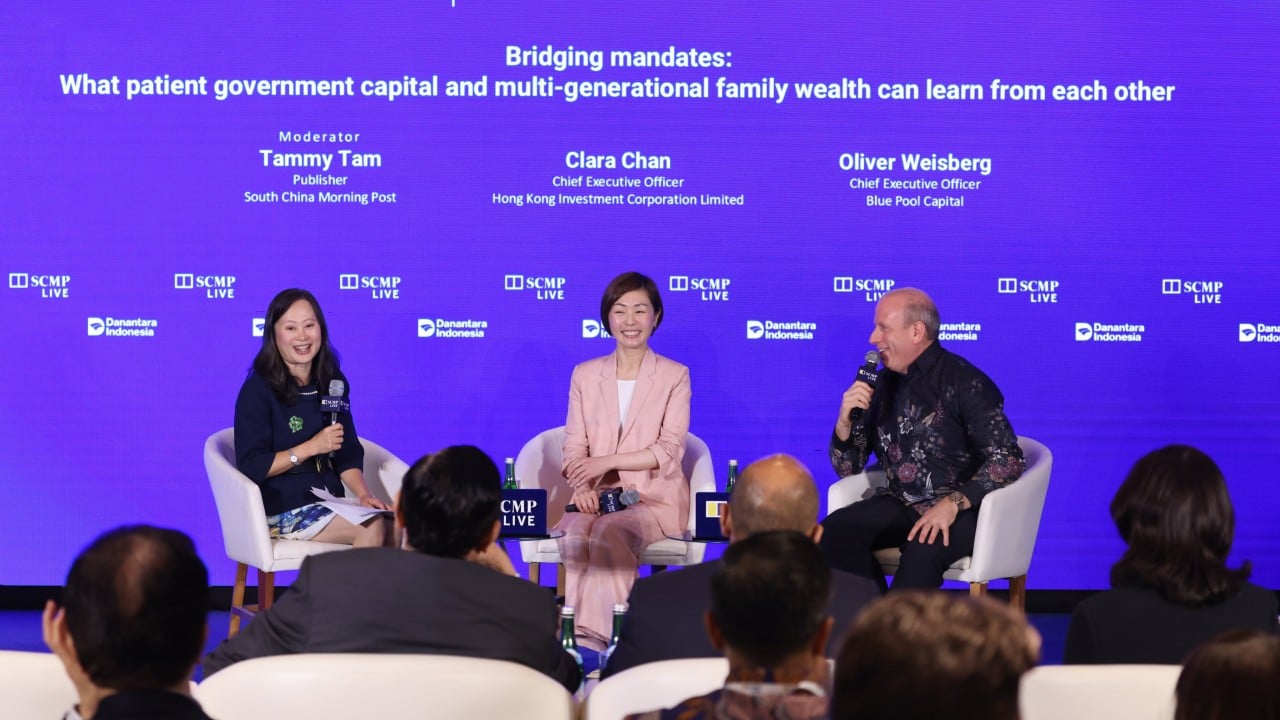
The Hong Kong Investment Corporation, or HKIC, just dropped its latest performance numbers, and they are turning heads. The fund racked up over HK$6.4 billion in investment income for the year, marking an eye-popping 175% increase from the previous year. Even more impressive is its net internal rate of return, which hit 14%.
But the headline figure that has everyone talking comes directly from the fund's chief executive, Clara Chan. For every single Hong Kong dollar the fund invests, it pulls in more than eight dollars of long-term private market capital.
That's a 1 to 8 multiplier.
If you understand how hard it's to attract international capital to the region right now, you know that number is ridiculous. It means the government isn't just spending taxpayer money. It's using its capital as a magnet to drag private money, sovereign wealth funds, and global pension plans into highly specific tech sectors.
This isn't a traditional sovereign wealth fund looking for passive returns. It's an aggressive piece of state-directed capitalism designed to rebuild the city's economic foundations from the ground up. If you are an investor, a founder, or just someone trying to figure out where the money is flowing in Asia, you need to understand exactly how this machine works.
Decoding the Eight to One Multiplier Effect
A lot of casual observers look at the 1 to 8 ratio and think it's a fluke. It isn't. To understand why private investors are willing to pile on top of HKIC cash, you have to understand the current psychology of global institutional investors.
Right now, putting money into early-stage deep tech, artificial intelligence, or biotech in Asia is terrifying for Western and even some regional funds. Regulatory environments are shifting. Geopolitical tensions make everyone nervous. If a private venture fund goes in alone, they carry 100% of the risk.
When the Hong Kong Investment Corporation steps into a deal, the math changes completely.
The fund acts as the ultimate validator. HKIC does the heavy lifting on due diligence. They vet the tech, check the founders, and ensure compliance with local regulations. Because the fund is chaired by Financial Secretary Paul Chan Mo-po, its investments carry the explicit stamp of approval from the highest levels of government.
For an overseas pension plan or a Middle Eastern sovereign wealth fund, that changes everything. They see HKIC's money as a shield. They know the government is heavily invested in making sure these specific companies succeed, get land, find talent, and clear regulatory hurdles.
The 1 to 8 ratio is the direct result of this validation. HKIC doesn't need to fund the whole company. It writes the first check, sets the terms, and lets the global market fight over the rest of the allocation. It's a highly efficient way to stretch a government balance sheet. Instead of spending billions to build an industry, you spend hundreds of millions and let the private market supply the rest of the cash.
Inside the Investment Portfolio
The fund doesn't spread its chips across the entire board. It focuses tightly on three distinct verticals: hard technology, biotechnology, and green energy.
Let's look at what they are actually buying. They aren't investing in simple software apps or consumer e-commerce platforms. They are buying into deep, capital-intensive tech that requires years of research before seeing a single dollar of profit.
In the artificial intelligence space, they backed Moonshot, a prominent generative AI startup. They also put money into Galbot, a firm specializing in embodied AI and robotics. These aren't just software plays. They are companies trying to merge digital intelligence with physical machines, which is where the next decade of industrial growth lives.
In the medical sector, their money went into Insilico Medicine, a company using AI to automate and speed up drug discovery. Drug development normally takes a decade and costs billions. Insilico wants to cut that down to months using algorithms. It's risky, but if it works, the upside is massive.
Then there is the green energy slice. They backed EcoCeres, a company making sustainable aviation fuel, and Emaldo, a European household battery energy storage provider.
Notice something about that list? Emaldo is European. This shows the fund isn't just focused on local Hong Kong startups. It's actively looking for global firms that can use Hong Kong as a launchpad to enter Asian markets, or firms that can bring critical industrial capabilities back to the city.
By targeting over 200 projects as of mid-2026, the fund has built a diverse tech ecosystem. It's not just hoping one company hits it big. It's creating an interconnected web of firms that buy from each other, share talent, and push the entire region's tech capabilities forward.
The Push for Public Markets
A massive return on paper doesn't mean anything if you can't exit the investment. That's the trap many government funds fall into. They invest in cool projects that stay private forever, eventually rotting away on a spreadsheet.
HKIC is explicitly avoiding this by tying its investments directly to the Hong Kong Stock Exchange.
Right now, 10 of its portfolio companies have already completed their listings in Hong Kong. That provides immediate liquidity and proves the fund's thesis to the public. But the real wave is coming next. More than 30 portfolio companies are either applying or actively preparing to go public this year.
Think about what this does for the local financial ecosystem. The Hong Kong stock market has historically been dominated by old-economy giants: real estate developers, traditional banks, and shipping conglomerates. Young tech companies skipped Hong Kong and went straight to New York or Nasdaq.
By feeding dozens of high-growth tech firms directly into the local public markets, HKIC is fundamentally changing the flavor of the exchange. It's creating a pipeline of tech stocks that will attract a different breed of global investor. It gives institutional funds a reason to allocate capital back to the city's markets.
Moving Capital Across Borders
The strategy is getting even more aggressive with the creation of an offshore yuan venture capital fund. This is a brilliant structural move that addresses a massive pain point in the market right now.
There is a huge amount of yuan sitting outside mainland China, especially in places like Hong Kong, the Middle East, and Southeast Asia. Investors want to deploy this currency, but finding high-yield tech opportunities that accept offshore yuan can be incredibly complicated.
HKIC's new offshore yuan fund gives these investors a direct pipeline into top-tier Chinese technology firms that are expanding globally. It allows the fund to capture growth from mainland tech champions while keeping the financial plumbing safely within Hong Kong's legal and regulatory framework.
At the same time, the fund is matching this financial strategy with actual physical infrastructure. They are tying their capital directly to major local development zones like the Northern Metropolis.
This matters because tech companies don't exist in a vacuum. They need labs. They need data centers. They need manufacturing facilities and housing for engineers. By forcing industrial planning and spatial planning to work together, the government ensures that when HKIC writes a check to a robotics company, that company actually has a physical space in the Northern Metropolis to build its factory.
The Risks Most Analysts Ignore
It's easy to look at a 14% return and a 175% jump in income and declare total victory. But a direct look at the numbers requires acknowledging the massive risks built into this model.
Venture capital is a game of extreme outliers. Usually, 90% of tech startups fail, while the top 2% or 3% generate all the returns. When a state fund boasts about investing in over 200 projects, an experienced investor immediately starts worrying about asset quality. Is the fund spreading itself too thin? Can a government-linked entity truly monitor and guide 200 deep-tech companies simultaneously?
There is also the risk of political capture. When the government is your primary investor, business decisions can easily get tangled up with social goals. A company might be forced to keep its expensive headquarters in Hong Kong when it would be cheaper and more efficient to move production to Shenzhen or Southeast Asia. If political goals start taking priority over pure commercial returns, that 14% IRR can evaporate incredibly fast.
We also have to talk about the exit environment. Yes, 30 companies are preparing to list. But public markets globally have been volatile, and tech valuations are under intense scrutiny. If these upcoming initial public offerings debut to tepid market demand, the paper gains the fund is celebrating right now won't translate into actual cash returns.
How to Position Your Business for This Capital Wave
If you are running a business or managing a fund in Asia, you shouldn't just watch this happen from the sidelines. You need to figure out how to ride the wave. The government has made its playbook completely transparent, and you can use that to your advantage.
First, align your corporate focus with their three specific pillars. If you are working on software apps, don't waste your time pitching them. But if your company touches hard tech, biotech, or green energy applications, you are exactly what they are looking for. Highlight how your company can help pull private, international capital into the city. Remember, they love the 1 to 8 multiplier. If you can show up with international co-investors already lined up, you become an incredibly attractive target for them.
Second, plan your physical presence around their geographic priorities. Look seriously at the Northern Metropolis. If you can demonstrate that an investment from HKIC will directly lead to jobs, factories, or research labs in these specific zones, your pitch becomes ten times stronger.
Finally, build your long-term roadmap around a Hong Kong listing. The fund wants to see its portfolio companies go public locally. If your exit strategy involves listing on the local exchange and adding depth to the financial markets, you are perfectly aligned with their broader economic mission.
Stop thinking of the Hong Kong Investment Corporation as just another slow-moving government entity. They are operating like an aggressive, highly strategic institutional investor. The money is flowing, the rules are set, and the funds are actively chasing deals. It's time to adapt your strategy accordingly.
For a deeper look into how these strategies play out on the ground, check out this discussion on strategic early investments in AI, where industry leaders break down the mechanics of tech deployment in the region.

/media/movies/covers/2025/07/cats_2pLndEa.png)