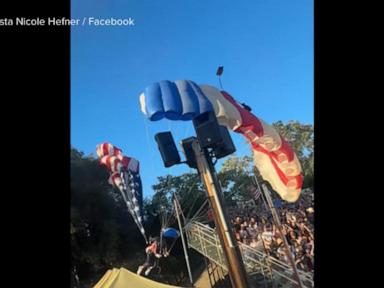
You see a skydiver plummeting toward a stadium crowd, a massive American flag trailing behind him, and suddenly everything goes wrong. That is exactly what hundreds of spectators witnessed on opening night at the 65th annual Folsom Pro Rodeo in Northern California. The video went viral instantly. On July 2, 2026, veteran parachutist Ross Vail came in hot, his weighted flag caught a tree branch, and he slammed hard into a tent right next to the grandstands.
It looked like an absolute disaster. People screamed. Everyone assumed the worst because human bodies are not meant to impact the ground like that. But here is the part that isn't getting enough attention. Vail didn't just survive. He literally stood up, brushed himself off, walked into the center of the arena, and waved to a standing ovation. He had a minor cut on his lip. That's it. The next night, July 3rd, he was back in the air, jumping into the exact same arena.
This wild incident says a lot about the reality of extreme sports, crowd safety, and why things go sideways even when professionals are at the helm.
The Anatomy of the Folsom Pro Rodeo Mishap
The Folsom Pro Rodeo is a massive tradition in Northern California. It sells out regularly. For decades, a core part of the opening ceremony has involved a skydiver dropping out of the sky with a giant, heavily weighted American flag. It's a high-stakes crowd-pleaser.
Around 7:00 PM on Thursday night, Vail began his descent. The crowd looked up, cheering as the canopy glided over the stadium. Everything seemed perfectly normal until the final seconds of the approach. When you fly a massive flag during a jump, that flag acts like a giant sail. It creates an incredible amount of drag and carries heavy weights at the bottom to keep it unfurled and looking majestic for the crowd.
That weight and length proved to be the problem. As Vail carved his path toward the arena floor, the bottom of the long flag snagged on a tree outside the venue walls.
When a moving parachute suddenly anchors to a fixed object, the physics change instantly. The snag yanked the canopy down. It stole the forward momentum Vail needed to flare his canopy and slow his landing. The sudden loss of lift sent him face-down into a tent right next to the spectator stands.
Why Huge Flags Make Skydiving Unpredictable
Most people think skydiving is just about falling and pulling a cord. It isn't. Landing a high-performance canopy in an enclosed stadium is an incredibly technical discipline called canopy piloting. When you add a giant flag to the mix, you turn a complex job into a logistical nightmare.
The Drag Factor
A standard sport parachute responds to subtle inputs from the steering toggles. When a skydiver drops a 50-foot or 100-foot flag beneath them, that fabric catches passing air currents. It pulls on the harness. It changes how the canopy responds to turns. If the wind shifts slightly, the flag can wrap around the lines or pull the jumper off course.
Stadium Rotors and Wind Shear
Airflow over a stadium isn't smooth. Wind hits the outside walls of an arena, shoots upward, and creates turbulent rolling pockets of air called rotors on the inside. A skydiver can experience perfectly smooth air at 500 feet, only to hit a chaotic washing machine of wind the moment they drop below the stadium rim.
When you combine stadium wind rotors with a massive, trailing piece of fabric, your margin for error shrinks to zero. Vail is a highly experienced professional, but when that fabric met the tree line, physics took over.
The Beer Tent Cushion
Witnesses at the Folsom arena reported a terrifying thud when Vail hit the ground. He landed squarely on a tent structure near the audience. Interestingly, hitting that tent might have saved him from broken bones or worse.
Think about the materials involved. A metal frame covered in heavy canvas or vinyl gives way under impact. It absorbs energy. Landing on a tent acts somewhat like a crumple zone on a car. It is a terrifying way to stop, but it beats hitting solid asphalt or a concrete barrier by a mile.
The crowd held its breath as rodeo officials and emergency personnel rushed toward the impact zone. Then, the unexpected happened. Vail emerged from the wreckage of the tent. He wasn't on a stretcher. He walked out on his own two feet, blood dripping from a small cut on his lip, and marched right into the dirt of the arena. The stadium erupted.
The Show Must Go On
Rodeo culture is notoriously tough, and apparently, so is Ross Vail. The organizers from Choose Folsom put out a statement the next day confirming their jumper was totally fine. They didn't cancel the stunt for the rest of the weekend either. Vail packed his gear, checked his rig, and went right back up in the plane on Friday night to execute the jump successfully.
That tells you everything you need to know about the mindset of these performers. They know the risks. They plan for failures. When a mishap happens, they analyze the mistake, adjust their entry angles, and get back to work.
What This Means for Public Event Safety
While this story has a happy ending, it opens up a massive conversation about how close these stunts come to the general public. Vail crashed right next to attendees. A few feet in either direction, and this viral video would be a tragedy involving spectators.
Municipalities and event coordinators will certainly look at this footage. Expect to see stricter buffer zones established between the landing targets and the crowd barriers at public exhibitions going forward. Trees near stadium entrances might get a heavy trim before next year's event, or the flight paths will be shifted further away from the grandstands.
If you are planning to attend a public demonstration anytime soon, remember that live stunts carry live risks. Always stay aware of your surroundings, especially during opening ceremonies when the action comes from above. Ross Vail proved he's made of tough stuff, but nobody wants to test if the crowd is just as resilient.
To stay safe at large outdoor events with aerial displays, make sure you do the following. Keep your eyes on the performers during active jumps, stay completely clear of designated landing zones, and follow all directional commands from event security. Stunts are thrilling because they are real, and keeping a respectful distance ensures everyone goes home in one piece.