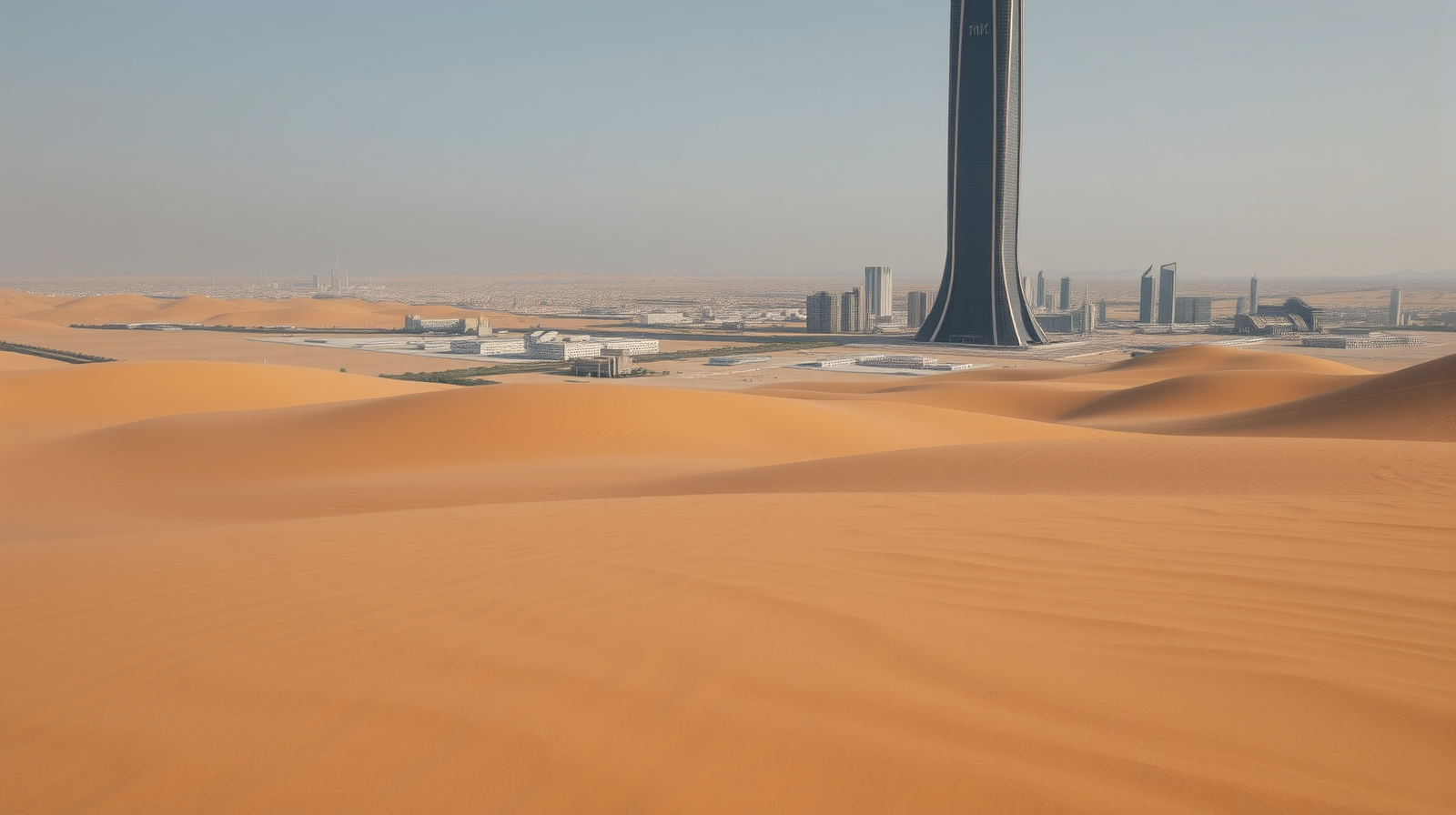
If you take a forty-five kilometer drive east of Cairo, you'll run straight into the largest construction site on earth. It's an imposing, ultra-modern metropolis rising directly out of flat sand and gravel. This isn't just an urban expansion project. Egypt is literally building a desert city from scratch, a $58 billion gamble meant to solve Cairo's crushing infrastructure crisis. While casual onlookers look at the glossy pictures of the new skyline, they completely miss the real economic and social forces driving this massive relocation.
Cairo is breaking under its own weight. The current capital holds over twenty million residents, jammed into historic quarters that can't handle modern vehicle traffic, plumbing, or power grids. Air pollution sits at hazardous levels most of the year. Instead of trying to fix a thousands-of-years-old gridlock, the government decided to start over on an empty canvas spanning seven hundred square kilometers. It's a space roughly twice the size of Singapore.
But don't assume this is a simple ghost town project or a playground for the rich. Government ministries, foreign embassies, and major financial institutions are actively packing their bags to move here. This is an assertive, heavy-handed shift of national power.
Why Egypt is Building a Desert City from Scratch right now
To understand this project, you have to look at the numbers. Cairo grows by hundreds of thousands of people every year. The historic city centers have turned into endless traffic jams. Commutes that should take twenty minutes take two hours. Logistics are a nightmare for companies trying to do business. The government's solution was radical. They set up the Administrative Capital for Urban Development, a joint venture where the Egyptian military holds a fifty-one percent stake and the Ministry of Housing owns forty-nine percent.
This corporate structure tells you everything you need to know about how decisions get made here. It bypasses traditional municipal bureaucracy to build fast.
The master plan splits the project into distinct phases. Phase one focuses heavily on the government district and the Central Business District. Think of it as a forced migration of the state apparatus. Ministries are already operating out of these new buildings. The parliament building is massive. The presidential palaces are sprawling. By forcing civil servants and foreign diplomats to relocate, the state creates an artificial demand for residential housing, schools, and markets around the new core.
The Engineering Chaos Behind Africa's Tallest Skyscraper
At the heart of the Central Business District stands the Iconic Tower. It tops out at 1,293 feet, easily snatching the title of the tallest building on the African continent. The structural design borrows heavily from ancient Egyptian motifs, imitating the shape of a pharaonic obelisk. The glass crown symbolizes the feathers of the ancient god Amun.
It looks stunning in drone footage. But building it was a logistical nightmare.
The tower sits on loose desert terrain that required intense stabilization. Engineers had to dig deep into the earth to find a stable basalt rock layer. To make sure the tower didn't sink or lean, workers poured a continuous concrete raft foundation that is five meters thick. This wasn't a standard pour. They ran an unbroken, eighty-five-hour operation to cast 18,500 cubic meters of concrete in one single block.
When you pour that much concrete at once, chemical reactions create immense internal heat. If the center gets too hot while the outside cools, the whole foundation cracks. Engineers had to build massive, five-meter test cubes beforehand just to study the thermal output. They mixed silica fume into the cement to keep the curing temperature low. They even used a fleet of specialized cooling trucks to drop the temperature of the mix before it hit the ground.
China State Construction Engineering Corporation ran the actual build, using thousands of workers to maintain an aggressive schedule of finishing one entire floor every three days. It's a staggering feat of project management, but it came with massive international debt strings attached.
The Smart City Tech Most Critics Ignore
People love to bash mega-projects as vanity exercises. They call this place a desert mirage. But the infrastructure built below the sand tells a different story. This is Egypt's first genuine attempt at a data-driven urban center.
Instead of ripping up asphalt every time a water pipe bursts or a fiber optic cable snaps, the city utilizes automated utility tunnels. Workers can walk right into underground corridors to fix infrastructure without stopping traffic on the surface.
The entire city connects to a central command center. Thousands of cameras track traffic flow in real-time. Artificial intelligence software adjusts traffic light intervals based on congestion, entirely removing human error from the equation. If a sensor detects a water leak in a residential sector, the system automatically shuts off the local valve and alerts maintenance teams before a major flood occurs.
Then there's the Green River project. It's a massive central park system meant to mimic the flow of the Nile River through Cairo. It spans kilometers of green walkways, artificial lakes, and recreational zones. Critics point out the sheer absurdity of watering a massive park in an arid desert with minimal rainfall. The planners claim they're using treated wastewater and recycled sewage to keep the parks green, but the long-term water balance remains a major point of anxiety for regional experts.
The Great Financial Divide
Here's where we need to be transparent. The project has a massive dark side. Egypt's national debt has soared past eighty percent of its gross domestic product. The country is dealing with sharp inflation, currency devaluations, and heavy pressure on food subsidies. Spending tens of billions on high-end skyscrapers while ordinary citizens struggle to buy lentils is a highly controversial choice.
The real estate prices in the new city are completely out of reach for the average Egyptian worker. A standard apartment costs more than what a mid-level civil servant makes in fifteen years. The government argues that selling luxury real estate and commercial offices brings in foreign investment and keeps the construction sector alive, providing jobs for millions of laborers.
It's a high-stakes economic theory. If international corporations don't set up regional headquarters in these shiny glass towers, the whole deck of cards could fall. Foreign investment is the lifeblood keeping this site moving forward.
What Happens Next for Travelers and Investors
If you're looking at Egypt right now, you can't just focus on the pyramids at Giza anymore. The center of gravity is shifting east.
If you're an investor, look at the logistics and tech corridors connecting the new capital to the Red Sea port of Suez. That's where the actual commercial value lies, far away from the residential real estate speculation.
If you're a traveler, prepare for a completely different Egyptian experience. The old Cairo will always have its chaotic charm, its historic markets, and its ancient grit. But this new capital, recently proposed to be renamed Memphis or given a unique province status, offers a sterilised, hyper-efficient look at the future.
Skip the tourist traps. Keep an eye on how the government handles the final transition phases over the next twelve months. Watch whether ordinary businesses follow the ministries into the desert. That will tell you if this project succeeds or serves as a cautionary tale for global architecture.


.jpg)