When a massive earthquake strikes and buildings pancake into mountains of concrete, the clock starts ticking. You always hear about the golden 24 hours, followed by the terrifying 72-hour window where hope begins to fade. But the math of human survival under rubble isn't that simple.
The real timeline of how long you can survive trapped after an earthquake depends on a brutal mix of biology, physics, and luck. While emergency teams scramble to find signs of life, history shows that some people defy the odds for days, even weeks, while others perish within hours.
Here's the raw truth about what actually determines who survives beneath the concrete, why the standard timelines don't always hold up, and what you need to do if the worst happens.
The Myth of the Flat 72 Hour Deadline
Most search and rescue operations operate on a general assumption that after three days, finding living survivors becomes a statistical miracle. It's a standard baseline based on basic human hydration needs. But treating 72 hours as a hard cutoff misses the bigger picture.
In reality, the drop-off in survival rates is a steep curve. The vast majority of successful rescues happen within the first 24 hours. After that first day, the odds plummet significantly with each passing hour. According to data tracked during global disaster responses, if a victim isn't severely injured and has access to fresh air, survival for a week or more is entirely possible under the right conditions.
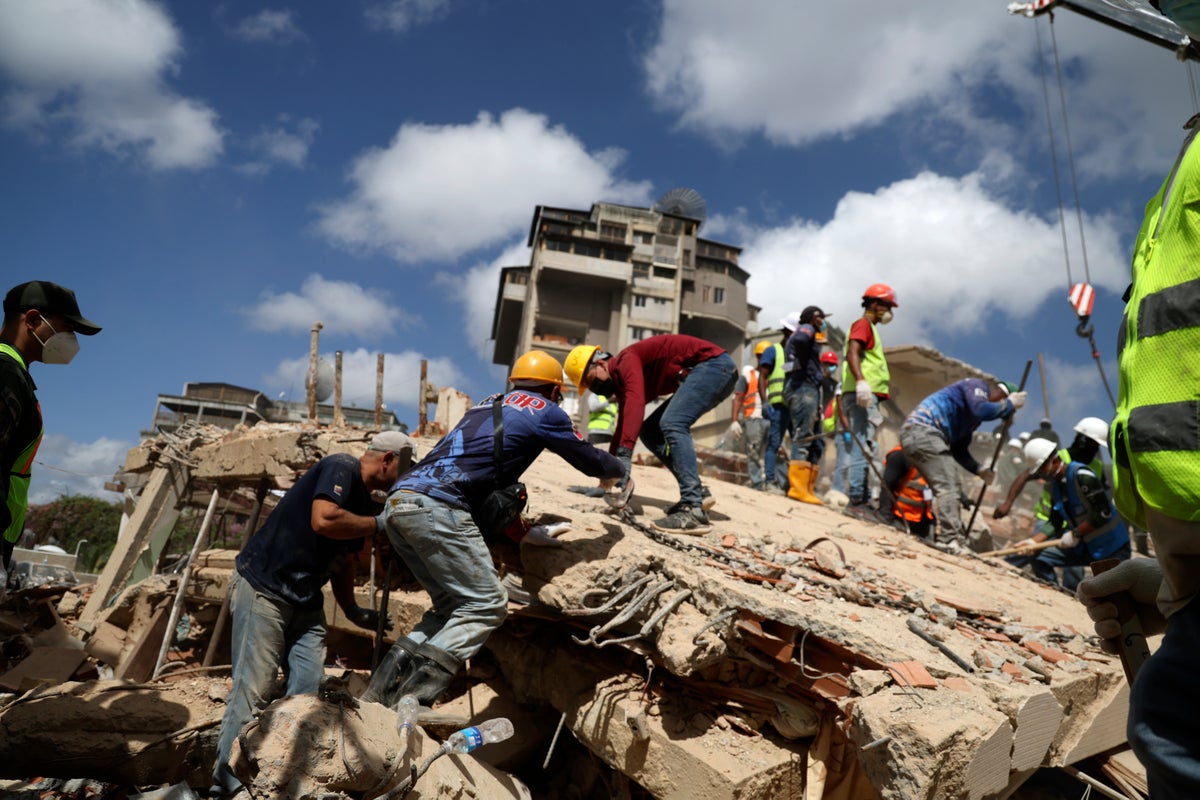
Take the recent double earthquakes that struck La Guaira, Venezuela. Over 770 buildings collapsed, trapping hundreds of residents. Days into the disaster, international teams were still pulling people out alive, including a man rescued after four days who was still clutching his cell phone.
Even longer timelines exist in rescue history. After the devastating 2010 earthquake in Haiti, a 16-year-old girl was rescued from the rubble in Port-au-Prince after 15 days. In 2011, a teenager and his 80-year-old grandmother were pulled from their flattened home nine days after the earthquake and tsunami in Japan.
So why do some people last weeks while others don't make it past day two? It comes down to four critical variables.
The Chemistry of Void Spaces and Toxic Muscle Buildup
Your physical environment inside the collapse determines everything. Geophysicists point out that structural survival relies entirely on what they call a survivable void space. This is a debris-free pocket created when a building collapses unevenly, perhaps propped up by a heavy desk, a reinforced wall, or structural pillars. If you're caught in a tight space where the weight of the structure is completely supported, your injuries might be minimal, giving you a baseline chance to fight for survival.
But even inside a void space, invisible killers lurk. If the building collapse ruptured gas lines, ruptured chemical containers, or triggered localized fires, smoke and toxic fumes will cut down a victim's survival window to minutes, regardless of how much physical space they have.
Then there's the internal biological clock. Emergency response experts like Dr. Joseph Barbera from George Washington University highlight a major medical hurdle known as crush syndrome. If a heavy piece of concrete traps a limb for hours, the pressure cuts off blood flow, causing muscle tissue to die. The real danger happens the moment rescuers lift that debris.
When the pressure is released, a massive wave of toxins from the dead muscle tissue floods the bloodstream, causing sudden kidney failure or cardiac arrest. This is why specialized search and rescue teams often insist on administering medical care, like IV fluids, before they physically extract a victim from the rubble. Without immediate medical stabilization on-site, a survivor can go into fatal shock minutes after being freed.
Temperature and the Brutal Math of Hydration
You can survive for weeks without food, but water is a non-negotiable requirement. Under normal conditions, the human body can last roughly three to five days without hydration. If a trapped victim has access to a pocket with water, perhaps from a broken pipe or a stray bottle, their survival window extends dramatically.
Local weather conditions completely dictate this timeline. Extreme heat accelerates dehydration. During high-temperature disasters, trapped victims lose water rapidly through sweat, and severe dehydration can trigger organ failure within 48 to 72 hours. Conversely, freezing temperatures introduce the immediate threat of hypothermia, which can kill a trapped person long before dehydration or starvation sets in.
The ideal scenario for extended survival is a temperate climate, where the body's metabolic demand remains low, conserving the precious moisture already in the system.
Actionable Steps to Take If You Are Trapped
If you ever find yourself caught in a building collapse, your immediate actions will directly dictate your odds of survival. Forget what you see in movies. Screaming at the top of your lungs for hours will only dehydrate you and exhaust your oxygen supply.
Follow these specific survival protocols to buy yourself time:
- Protect your airways immediately. Cover your mouth and nose with a shirt, jacket, or any available cloth to avoid inhaling thick concrete dust, which can suffocate you or cause acute respiratory distress.
- Assess your immediate physical space. Avoid moving large pieces of debris nearby. Shifting a single brick can trigger a secondary collapse of the unstable pile above you.
- Conserve your energy. Do not panic or overexert yourself. Sit or lie still to keep your heart rate low, which minimizes oxygen consumption and slows down dehydration.
- Signal efficiently. Do not scream continuously. Instead, look for metal objects, pipes, or hard concrete surfaces nearby and tap on them in rhythmic patterns of three. Sound travels much better through solid structures than through air, and acoustic listening devices used by search teams are designed to pick up these rhythmic vibrations.
- Manage your technology wisely. If you have a working phone, do not leave it on searching for a nonexistent signal, which drains the battery in an hour. Turn off your mobile data, lower the brightness, and use it in short, controlled spurts to check for signal or to text emergency contacts. Use the flashlight only when you hear rescue teams nearby.
- Ration whatever you have. If you happen to have a water bottle or a piece of food within arm's reach, do not consume it immediately out of fear or stress. Dictate a strict, minimal schedule to make it last as long as possible.
:max_bytes(150000):strip_icc()/TAL-nassau-bahamas-BEAUTCARIB0323-4fbfce903e5a4418b895e03717e3de0d.jpg)