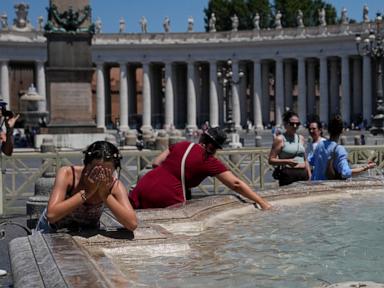
The headlines are staggering but predictable. France records around 1,000 additional deaths as extreme heat breaks European records, leaving health systems reeling and infrastructure buckling. If you think this is just another standard summer hot spell, you are missing the real story.
This isn't a temporary weather anomaly. It is a fundamental shift in how the planet operates, and the data coming out of Europe proves that our current infrastructure is a disaster waiting to happen.
During the peak of the scorching temperatures, France saw a massive spike in mortality. Public Health France reported that daily deaths jumped from a baseline average of 900 to 1,000 in April and May up to more than 1,200 on Wednesday, eventually exceeding 1,400 on both Thursday and Friday. That is where that terrifying figure of 1,000 excess fatalities comes from. It happened in just a few days.
The silent killer inside European homes
When people think of heatwave dangers, they picture sunstroke on a beach or workers collapsing on asphalt. The reality is far more mundane and far more tragic. Most of these deaths didn't happen in the streets. They happened indoors.
Public health officials noted a sharp increase in fatalities directly inside private homes, particularly across the Île-de-France region surrounding Paris. Around 85% of those who lost their lives were aged 65 or older. Many were isolated, living in top-floor apartments that turned into literal brick ovens.
European buildings are famously built to retain heat, not reject it. Thick stone walls, lack of proper ventilation, and a historic absence of residential air conditioning mean that once a building absorbs heat all day, it traps it all night.
The night provides no relief anymore. In Kubschütz, Germany, nighttime temperatures refused to drop below a record-breaking 29.4°C (84.9°F). When the human body cannot cool down at night, the cardiovascular system remains under constant, relentless stress. It wears people down until their hearts simply give out.
Shattering temperature records across the continent
France bore the initial brunt, but the weather system quickly marched eastward, toppling historical benchmarks like dominoes.
- Germany clocked an unprecedented 41.7°C (107°F) in Neißemünde near the Polish border.
- The Czech Republic watched the mercury soar to 41.9°C, breaking a record that had been set only 24 hours prior in the town of Doksany.
- Poland and Hungary both breached the grueling 40°C (104°F) threshold over the same weekend.
World Health Organization Director-General Tedros Adhanom Ghebreyesus put the situation into sharp perspective, warning that Europe is heating at twice the global average rate. It makes Europe the fastest-warming continent on Earth. Over 150 million people found themselves living under extreme heat warnings simultaneously.
The scientific consensus is no longer up for debate. A rapid study issued by the World Weather Attribution group confirmed that this specific combination of suffocating heat and humidity would have been virtually impossible five decades ago. Thanks to human-driven climate change, an event of this magnitude is now 200 times more likely than it was just twenty years ago. This is our new baseline.
The multi-system collapse
Extreme heat acts as a force multiplier for secondary crises. As the temperatures peaked, northern France was slammed by violent electrical storms and high winds that ripped up trees and flooded homes, knocking out power grids when people needed fans the most. In Sweden, lightning struck an amusement park, sending multiple adults to the hospital.
Meanwhile, transport networks choked. Train tracks warped under the sun, causing widespread transit delays. River levels plummeted, warming the water and crippling the cooling systems of nuclear power plants, which forced energy companies to scale back electricity generation right as demand spiked.
Emergency medical services were completely overwhelmed. In France alone, ambulance crews responded to over 122,000 emergency callouts during the peak days. Emergency doctors have warned that the final death toll will inevitably rise as authorities discover individuals who live alone and have already died or fallen into comas inside their apartments.
How to survive the new climate reality
We have to stop treating these events as surprise emergencies. They are annual certainties. If you are responsible for elderly relatives, neighbors, or your own household, waiting for the government to fix the power grid or update building codes is a losing strategy. You have to take immediate, practical steps to insulate yourself from extreme heat.
- Audit internal temperatures early
Do not rely on how the air feels. Buy a basic digital thermometer for the main living spaces. Once indoor temperatures consistently stay above 32°C (89.6°F) during the day, fans stop cooling the body and can actually accelerate dehydration by blowing hot air over the skin like a convection oven. - Create a radiant barrier
Keep windows closed and shutters drawn completely during daylight hours. If your apartment has no external shutters, tape aluminum foil or reflective thermal blankets directly onto the inside of the glass. It looks ugly, but it blocks up to 80% of solar heat gain. - Track the ten-day lag
Health Minister Stéphanie Rist warned that the medical impact of a severe heatwave lingers for up to 10 days after the weather cools down. The body remains weak. Do not resume heavy physical exertion or stop monitoring vulnerable individuals the moment the thermometer drops. - Identify local cooling sanctuaries
If your home lacks air conditioning, map out air-conditioned public spaces within walking distance before the next heatwave hits. Libraries, supermarkets, and municipal cooling centers can provide the few hours of metabolic rest your body needs to reset its core temperature.
The data from this latest disaster makes one thing clear. The climate changed faster than our cities did, and individual adaptation is currently the only shield we have left.

:max_bytes(150000):strip_icc()/TAL-nassau-bahamas-BEAUTCARIB0323-4fbfce903e5a4418b895e03717e3de0d.jpg)