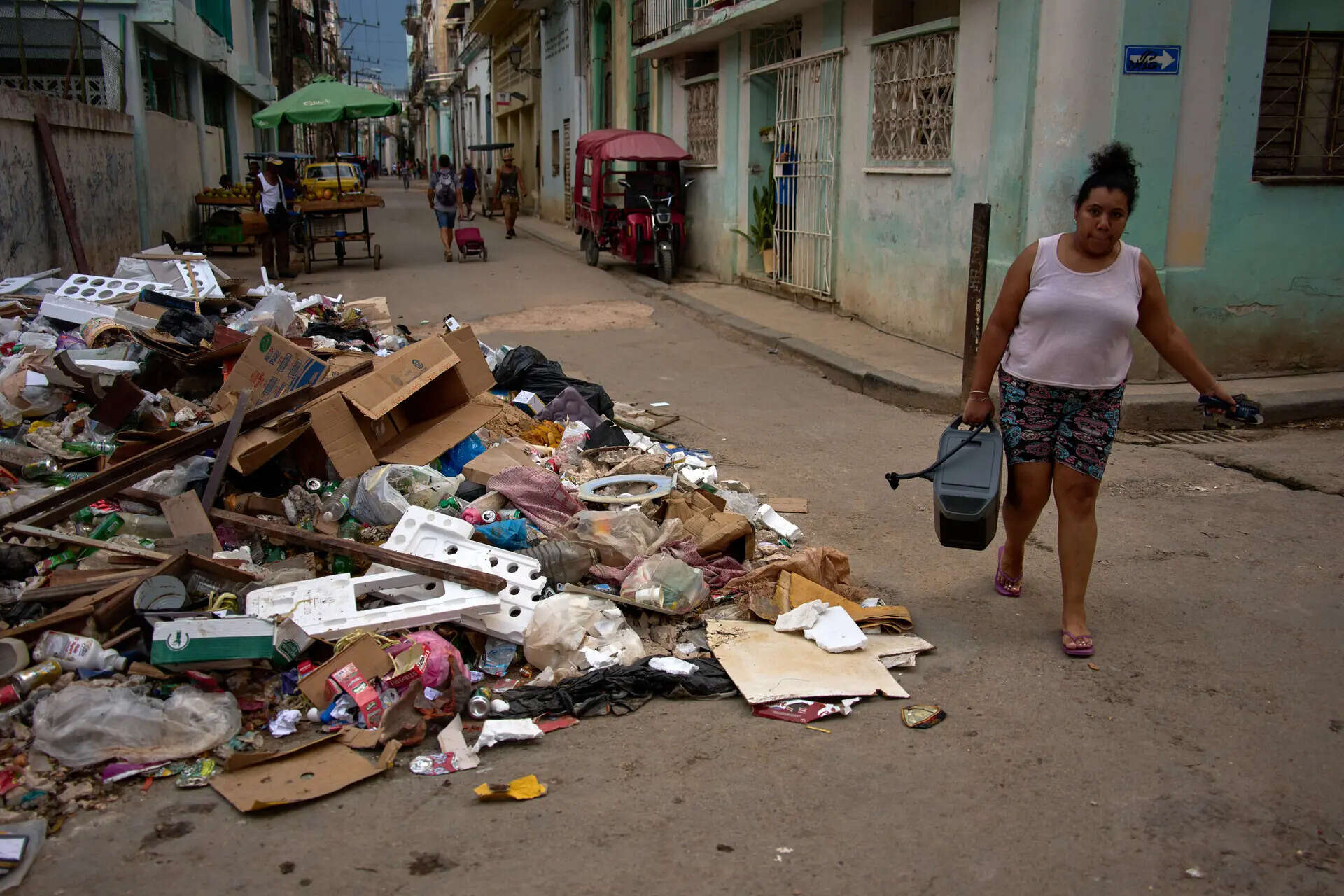
Cuba went completely dark again on Monday. The national electrical grid suffered a total, catastrophic shutdown, cutting power to 9.6 million people instantly. If you read the mainstream media headlines, you might think this is just another unfortunate hiccup in a developing nation.
It isn't. This is the third time the entire island has lost power in the last six months alone. It is the eighth total grid collapse since late 2024. This isn't a temporary inconvenience. It is the complete, systemic disintegration of an entire country's infrastructure happening in real time.
When a national grid fails this frequently, it means the baseline systems required to sustain modern human life are gone. The capital city of Havana has seen power cuts stretching beyond 24 hours at a single time. In rural provinces, people are living without electricity for over 70 hours straight. Food rots in dead refrigerators. Clean water pumping systems stop working. Hospitals are forced to postpone critical surgeries. The United Nations is already warning of a massive humanitarian emergency on the island.
To understand how a society reaches this point, you have to look beyond the immediate shock of a blackout. The crisis is a toxic mix of decades-long domestic mismanagement, an uncompromising foreign fuel blockade, and an electrical system that is quite literally held together by scrap metal and duct tape.
The Reality of a Country Without a Power Grid
Living in Cuba right now means adapting to a primitive existence. For years, rolling blackouts were a predictable, if annoying, part of daily life. The government would publish schedules, and people would plan their cooking, laundry, and work around those designated blocks of time.
That predictability is completely dead.
When the National Electric System experiences a total disconnection, nobody knows when the lights will come back on. The state power utility, UNE, usually posts a brief statement on social media stating they are investigating the causes. But the cause is always the same. There isn't enough fuel to burn, and the plants that burn it are broken.
The deficit numbers are staggering. During peak evening hours, Cuba regularly faces a supply gap of over 1,700 megawatts. The country's total maximum demand sits around 3,000 megawatts, but the grid can barely manage to scrape together 1,200 to 1,300 megawatts of actual generation. More than half of the country's electrical demand goes completely unmet.
This has effectively paralyzed the economy. Private businesses, which had seen a slight resurgence due to recent legalizations, cannot operate without electricity or internet. Software developers working for foreign startups find themselves stranded without Wi-Fi for days. Small grocery shops lose their entire inventory of meat and dairy in a single afternoon. People are cooking with charcoal on the streets because their electric stoves are useless pieces of plastic.
The Real Culprit Behind the Latest Breakdown
You can't discuss the current collapse without talking about the geopolitical stranglehold on Cuba's energy supply. The situation shifted from bad to critical earlier this year. In January, the United States administration under Donald Trump imposed a strict oil blockade on the island.
The strategy behind the blockade is straightforward. Washington wants to cut off the flow of foreign crude oil to force a political transition in Havana. By targeting fuel shipments from Cuba's primary regional allies, Venezuela and Mexico, the US has engineered an artificial, severe fuel starvation.
The tactics are aggressive. The US has pressured Mexico to completely halt its planned oil exports to the island. Shipping companies face heavy sanctions, and any country that dares to deliver oil to Cuban ports risks severe economic retaliation. Because of these measures, oil imports to Cuba dropped to near zero at the start of the year. Since January, only a single oil tanker from Russia has been permitted to successfully dock and unload fuel.
The Cuban government relies heavily on these fuel imports to run its decentralized network of diesel and gas turbine generators. These smaller, distributed units were supposed to act as a safety net during peak hours. Instead, they are sitting idle because their fuel tanks are bone dry. Without these auxiliary generators to support the main power plants, any minor issue on the main transmission lines triggers a cascading failure that brings down the entire national grid.
Decrepit Soviet Power Plants Can Only Do So Much
While the fuel blockade is the immediate trigger for the current crisis, the physical infrastructure itself has been failing for decades. The backbone of Cuba's power generation relies on thermoelectric power plants built with Soviet technology during the Cold War.
These plants have an average operational lifespan of about 30 years. Most of Cuba's major facilities have been running continuously for 40 to 50 years. They are plagued by a severe lack of investment, a shortage of foreign currency to buy genuine replacement parts, and a lack of proper maintenance.
Consider the Antonio Guiteras power plant in Matanzas, the single most critical power facility on the island. It has become a symbol of the country's energy fragility. The plant suffers from frequent automatic trips, boiler leaks, and structural failures. In March, a major boiler leak at Guiteras caused a total grid failure that left the western part of the country in darkness for nearly 30 hours.
The Cuban government attempted to address this structural vulnerability back in 2006 through a program called the Energy Revolution. The plan involved distributing millions of energy-efficient appliances to households and installing smaller diesel generators across towns to decentralize production. It was a decent temporary fix. But today, both the massive centralized plants and the smaller localized generators are failing simultaneously. The centralized plants are structurally ruined, and the local generators have no diesel to burn.
The state has tried to pivot toward solar energy, investing heavily in solar parks across various provinces. Solar power now makes up roughly 10 percent of the nation's energy mix, generating about 560 megawatts at peak hours. It helps during the middle of a sunny day, but it does absolutely nothing to solve the massive generation deficits during the humid, high-demand evening hours.
Washington and Havana Are Locked in a Brutal Standoff
The human suffering caused by the blackouts has not resulted in a political breakthrough. Instead, both governments remain locked in a rigid diplomatic impasse, with ordinary Cuban citizens trapped in the middle.
Washington views the crisis as a sign that its pressure campaign is working. The US State Department has repeatedly stated that the sanctions are designed to compel the Cuban government to open its economy, allow direct foreign investment, and grant political freedoms to its citizens. From the American perspective, the current hardships are the fault of a corrupt, inefficient communist system that refuses to reform.
Havana has taken an equally unyielding stance. The Cuban Ministry of Foreign Affairs routinely denounces the fuel blockade as an act of economic warfare. The government maintains that its political model is non-negotiable and has vowed to resist external military or economic coercion.
The standoff has led to unprecedented diplomatic maneuvers. High-level security officials from both sides have held quiet, tense discussions. The CIA Director traveled to Havana for meetings with Cuban intelligence officials, and the commander of the US Southern Command met with Cuban military leaders near the Guantanamo Bay Naval Station. The US remains deeply concerned about reports that Cuba might host foreign listening posts for adversarial nations. Cuba firmly denies these allegations, utilizing them as leverage to demand relief from the oil blockade.
The Ripple Effect on Daily Life and Tourism
The energy crisis has spilled over into every other sector of the Cuban economy, accelerating a broader collapse. The aviation and tourism sectors, which serve as the primary sources of hard foreign currency for the island, have been devastated.
In February, the government announced it could no longer guarantee the refueling of foreign aircraft at national airports due to a severe shortage of aviation fuel. The response from international airlines was swift and damaging. Air Canada immediately suspended its flights to the country. Major airlines from Russia followed suit shortly after.
This flight freeze caused foreign tourist arrivals to plummet by an estimated 58 percent. Tourism requires reliable electricity, air conditioning, and fresh food. With luxury resorts forced to run on limited backup generators and international flights canceled, the primary engine of the Cuban economy has stalled.
Domestic transport is also at a near standstill. Public buses rarely run because diesel is rationed for vital services. Even the domestic fuel distribution network suffered a massive setback when a major fire broke out at the Nico López refinery in Havana Bay. While the Ministry of Energy and Mines managed to extinguish the blaze without casualties, the loss of fuel storage capacity further crippled the state's ability to move what little oil it possessed to where it was needed most.
In a desperate bid to stabilize the situation, the Cuban National Assembly approved a sweeping package of free-market economic reforms. The measures aim to drastically reduce state control over the economy, open up avenues for private retail, and attract international capital. The US State Department dismissed these reforms as superficial smoke signals, demanding deep political changes before any sanctions are lifted.
What Needs to Change Next
The situation in Cuba cannot be resolved by patching up the current grid. The system has passed the point of simple repairs. If you are tracking this crisis or analyzing infrastructure risks, look for these specific developments next.
- Track the movement of international tankers. Monitor whether alternative energy suppliers like Russia or China bypass the US blockade to deliver crude oil directly to Havana. Without immediate fuel infusions, the grid will continue to collapse weekly.
- Watch the implementation of the new free-market economic reforms. See if the Cuban government actually allows private enterprises to import their own fuel and power generation equipment, bypassing the inefficient state monopoly.
- Monitor the status of the Antonio Guiteras plant. The stability of this single facility determines whether the western provinces, including Havana, have a functioning economy or total darkness.
- Observe the ongoing diplomatic talks. Look for any small concessions regarding humanitarian aid or targeted sanctions relief that could ease the fuel blockade before the humanitarian situation worsens.
The current strategy of waiting for a total collapse is creating a massive humanitarian emergency just 90 miles from the US coast. The lights will not stay on in Cuba until the structural lack of fuel and the decay of its physical infrastructure are addressed simultaneously.