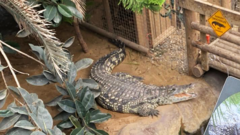
A three-year-old child lands in a crocodile enclosure after a fifteen-foot drop. It sounds like a horrific freak accident. But the unfolding investigation into the June 18 incident at Johnsons of Old Hurst zoo near Huntingdon, Cambridgeshire, reveals a reality that is far more complex and disturbing.
Initial reports left many assuming a structural failure or parental oversight. The truth is much darker. A 30-year-old man from Norfolk, who was entirely unknown to the child, was arrested on suspicion of attempted murder. While police continue to untangle the criminal details, the boy’s family broke their silence on Wednesday with a public statement issued through Cambridgeshire Police. They didn't focus on the horror of the attack. Instead, they focused entirely on the people who prevented a tragedy.
"We would like to thank the staff at the zoo who rescued our son from the enclosure," the family stated. It's a short sentence that carries massive weight.
The Fifteen Foot Leap You Didn't Hear About
When a child falls near predatory reptiles, seconds dictate survival. Crocodiles are purely reactionary. If something lands near them, they bite first and process later. The toddler landed on a concrete perimeter right next to the crocodile ponds, suffering a broken arm and a broken pelvis from the sheer impact of the drop.
What happened next requires a level of courage most people can't fathom.
Tracey Johnson, the co-owner of the zoo, didn't wait for emergency services. She didn't pause to calculate the risk. She leaped directly down the 15-foot drop into the enclosure to pull the boy away from at least one attacking crocodile. Former zookeepers and colleagues have since called it a remarkable act of bravery, but those who know her say it’s exactly what they expected. Witnesses in the nearby tea room recalled staff rushing from all directions, utilizing a site buggy to get the boy to a trailer where immediate first aid could be administered before the air ambulance arrived.
Without that immediate, instinctual intervention, the boy wouldn't be in stable condition at Addenbrooke’s Hospital today. He probably wouldn't be alive.
The Complicated Road to Justice
While the public demands answers, the legal process has hit a significant bottleneck. The 30-year-old suspect, who was visiting the zoo alongside carers, reportedly has severe learning difficulties. Detectives from the major crime unit have bailed him until September 18 because he was officially assessed as "not fit for interview."
This leaves a lot of unanswered questions for a community in complete shock.
Now the Care Quality Commission (CQC) is stepping in. They are actively liaising with the care organization responsible for the suspect to determine if systemic oversight failures occurred. The watchdog has the authority to issue heavy fines or strip care licenses entirely if protocols were breached during the excursion. It's a reminder that safety isn't just about zoo fences; it's about the accountability of those trusted with vulnerable individuals.
What Recovery Actually Looks Like
The media cycle moves fast, but rehabilitation doesn't. The boy has already endured multiple surgeries at Addenbrooke's Hospital in Cambridge.
A grassroots fundraising page has been set up to help the parents stay by his side, providing financial stability while they navigate both the physical and psychological trauma. The reality of an apex predator attack means the healing process will be a long, non-linear journey.
If you want to support the family directly or stay updated on community-led efforts for his rehabilitation, you can follow the official updates provided by the Cambridgeshire Police or contribute to the verified GoFundMe campaign setup for their hospital stay. Any leftover funds from the drive are slated to go directly back into the Addenbrooke's Trust charities.



.jpg)