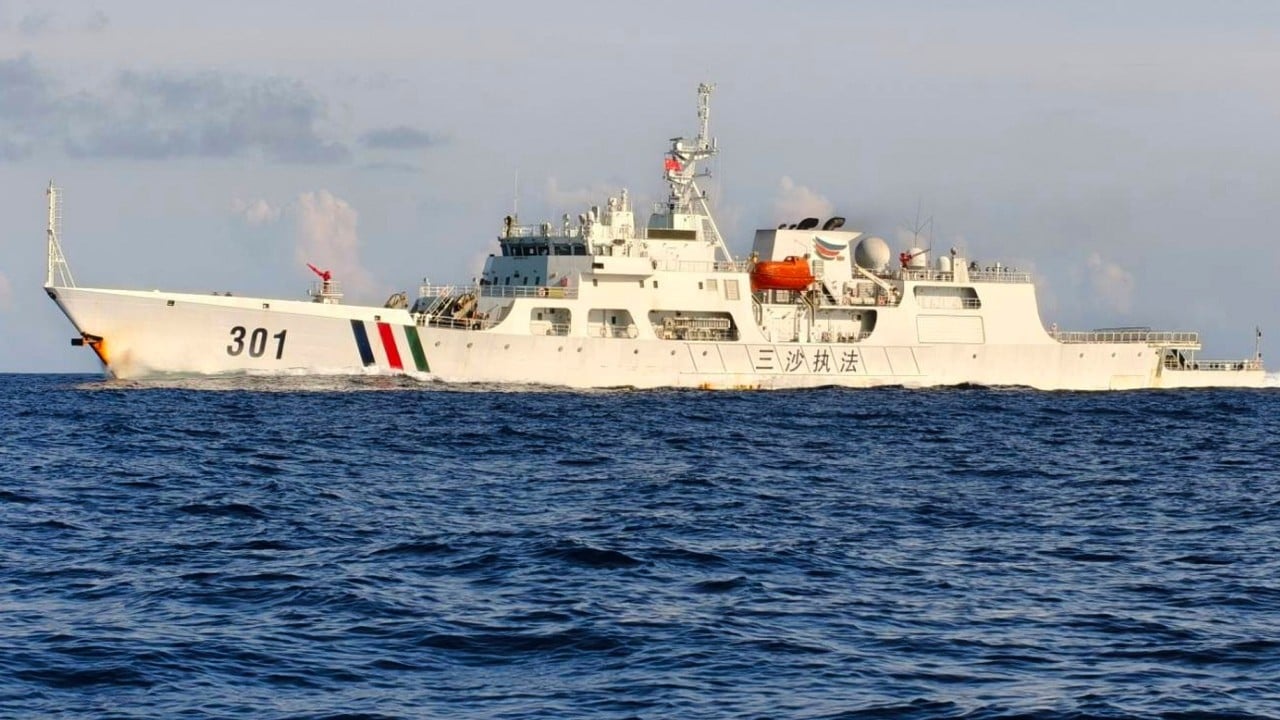
Beijing just pushed the envelope again in the waters around Taiwan, and the Western world is finally waking up to the new reality. If you're only tracking fighter jets crossing the median line, you're missing the real story. The latest escalation isn't about the People's Liberation Army Navy. It's about white-hulled law enforcement ships. Beijing's recent deployment of coast guard patrols near Taiwan represents a calculated shift from military intimidation to legal strangulation, and the diplomatic fireworks between China, the United States, and Europe prove how high the stakes have become.
Western capitals are alarmed. The United States, Britain, France, and Germany just issued a series of rare, coordinated rebukes against Beijing's operations off the eastern coast of Taiwan. Beijing didn't blink. Chinese Foreign Ministry spokesperson Guo Jiakun quickly fired back, telling Western powers to stop confusing right and wrong. The diplomatic spat highlights a terrifying development. Beijing is no longer just simulating blockades during high-profile military drills. It's actively trying to police international shipping lanes on the Pacific side of Taiwan.
To understand why this matters, you have to look at what actually happened on the water. In June 2026, China launched what it called a special maritime traffic law-enforcement and hydrographic survey operation. For five days, Chinese coast guard vessels didn't just sail through the area. They began issuing direct radio commands to foreign commercial vessels traveling through the deep waters east of Taiwan. They demanded that merchant ships report their identity, cargo, and intended routes.
Taipei fired back with outrage. Taiwan's Coast Guard Administration monitored the ships and broadcasted counter-assertions of jurisdiction. No commercial ships were physically boarded or inspected during this specific operation, but the precedent has been set. This is classic gray-zone warfare. By using civilian law enforcement vessels rather than warships, Beijing avoids triggering a direct military response while slowly chipping away at the status quo.
The Battle for the Pacific Side
Most geopolitical observers focus entirely on the narrow Taiwan Strait. That's a mistake. The Taiwan Strait is shallow and easily monitored. The real strategic prize is the east coast of Taiwan. The Pacific side features deep waters that are vital for submarine operations and international shipping lanes. Energy supplies, liquefied natural gas, and raw goods flowing from the Middle East and Europe to major ports in Japan, South Korea, and northern China must pass through or near these waters.
By establishing regular coast guard patrols near Taiwan's eastern coast, Beijing is executing a strategy of denial. Security experts like Alessio Patalano, a professor of war and strategy at King's College London, point out that these operations de facto deny Taiwan its voice as an active entity in international maritime activities. It's a slow strangulation. Today, it's a radio challenge. Tomorrow, it's a mandatory inspection.
If Beijing successfully normalizes the right to interrogate commercial vessels in these waters, it effectively establishes domestic legal jurisdiction over an international highway. Shipping companies hate risk. If a captain knows that routing a vessel east of Taiwan means facing interrogation or potential boarding by the Chinese coast guard, they will alter their route. Insurance premiums will skyrocket. Freight costs will surge. Beijing can achieve the economic effects of a blockade without ever firing a single shot or declaring an official war.
Turning the Tables on Japan and the Philippines
Beijing didn't launch this operation in a vacuum. Chinese authorities claim these patrols were a direct, necessary response to recent maritime border talks between Tokyo and Manila. Japan and the Philippines announced plans to formally discuss their overlapping exclusive economic zones in waters that sit uncomfortably close to Taiwan.
Beijing views this bilateral diplomacy as a direct assault on its maritime rights. The Chinese government asserts sovereignty over Taiwan and, by extension, claims the rights to the vast maritime zones surrounding the island. Spokesperson Guo Jiakun made it clear that China views the Tokyo-Manila negotiations as an illegal manipulation of maritime delimitation issues. From Beijing's perspective, sending the coast guard to the east of Taiwan was a defensive countermeasure to protect its territorial integrity against foreign encirclement.
The timing was also perfectly synchronized to maximize pressure on Taipei. Just as the coast guard vessels finished their law enforcement operation, China sailed its newest and most advanced aircraft carrier through the Taiwan Strait. This naval transit occurred mere hours after Taiwan launched its five-day immediate combat readiness exercises. The message to Taiwanese President and the public was clear. We can box you in from the west with our navy, and we can isolate you from the east with our coast guard.
Why Europe Joined the Fight
The most surprising element of this recent flare-up is the aggressive diplomatic response from Europe. For years, European powers treated the Taiwan Strait as a distant, regional flashpoint best left to the United States and regional allies. Not anymore. The de facto British, French, and German embassies in Taipei shattered that precedent by releasing a joint statement expressing deep concern over China's novel activity.
European leaders realize their economies are completely exposed to a Taiwan crisis. A disruption in these shipping lanes would cripple supply chains in Berlin, Paris, and London. The joint European statement explicitly noted that China's actions threaten regional stability, freedom of navigation, and the safety of international shipping. They reiterated their fierce opposition to any unilateral change to the status quo by threat, force, or coercion.
The U.S. State Department was equally blunt. American officials rejected any assertion by China of authority to interfere with the lawful uses of the sea, including the freedom to lay underwater cables and navigate international waters. The U.S. called Beijing's actions deeply destabilizing and accused the Chinese government of undermining the very peace it claims to seek.
Beijing's response was predictably defiant. The Taiwan Affairs Office and the Foreign Ministry maintain that their domestic law enforcement actions are entirely legitimate exercises of jurisdiction. They accuse Western powers of playing a double game by maintaining unofficial ties with Taiwan while claiming to respect the One China policy.
The Slippery Slope of Maritime Lawfare
The danger of this coast guard strategy lies in its legality. China passed a maritime law that explicitly grants its coast guard the authority to use force against foreign vessels in waters claimed by Beijing. By reframing a geopolitical territorial dispute as a standard maritime traffic safety issue, Beijing forces foreign entities into a dangerous compliance trap.
Consider the dilemma facing a commercial shipping captain. If the Chinese coast guard radios your vessel demanding a cargo manifest, do you comply? If you comply, you tacitly recognize Beijing's legal authority over those waters, helping China build a case that it exercises undisputed domestic jurisdiction. If you refuse, you risk being stopped, boarded, or delayed, costing your company millions of dollars and endangering your crew.
This isn't a hypothetical threat. China has already successfully run this playbook elsewhere. In the South China Sea, Beijing used coast guard vessels and maritime militia to gradually seize control of Scarborough Shoal and bully Philippine resupply missions. Near the Kinmen islands, which sit just off the mainland coast but are controlled by Taiwan, the Chinese coast guard began regular boarding actions after a fatal boat chase. Now, they are scaling this exact same tactic up to the global shipping lanes of the Pacific.
What Happens Next
The international community cannot afford to treat these coast guard patrols as minor diplomatic incidents. They are the opening moves of a bureaucratic blockade. If left unchecked, Beijing will continue to increase the frequency and intensity of these operations until the waters east of Taiwan are entirely under its administrative control.
Faced with this aggressive gray-zone campaign, commercial maritime operators, regional governments, and international security analysts must pivot.
First, shipping conglomerates need to establish clear, unified compliance protocols for transit through the western Pacific. Allowing individual ship captains to decide whether to submit to Chinese coast guard radio challenges creates a fractured, weak environment that Beijing will exploit. International shipping associations must coordinate directly with the navies of the U.S., Japan, and European nations to ensure that commercial vessels have immediate communication channels to allied warships if challenged.
Second, the U.S. and its partners must match China's white-hull strategy with their own law enforcement presence. Sending a multi-billion-dollar destroyer to counter a coast guard patrol looks heavy-handed and risks playing into Beijing's narrative of Western aggression. Instead, the U.S. Coast Guard and Japan's Coast Guard should increase their own joint patrols and exercises in the international waters east of Taiwan. Combating lawfare requires an agile, law enforcement-based counter-presence that demonstrates Western resolve without escalating to military conflict.
The era of ignoring China's civilian fleet is over. The white hulls are rewriting the rules of the Pacific, and the world must adapt before the trap snaps shut.
For an in-depth visual breakdown of how these maritime confrontations unfold on the water and the specific vessels involved in these gray-zone operations, you can watch this detailed analysis on Chinese Patrols Off Eastern Taiwan. This video provides crucial visual context on the proximity of these law enforcement operations to Taiwan's vital shipping lanes.