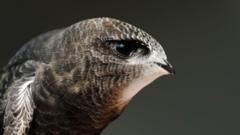
You see a flash of dark feathers screaming through the summer sky at forty miles an hour. Most people look up, smile, and carry on with their day. They think nature handles itself. It doesn't. Not anymore.
When news broke that the Cambridge college swift boxes used for first time had officially welcomed breeding pairs, local birdwatchers celebrated like their football team had won the league. It sounds like a minor local interest story. A nice, feel-good piece of news about birds choosing an ancient chapel tower as a home. But beneath the surface, this milestone at Jesus College reveals a massive crisis in urban wildlife conservation. It shows exactly what it takes to save a species that refuses to land on the ground for ten months of the year.
The common swift is an evolutionary masterpiece. They sleep on the wing. They mate in mid-air. They bathe by flying through rain clouds. But they have one fatal flaw. They rely on us for their real estate. For centuries, these birds have squeezed into the nooks, crannies, and loose mortar of our oldest buildings to raise their chicks. Then we started renovating. We sealed up the gaps, insulated the roofs, and blocked the entries. By making our buildings energy-efficient, we inadvertently made them wildlife deserts.
The successful nesting at Jesus College isn't just luck. It's a precise blueprint for how we can reverse a catastrophic fifty percent decline in the UK swift population.
The Real Story Behind the Cambridge College Swift Boxes Used for First Time
You can't just slap a wooden box on a wall and expect swifts to move in. They are notoriously stubborn tenants. They are fiercely loyal to their historic nesting sites. If a swift returns from its wintering grounds in Africa and finds its old roof gap sealed with modern plastic fascia, it won't just look for the nearest box. It will fly around the blocked site until it drops from exhaustion or falls prey to a hawk.
That's why the team at Jesus College had to deploy strategic tactics during their recent chapel tower restoration. When the college repaired and regilded its iconic cockerel weathervane, they realized the west elevation of the tower offered the perfect height and orientation for artificial nest sites.
The college installed specialized swift boxes into the historic brickwork. But the real magic happened with the addition of a sound system. Because swifts are social nesters, they look for established colonies. To fool them into thinking the tower was already a bustling avian hotspot, the college installed small speakers to blast pre-recorded swift attraction calls during the early mornings and late evenings.
It worked. This season, the calls attracted non-breeding juveniles and young pairs searching for a home. For the first time since the installation, swifts have formally occupied the boxes, a moment that delighted Master Sonita Alleyne and the conservation team.
Why Historic Architecture Holds the Key to Urban Biodiversity
Our ancestors didn't mean to build wildlife sanctuaries, but they did. Victorian terraces, medieval chapels, and Georgian manors are full of tiny architectural imperfections. These flaws are exactly what swifts, bats, and house sparrows need to survive.
When modern building regulations came into effect, we prioritised straight lines and absolute seals. We can't blame developers for wanting warm, draft-free homes. However, we must blame the systemic failure to integrate wildlife spaces into modern construction.
The project at Cambridge proves that historic preservation and biodiversity enhancement can go hand in hand. You don't have to ruin the aesthetic of a medieval chapel to save an endangered bird. The boxes on the Jesus College chapel tower blend into the architecture. They offer a secure, predator-proof environment that mimics the deep cavities of old stone walls.
The success of these Cambridge college swift boxes used for first time highlights a critical lesson for urban planners everywhere. If an institution with rigid heritage protections can successfully integrate wildlife infrastructure into a high-profile restoration project, regular developers have absolutely no excuse left.
The Science of Attracting a Bird That Never Touches the Ground
To understand why this nesting success is such a big deal, you have to look at the bizarre biology of the common swift, Apus apus. The generic name Apus literally translates from Greek as "footless." They have legs, but they are incredibly short and designed solely for clinging to vertical surfaces like rock faces and brick walls. If a swift lands on flat ground, it often struggles to take off again.
Because they spend almost their entire lives in the air, their perception of the world is entirely altitude-based. They hunt airborne spiders and beetles at heights that would make other birds dizzy. When they look for a nest, they look for high, unobstructed drop-offs. They need to be able to drop straight out of the nest hole to gain flight speed.
The table below breaks down the precise conditions required to get a swift to even look at an artificial nest box, based on the setup used in successful collegiate projects.
Height Requirement: Minimum of five metres above the ground, ideally higher.
Clear Flight Path: No trees, wires, or opposing roofs blocking the immediate exit.
Sun Exposure: North, northeast, or northwest walls to prevent the boxes from overheating in summer.
Internal Design: A concave nest mould or starter indentation to stop eggs rolling around on flat wood.
Audio Mimicry: An electronic call system to signal safety and community to passing birds.
If you miss just one of these variables, your box will sit empty forever. Starling pairs might move in, or wasps might build a nest, but swifts will ignore it. The Cambridge project hit every single metric perfectly.
Common Mistakes in Amateur Swift Conservation
Many homeowners read about the Cambridge success and immediately rush out to buy a birdbox. They hang it next to their kitchen window or tuck it under a garden bush. Then they wonder why they only catch views of blue tits or sparrows.
Let's clear up the misconceptions. Swifts don't want your garden trees. They don't want your bird feeders. They eat exclusively on the wing, catching thousands of insects a day in the upper atmosphere. If you want to replicate the success of the Cambridge college swift boxes used for first time, you have to think like an architect, not a gardener.
First, do not put a swift box on a hot southern wall. The midday sun will turn the interior into an oven, baking the chicks alive. It's a tragic mistake that well-meaning people make every single year.
Second, don't give up after one season. It took time for the birds to accept the Jesus College boxes. Swifts migrate thousands of miles from Africa to Europe every spring, arriving in May and leaving by August. The window for them to scout new real estate is incredibly brief. It often takes two or three years of playing audio calls before a passing pair decides to drop their anchor and lay eggs. Patience is a non-negotiable part of the process.
How to Turn Your Home into a Wildlife Sanctuary
You don't need a massive university budget or a medieval chapel tower to make a difference. The average British house can easily host a swift colony if you follow the right steps.
- Buy the correct box. Look for specialized swift boxes made from wood-concrete composites or marine-grade plywood. These materials handle the harsh British weather and offer superior thermal insulation.
- Choose your spot wisely. Find the highest point under your roof eaves. Ensure there are no climbing plants, wires, or trees directly in front of the box. The birds need a clean drop zone.
- Install an attraction call player. This is the single biggest factor determining success. You can buy cheap, weather-resistant micro-speakers that play the distinct "screaming" call of the swift on a loop. Run it on a timer during May and June from 06:00 to 09:00 and 18:00 to 21:00.
- Protect existing nests. If you are planning roofing work or fascia replacements on an older property, check for active nests first. It's illegal to disturb nesting birds under the Wildlife and Countryside Act. If work must happen, install internal swift bricks directly into the wall to replace the lost cavities.
The successful occupation of the Cambridge college swift boxes used for first time proves that targeted conservation works. When we give nature the right infrastructure, it responds. The birds did their part by flying across continents to find these boxes. Now it's our turn to build more of them.
Buy a box. Put it up high. Turn on the audio calls. Stop waiting for someone else to save the local wildlife. Do it yourself.
:max_bytes(150000):strip_icc()/TAL-nassau-bahamas-BEAUTCARIB0323-4fbfce903e5a4418b895e03717e3de0d.jpg)