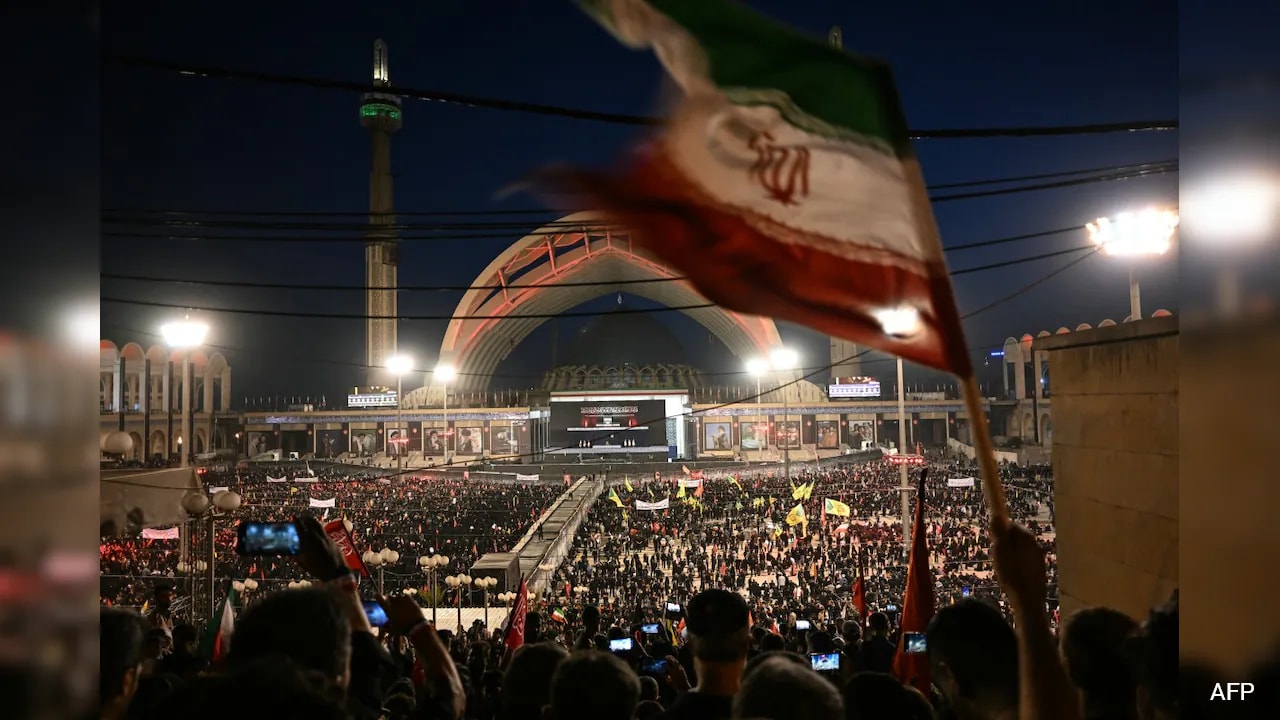
Walk down the streets of central Tehran right now and you'll notice something completely unexpected. It doesn't feel like a funeral.
Sure, the black chadors are out in full force. The billboards of the late Supreme Leader Ayatollah Ali Khamenei line every major intersection, and the official state media is pumping out endless loops of grieving citizens. But if you step just a block away from the grand Imam Khomeini Mosalla mosque, the somber atmosphere evaporates. Also making headlines in this space: Why Benjamin Netanyahu Mourns Lindsey Graham More Than Most American Politicians.
Instead, you run straight into a summer street festival.
Electronic music blares from massive speakers. Teenagers hustle behind makeshift counters frying up free trays of potato chips. Volunteers hand out fresh slices of watermelon and ice-cold lemon juice to anyone walking by. It's loud, it's chaotic, and it's happening under a scorching July sun. More insights on this are covered by TIME.
Western observers often look at these massive state funerals in Iran and assume they are monoliths of pure, unadulterated grief. They aren't. The reality on the ground is a fascinating, jarring mix of religious devotion, state-sponsored carnival, and fierce geopolitical defiance.
The Bazaar of Martyrdom
Iran has turned public mourning into a logistical art form. The government declared public holidays, shutting down normal business to ensure the streets stay packed. To manage the millions of pilgrims traveling from distant provinces, authorities opened up over 5,000 schools and thousands of classrooms as temporary campsites.
But the real action is at the mokebs—the hundreds of free food and drink stations lining the procession routes.
These aren't just charity stalls. They're heavily subsidized hubs designed to keep the crowd energized and comfortable. At one station, a volunteer named Said Rezai Manesh proudly mentioned handing out 15,000 eggs alongside potatoes, tea, and juice in just the first two days. There are no menus or prices. The only currency required is your presence.
The soundscape is just as surreal as the food scene. Instead of traditional, quiet Islamic recitations, you hear heavy electronic beats mixed with political speeches and rhythmic Shia chants praising Imam Hussein. It feels like a block party, but the decorations consist entirely of blood-red flags demanding vengeance and posters honoring Iran's "martyrs."
A Tale of Two Tehrans
Don't mistake the festival vibe for a lack of tension. The mood changes completely depending on exactly where you stand.
Inside the Grand Musalla religious complex, the atmosphere remains aggressively intense. Men sit cross-legged, sobbing uncontrollably and beating their chests in rhythm. The air smells of sweat and rosewater. Here, the casket of the 86-year-old leader—who was killed in a US-Israeli strike back in February—sits in a glass case, topped with his iconic black turban. Next to him are the coffins of his family members killed in the same attack, including his three-year-old granddaughter.
Step inside, and you hear the roar of "Death to America" and "Death to Israel." Step outside, and you're offered a cup of cold water mist to beat the 36°C heat while teenagers take selfies in front of posters of Mojtaba Khamenei, the late leader's son and successor.
This duality is intentional. The Iranian state knows it cannot sustain absolute, tearful mourning across a six-day, five-city funeral marathon. By embedding a festival-like infrastructure into the event, they keep people on the streets longer. It prevents the crushing stampedes that historically ruined these events, like the chaotic 1989 burial of Ayatollah Ruhollah Khomeini where the crowd literally broke the casket.
The Geopolitical Theater on Display
The timing of this massive event isn't an accident. Iran kicked off the public ceremonies on July 4, deliberately coinciding with the 250th anniversary of the founding of the United States.
While Washington celebrated with fireworks, Tehran used its street festival to broadcast a message of defiance. Speakers at the funeral openly called for the assassination of US President Donald Trump, who joked in a speech at Mount Rushmore that he gave Iran "a week off for a funeral."
Meanwhile, behind the free watermelons and electronic music, the real stakes are being negotiated. Iranian officials are using the massive turnout to signal regional continuity. Even as the country mourns, its diplomats are issuing warnings to European powers over the security of the Strait of Hormuz.
For the hardliners, this funeral is a victory parade. For the everyday pilgrims, it's a religious duty wrapped in a rare public holiday with free food. And for the thousands of Tehran residents who packed their cars and fled the capital the moment the holidays were announced, it was simply an event to avoid entirely.
If you want to understand modern Iran, look closely at these streets. Don't just watch the weeping crowds on state TV. Look at the kids eating free fries under a poster calling for war. That's where the real story lies.
If you are tracking international politics or preparing an analysis on Middle Eastern state strategies, your next step should be auditing the official statements coming from Iran's Supreme National Security Council over the next 48 hours. The funeral ends soon, and the political holiday will give way to actual policy shifts.