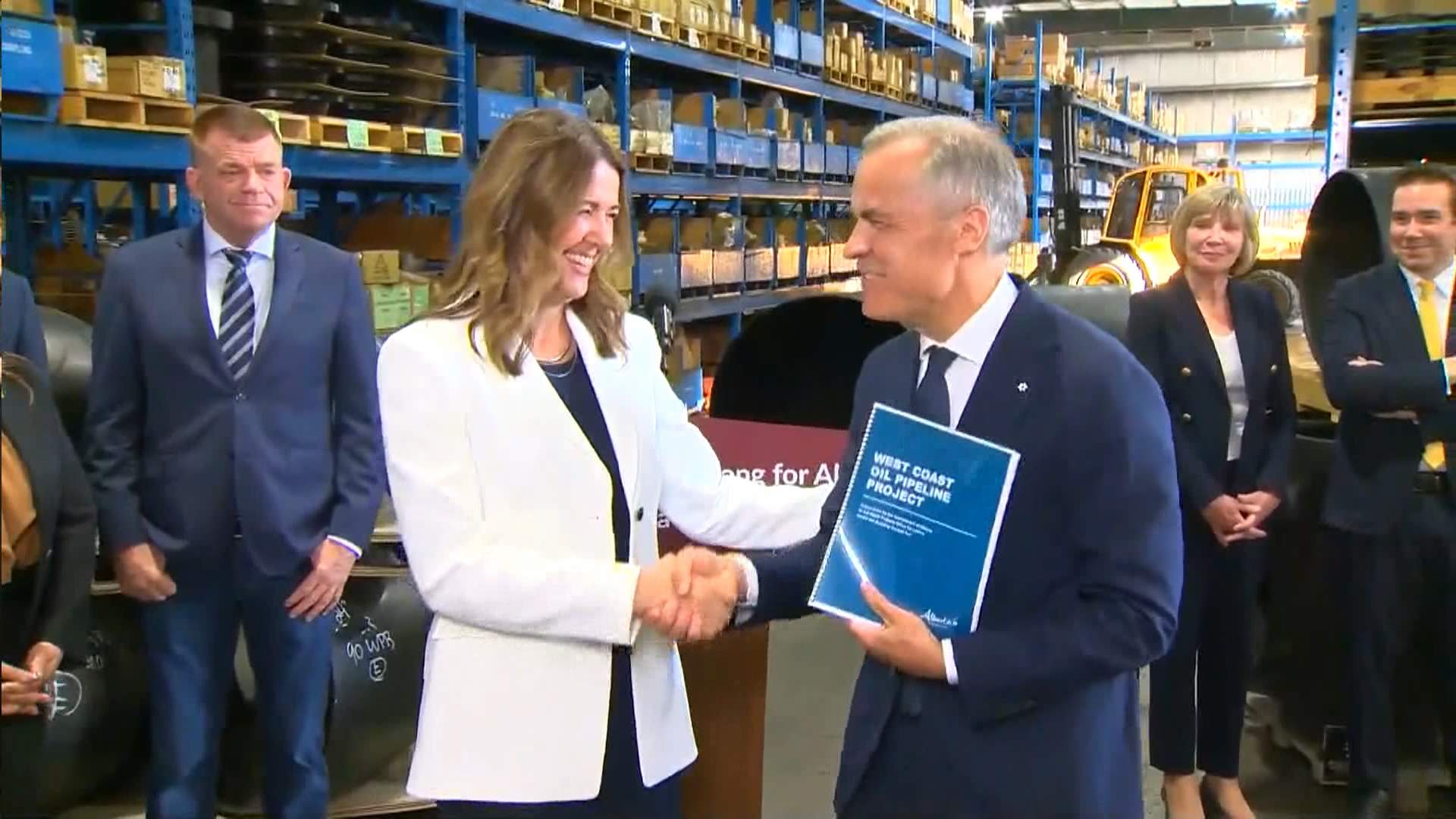
Politicians love cutting ribbons and announcing multi-billion dollar mega-projects. It makes for great television. On July 2, 2026, Prime Minister Mark Carney and Alberta Premier Danielle Smith stood together in Calgary to announce a massive new oil pipeline project stretching from Bruderheim to the British Columbia coast. They promised a million barrels a day of export capacity, tens of thousands of jobs, and a new era of Canadian energy independence.
But if you think this means shovels are hitting the ground tomorrow, you're getting it wrong.
The media is covering this as a done deal or an immediate economic savior. It isn't. Underneath the optimistic press releases lies a massive web of financial risk, missing corporate buyers, and intense legal hurdles that could easily keep this pipeline trapped on paper for the next decade. Let's look past the political theater and examine what it actually takes to build a forty-billion-dollar pipe in Canada today.
The Reality of the Forty Billion Dollar Price Tag
The sheer scale of this project is staggering. Early project submission packages estimate the construction costs will land somewhere between $35.2 billion and $43.7 billion. If history tells us anything about Canadian infrastructure, that number will go up.
Look at the Trans Mountain Expansion project. It was supposed to cost $7.4 billion. It ended up costing over $34 billion by the time oil started flowing in 2024. Taxpayers shoulder that burden.
The new proposal plans to follow almost the exact same corridor as the existing Trans Mountain line, terminating at the Roberts Bank Terminal near Delta, British Columbia. On paper, twinning an existing route sounds smart. It reduces the need for new environmental surveys and utilizes established rights-of-way.
But building a pipeline through the Rocky Mountains is a logistical nightmare. The terrain is brutal. The engineering requirements are extreme. When you add inflation, labor shortages, and rising material costs, that $43.7 billion ceiling looks more like a baseline floor.
Where Are the Shippers
A pipeline is just a very long, very expensive straw. It doesn't make money unless oil companies pay to pump their product through it. Right now, those companies are quiet.
The biggest issue facing this new Alberta pipeline isn't the government or the regulators. It's the market. Major oil sands producers haven't signed long-term, binding commitments to fill this line. Without those contracts, known as take-or-pay agreements, the project is a non-starter for private investors.
Why are the producers hesitant? It comes down to basic math. Committing to a new pipeline means signing 20-year or 30-year shipping contracts. It means betting billions that global demand for heavy crude will remain high well into the 2040s and 2050s.
With global net-zero targets looming and the rise of alternative energy, many corporate boards are reluctant to make those bets. They prefer returning cash to shareholders through dividends and stock buybacks rather than investing in massive capital expenditures. If the local oil companies won't back the project with their own money, why should anyone else?
The Private Sector Mirage
Premier Danielle Smith stated she wants a full private sector takeover of the project down the line. Currently, the Trans Mountain Corporation is slated to handle planning and construction, while Pembina Pipeline Corporation has taken a modest 10 percent stake during the development phase. Pembina might bump that up to 20 percent later.
That leaves 80 to 90 percent of the financial risk sitting squarely on the public ledger.
Independent energy think tanks are already raising red flags. If this project were a guaranteed cash cow, private equity and major midstream corporations would be fighting for a piece of the action. They aren't. Instead, the government is acting as the early-stage proponent, spending $14 million of public money just for preliminary engineering and economic modeling.
When governments finance pipelines, commercial discipline often flies out the window. Decisions get made for political survival rather than economic efficiency. If the private sector refuses to step up and buy out the government's stake, Canadian taxpayers will find themselves owning yet another incredibly expensive piece of energy infrastructure.
The First Nations Consultation Minefield
You can't build a project of this magnitude in Canada without meaningful Indigenous participation. The Canadian Constitution demands it. Past projects failed because politicians treated consultation like a box-checking exercise.
The federal court overturned the original TMX approval back in 2018 for this exact reason. The government failed to engage in deep, meaningful dialogue with affected First Nations.
Prime Minister Carney promised this new line would feature a meaningful ownership stake for Indigenous communities. The goal is to build wealth and alignment from day one. Some nations are eager to participate, seeing equity stakes as a path toward long-term financial self-reliance.
Other coastal communities remain fiercely opposed. They point to the threat of oil spills along the Pacific coast. A single tanker accident could wipe out local ecosystems and traditional fishing grounds. No amount of compensation can fix a ruined coastline.
While the chosen southern route avoids the northern tanker ban area, it still requires hundreds of separate agreements with individual nations along the path. One major legal challenge can stall construction for months, racking up millions of dollars in interest charges.
Moving West Over Riding the Tanker Ban
The choice of the southern route to Delta wasn't an accident. It was a strategic retreat by the Alberta government.
For years, Alberta leaders fought against the federal Oil Tanker Moratorium Act, which blocks crude exports from British Columbia's northern coast. Premier Smith initially wanted a northern route to access deep-water ports closer to Asia. That would have required overturning federal law.
By accepting the southern route alongside the TMX corridor, Alberta avoided a massive federal showdown. The southern coast is not subject to the tanker ban.
This route gets Canadian oil to Asian markets faster, theoretically. It uses existing marine infrastructure and complies with current federal laws. It satisfies B.C. Premier David Eby's demands for strict environmental safeguards, resulting in a new Canada-British Columbia Cooperative Prosperity Agreement.
But the southern route means navigating the heavily populated Lower Mainland of British Columbia. Protests will happen. Legal challenges from environmental groups are inevitable. Construction in urban and suburban areas brings severe logistical headaches that you don't encounter in the remote north.
The Decarbonization Dilemma
The federal government and Alberta are trying to paint this as a green pipeline. That sounds like a contradiction.
To sell this project to a climate-conscious public, the deal is tied to massive emissions reductions. The tripartite agreement includes the Pathways Project, an ambitious carbon capture and storage initiative designed to trap 16 million tonnes of carbon dioxide annually from the oil sands.
The federal government also locked in an agreement to cut oil and gas methane emissions by 75 percent below 2014 levels by 2035.
It's a grand bargain. Alberta gets its export pipeline pipe dream, and Ottawa gets binding corporate commitments on climate targets.
But the technology behind large-scale carbon capture is still unproven at this scale. It is incredibly expensive to build and operate. Oil companies are complaining about the costs, even with newly reduced provincial industrial carbon taxes. If the carbon capture infrastructure lags behind, the political consensus supporting the pipeline will crumble.
What Happens Next
The timeline announced by politicians is wildly optimistic. They want the pipeline designated as a project of national interest through the federal Major Projects Office by October 1, 2026. They hope construction will begin by September 1, 2027, with oil flowing by 2033.
Don't hold your breath.
If you're an investor, an energy worker, or a concerned citizen, you need to watch the actual markers of progress, not the political speeches. Here is what needs to happen next before this project becomes real.
First, look for signed commitment contracts from actual oil producers. If companies like Snehus, Canadian Natural Resources, or Imperial Oil don't sign binding agreements to ship oil on this line by the end of 2026, the project is dead in the water.
Second, watch the private equity markets. See if Pembina or other corporations actually increase their financial stakes past the token 10 percent mark. True private sector investment is the only real proof of commercial viability.
Third, monitor the legal filings from B.C. First Nations. The level of true consensus along the TMX corridor will dictate whether this project faces years of injunctions or a smooth regulatory path.
The Alberta new pipeline proposal is a massive political gamble. It's an attempt to bridge the gap between climate mandates and resource wealth. But until corporate cash replaces taxpayer funding, it remains an expensive question mark.
Federal and Alberta governments reach agreement on new pipeline, carbon capture – July 2, 2026
This video features the live joint press conference where the pipeline proposal and the associated emissions agreements were officially presented to the public.



:max_bytes(150000):strip_icc()/TAL-nassau-bahamas-BEAUTCARIB0323-4fbfce903e5a4418b895e03717e3de0d.jpg)