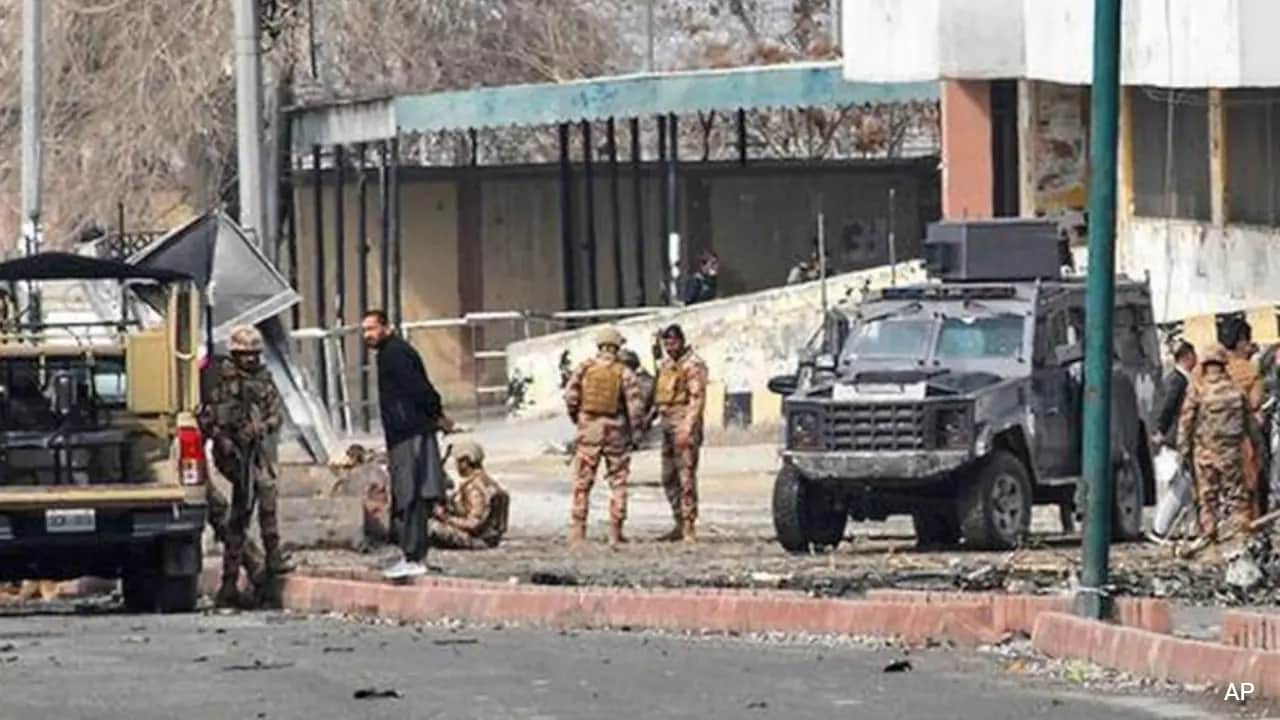
Pakistan just hit a grim milestone. A report by the Pakistan Institute for Conflict and Security Studies (PICSS) reveals the country ranked first on the Global Terrorism Index. Let that sink in. During a single year, the nation recorded 1,045 terror incidents resulting in 1,139 deaths. It's the highest fatality level the country has seen in over a decade.
If you're trying to make sense of why a nuclear-armed state can't secure its own backyard, you aren't alone. Most international observers look at Pakistan and see a confusing web of regional rivalries and shifting alliances. But the reality is much more straightforward. The state is trapped in a security nightmare of its own making, fighting a multi-front internal war that it can't seem to win.
The Blowback From Kabul
For decades, the conventional wisdom in Islamabad was that a friendly regime in Afghanistan would give Pakistan "strategic depth." That theory blew up in spectacular fashion. When the Afghan Taliban retook Kabul, the Pakistani establishment celebrated. Now, they're paying the price.
The victory of the Afghan Taliban injected fresh life into the Tehreek-e-Taliban Pakistan (TTP), often called the Pakistani Taliban. The TTP shares an ideological DNA with the Afghan group but focuses its violence directly on the Pakistani state. Instead of reigning in the TTP, the new rulers in Kabul have given them a safe haven.
Look at Khyber Pakhtunkhwa province. It has become a meat grinder for local law enforcement. Just recently, a suicide car bomb targeted a police station in the province, killing five people. Security convoys are routinely hit by roadside bombs, and police training facilities face coordinated assaults. The state's response has been a mix of panic and desperation, including launching controversial cross-border airstrikes into Afghanistan that only end up killing civilians and driving the two governments closer to open conflict.
The Forgotten War in Balochistan
While the northwest burns with religious militancy, the southwest faces an entirely different beast. Balochistan is Pakistan's largest province by landmass, its poorest by economic metrics, and its most volatile. Here, the enemy isn't fighting for a caliphate; they're fighting to break away from Pakistan entirely.
The Balochistan Liberation Army (BLA) and other separatist groups have shifted from low-level insurgencies to highly lethal, coordinated campaigns. They don't just target Pakistani soldiers anymore. They actively hunt down Chinese engineers and workers involved in the China-Pakistan Economic Corridor (CPEC).
This puts Islamabad in an impossible position. Beijing expects absolute security for its multi-billion-dollar investments, but the Pakistani military can't even protect its own officers. The heavy-handed military crackdown in Balochistan—marked by enforced disappearances and extrajudicial actions—is backfiring completely. It feeds the local narrative of exploitation, making it incredibly easy for insurgent groups to recruit angry, marginalized young men.
Why the Current Strategy is Failing
You can't solve a political and economic crisis with bullets alone. Pakistan's leadership treats militancy like a bad weed, chopping off the top while leaving the roots perfectly intact.
The military routinely announces sweeping operations, boasting about the number of terrorists eliminated. Yet, the violence surges. In the third quarter of last year alone, overall violence jumped by 46 percent.
The fundamental issue is structural hypocrisy. The state has historically tolerated or even nurtured certain militant factions to use as foreign policy tools while trying to crush others. This distinction between "good" and "bad" militants has eroded any institutional credibility. You can't keep snakes in your backyard and expect them only to bite your neighbors. Eventually, they turn on you.
Add a crashing economy, political instability, and a population that has lost faith in the ruling elite, and you get a perfect recipe for state fragility. Local communities feel abandoned by Islamabad, caught between the brutality of the militants and the collateral damage of military operations.
Moving Past the Body Count
If Pakistan wants to break this cycle, the playbook has to change right now. Relying entirely on kinetic military action has proven useless for twenty years.
First, stop the double game entirely. There is no such thing as a manageable militant group. As long as sectarian and extremist outfits are allowed to operate infrastructure inside the country, the domestic security situation will remain volatile.
Second, pivot to real intelligence-led policing rather than sweeping military campaigns. The frontline defense against terror isn't the army; it's the local police force. Currently, provincial police forces are underfunded, poorly equipped, and treated as afterthought targets. Upgrading local law enforcement capabilities and securing the border properly through diplomatic engagement—rather than unilateral airstrikes—is the only way to stabilize regions like Khyber Pakhtunkhwa.
Finally, fix the economic alienation in Balochistan. Treat the local population as stakeholders in Chinese-funded projects rather than obstacles to be cleared by the security apparatus. Until the economic grievances are resolved, the separatist insurgency will continue to bleed the state dry.