You can't patch up ancient history like a pothole on a highway. Yet, that seems to be exactly what local authorities in Punjab did to Taxila, one of South Asia’s most vital archaeological treasures. Now, the United Nations cultural body isn't having it. UNESCO just handed Pakistan a sharp ultimatum. Undo the recent work at these ancient ruins, or watch Taxila get shoved onto the global Danger List. It might even face full delisting.
This isn't a minor disagreement over a few stones. It's a high-stakes clash between lazy modern construction and the strict rules of global heritage preservation. In March 2026, a sharp-eyed visitor noticed something deeply wrong at the sites of Mohra Moradu and Sirkap. They took photographs and sent them straight to Pakistan’s Permanent Delegate to UNESCO in Paris. The whistle stood blown. What those pictures revealed wasn't careful preservation. It looked like a botched home renovation.
The Punjab archaeology department claims they're just stabilising crumbling ruins. UNESCO and federal experts say they're butchering them. When you replace irregular, weathered ancient masonry with polished, uniform modern stone and slather it in cement, you aren't saving the past. You're erasing it.
The Line Between Saving History and Erasing It
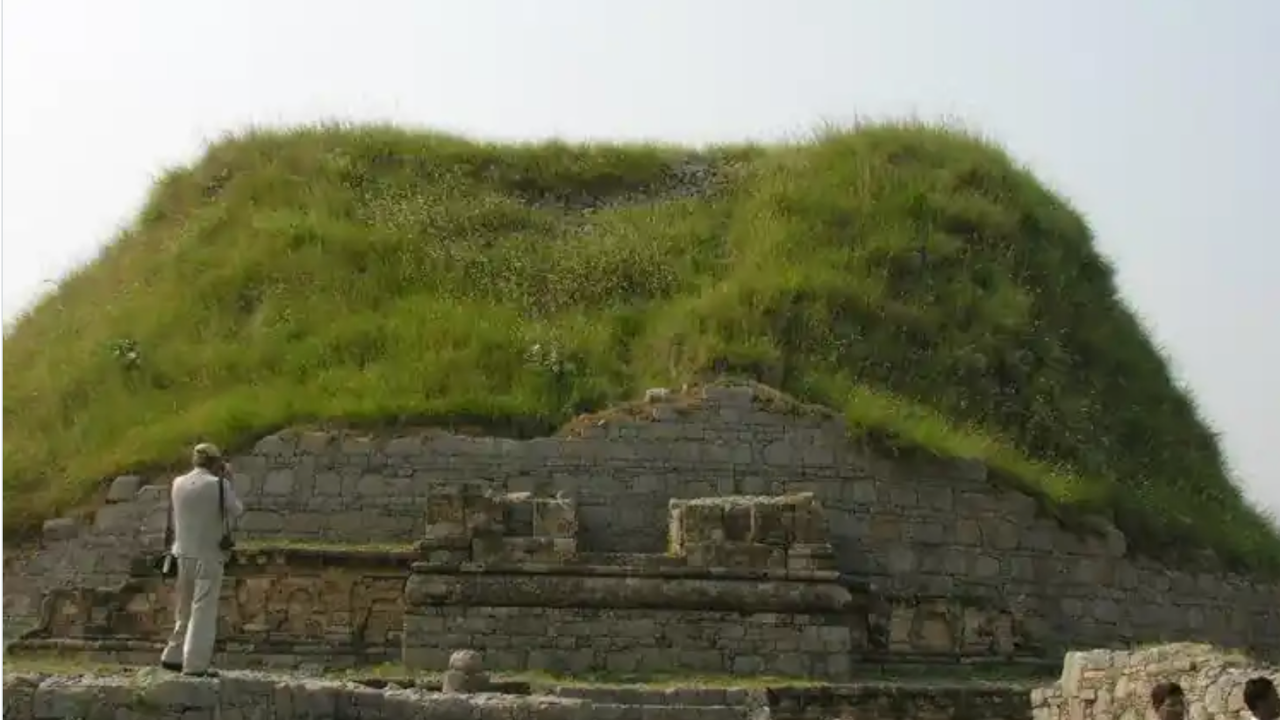
Archaeological preservation has rules. They are strict, unforgiving, and designed to keep ancient sites authentic. The core issue at Taxila centers on two specific locations within the larger serial heritage site, Mohra Moradu and Sirkap. Whistleblower photos showed that original walls weren't just stabilized. They were entirely replaced. In several areas, workers had built the walls significantly higher than their original ruined states.
It doesn't take an expert to see the damage. Ancient stones are irregular, shaped by human hands thousands of years ago, and weathered by centuries of wind and rain. The new materials look uniform. They look polished. They look like they belong in a modern suburban retaining wall, not an ancient monastic complex.
Worse yet is the use of cement. International heritage bodies explicitly ban the use of modern cement on ancient masonry. Cement traps moisture inside the old stones. It accelerates decay instead of preventing it. Traditional structures need to breathe. Paving over ancient earthen courtyards at Mohra Moradu with modern mortar kills the very soul of the site. It turns a timeless archaeological wonder into a sanitized, sterile tourist prop.
The Immense Weight of Taxila History
To understand why this bungle matters, you have to understand what Taxila actually represents. Known in antiquity as Takshashila, this city isn't just a collection of old rocks. It’s a physical crossroads of world history. Its roots stretch back to the Vedic period. It features heavily in epic texts like the Ramayana and the Mahabharata.
Taxila was a global intellectual magnet. It hosted one of the earliest universities in human history, attracting thinkers, scientists, and students from across the known world. When Alexander the Great marched into the subcontinent, Taxila was there. When the Mauryan Empire flourished under Ashoka, Taxila became a sprawling center of Buddhist learning.
This is where Gandharan art was born. That specific, beautiful artistic tradition fused Greek and Hellenistic sculptural styles with Buddhist iconography. You can see the Mediterranean influence in the folds of stone robes and the sharp lines of carved faces. It’s a unique cultural synthesis that happened nowhere else on Earth. When you slap modern, uniform brickwork over these walls, you break that direct physical link to the ancient world. You're destroying evidence of a time when global empires collided and traded ideas right here in Punjab.
The Defense That Doesn't Hold Water
The Punjab archaeology department isn't backing down easily. Director General Malik Zaheer Abbas publicly pushed back against the criticism. He argued that calling the work a reconstruction is completely inaccurate. According to provincial officials, these interventions are merely conservation measures meant to stabilize vulnerable remains and prevent further deterioration. They claim they are following established principles and referencing the historical dossiers left behind by Sir John Marshall, the legendary archaeologist who excavated Taxila a century ago.
The province claims they don't intend to reverse anything because, in their view, there's nothing to reverse. They claim the upgrades are necessary for visitor facilities, especially for visiting Buddhist monks who travel to the region on pilgrimage.
But the federal Department of Archaeology and Museums isn't buying the provincial spin. Federal officials have made it clear that using cement and altering structural heights represents a direct violation of international guidelines. They quickly fired off warnings to the Punjab authorities. For weeks, those warnings met a wall of bureaucratic silence.
This internal finger-pointing reveals a massive flaw in how Pakistan manages its heritage. The federal government answers to global organizations like UNESCO, but the actual execution of site maintenance sits with provincial departments. When a province decides to treat an ancient site like a modern engineering project, the entire country pays the diplomatic and cultural price.
A Dangerous Pattern of Heritage Mismanagement
This isn't the first time Pakistan has played fast and loose with the integrity of Taxila. Back in 1998, another major component of the complex, Bhir Mound, faced severe threats. A local politician approved the construction of a sports stadium right on top of the archaeological area. It took massive public outcry and international pressure to finally scrap that project and save the mound from being bulldozed.
The current crisis stems from a broader philosophical failure. The Taxila Archaeological Heritage Master Plan has often behaved more like an urban planning roadmap than an archaeological mandate. It prioritizes the wrong things. It puts visitor convenience, paved walkways, and neat, clean aesthetics ahead of raw historical truth.
Clean lines look great on a tourism brochure. They look tidy for a VIP photo op. But true archaeology isn't tidy. It’s messy, fragmented, and fragile. The moment you prioritize making a site look pretty for tourists over keeping it genuine, you stop being a caretaker. You become a theme park developer.
What’s Really At Stake for Pakistan
The fallout from this dispute goes way beyond Taxila borders. Pakistan has been trying to get 24 historically significant sites added to the official UNESCO World Heritage list since 1997. The evaluation process is slow and incredibly competitive. A nation can typically push for only one site every two years.
To win these designations, a country needs an spotless reputation as a responsible steward of history. When UNESCO sees a state actively damaging an existing World Heritage site with cheap concrete repairs, that trust vanishes. Why would the international community grant protection to new locations when the old ones are being remodeled like modern shopping centers?
UNESCO pointed out that it has stripped sites of their status before, explicitly reminding Pakistani officials about a World Heritage site in Germany that lost its listing due to improper modern interventions. If Taxila gets demoted to the Danger List, or worse, delisted entirely, it will severely damage Pakistan’s cultural credibility on the world stage. It destroys decades of diplomatic effort to showcase the country's rich pre-Islamic history.
Immediate Steps to Fix the Mess
The time for bureaucratic excuses is over. If authorities want to save Taxila from global embarrassment, they need to take immediate action.
First, the provincial government must halt all ongoing masonry and modification work at Sirkap and Mohra Moradu right now. There shouldn't be another brick laid or another bag of cement mixed until an independent panel reviews the damage.
Second, the federal government needs to step in and take full charge of the oversight. They must commission an independent, transparent audit featuring international conservation experts. This group needs to inspect every single foot of the new walls, document the exact materials used, and publish their findings openly.
Third, where modern cement was applied to ancient stone, specialists must carefully remove it using non-destructive methods. Any wall heights raised without clear, undeniable archaeological justification must be lowered back to their original recorded states.
Finally, Pakistan needs to overhaul its entire heritage management structure. Provincial teams shouldn't have the power to alter World Heritage sites without strict federal sign-off and a formal Heritage Impact Assessment completed beforehand.
Taxila survived the rise and fall of ancient kingdoms, foreign invasions, and hundreds of years of total neglect. It would be a tragedy if it couldn't survive the clumsy, impatient hands of its own modern caretakers.