You can't claim a region is free when you block your own country’s political leaders from crossing its borders. Yet, that is exactly what happened this week at the gates of Pakistan-occupied Jammu and Kashmir (PoJK).
A high-profile opposition delegation—including former Prime Minister Shahid Khaqan Abbasi, veteran politician Mehmood Khan Achakzai, and Mustafa Nawaz Khokhar—was stopped cold by police. Their crime? Trying to visit the unrest-hit territory to show solidarity with locals.
When the politicians demanded to know under what law they were being barred, the police had no real answer. They simply mumbled about "orders from higher authorities." It is a script we have seen play out too many times in Pakistan.
The state wants total control over the narrative in PoJK, and right now, that narrative is spinning wildly out of their hands.
Branding ordinary citizens as terrorists
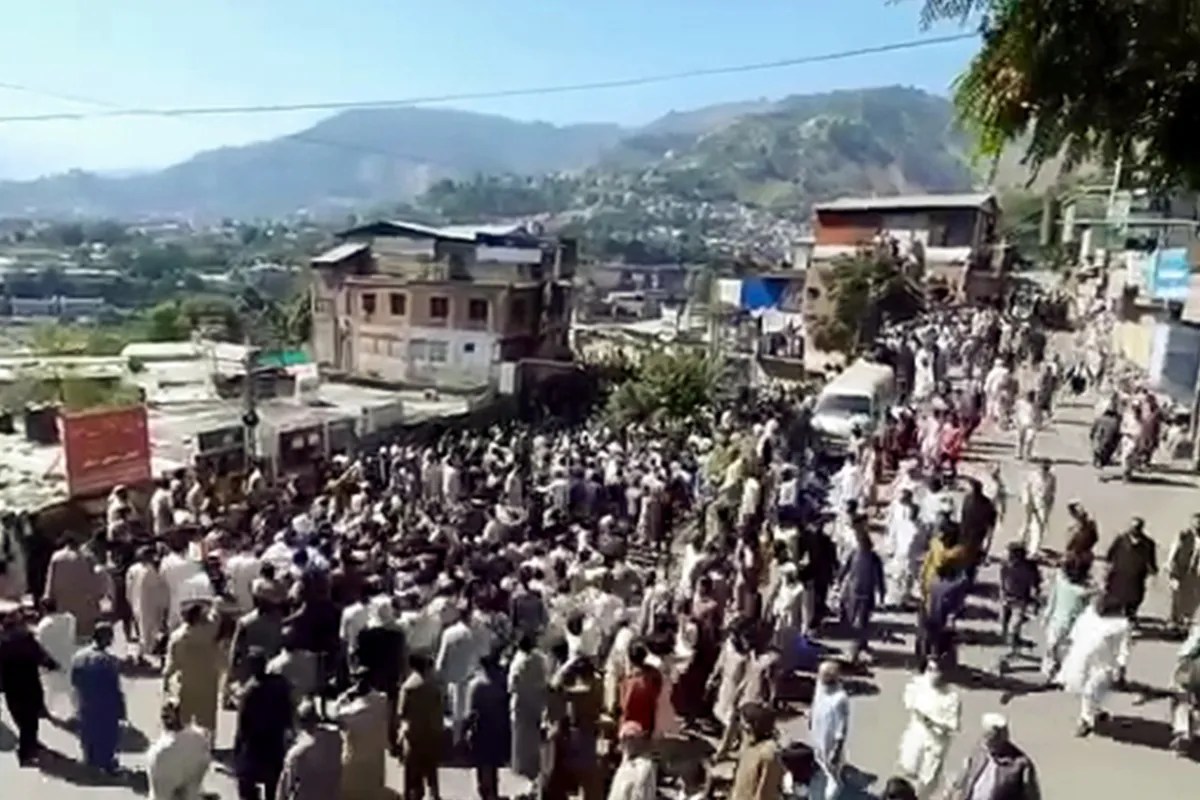
The real crisis in the region isn't driven by foreign actors or armed insurgents. It is driven by everyday economic survival. For weeks, the Jammu and Kashmir Joint Awami Action Committee (JAAC) has led massive, region-wide strikes, shutting down markets and halting traffic. The epicentre of this movement, Rawalakot, has seen families, students, and workers hit the streets in sheer desperation.
What are they asking for? The demands are basic:
- Cheaper electricity tariffs.
- Subsidised wheat flour.
- Fair royalty shares from local hydropower projects.
- The abolition of luxury privileges for ruling elites.
Instead of sitting down for a honest dialogue, Islamabad panicked. The federal government officially designated the JAAC as a proscribed "terrorist" organisation under the Anti-Terrorism Act.
Think about that for a second. When public school teachers, shop owners, and local lawyers march because they can't afford their electric bills, the state labels them terrorists.
By applying this extreme label, the government gave its security forces a blank check to crush the movement. Over a dozen people, including both protesters and police officers, have been killed in the ensuing clashes. The state response has been predictably brutal: mass arbitrary arrests, a complete mobile internet shutdown, and the sealing of the region to keep information from leaking out.
The rigged system behind the July polls
Why is the crack down happening with such ferocity right now? Follow the calendar. Elections for the region's legislative assembly are scheduled for July 27. Defense Minister Khawaja Asif has already accused the protesters of trying to sabotage the democratic process. But if you look closer, the state’s version of democracy in PoJK is a carefully managed illusion.
The core political trigger for the current unrest is a controversial rule regarding 12 assembly seats reserved for refugees who fled Indian-administered Kashmir after 1947 and settled across Pakistan.
The JAAC and local opposition leaders want these seats abolished. Why? Because mainstream Pakistani political parties weaponise them. Since these refugee voters live scattered throughout Pakistan—far outside the geographic boundaries of PoJK—the ruling party in Islamabad can easily manipulate these votes to tilt the balance and manufacture a puppet government in Muzaffarabad.
By blocking opposition leaders like Abbasi and Achakzai from entering the territory, the establishment ensures that local grievances remain isolated. They don't want a national political alliance linking arms with a regional civil rights movement just weeks before an election. It tears away the veneer of normal democratic governance that Pakistan tries to project to the international community.
The deep-rooted hypocrisy of Pakistan's Kashmir stance
For decades, Islamabad has used global forums like the United Nations Human Rights Council (UNHRC) to accuse India of heavy-handedness in Kashmir. But their actions at home reveal an incredible double standard. You cannot wave the flag of self-determination on the international stage while running a police state in the territory you control.
Local journalists who dare to report on the ground reality are being picked up under draconian electronic crime laws, charged with spreading "fake news" simply for streaming video of the protests. Human rights organisations, including Amnesty International, have raised urgent red flags about the state's use of lethal force and unlawful detentions.
When you strip away the official rhetoric, Pakistan's policy toward PoJK has never been about empowering the local population. It has been about exploiting the region’s massive water resources for hydropower while denying the locals basic economic survival, all while enforcing a strict constitutional clause that forbids anyone from holding public office unless they sign an oath supporting the region's accession to Pakistan.
What happens next
The current strategy of internet blackouts and border blockades won't work long-term. Branding a civil rights movement as a terrorist group only deepens local alienation and guarantees that the unrest will explode again.
If the Pakistani establishment wants to prevent total chaos before the July 27 polls, they need to take immediate, transparent steps:
- Lift the terrorist designation on the Joint Awami Action Committee and release the hundreds of political activists and journalists currently held in custody.
- Open immediate, unconditional negotiations regarding the 32-point charter of demands, specifically addressing the wheat subsidies and electricity tariffs that started this mess.
- Allow free political movement by removing internal travel bans on national opposition leaders and international observers, letting the region breathe before the upcoming elections.
- Initiate an independent, judicial inquiry into the recent civilian and police deaths in Rawalakot to hold trigger-happy security officials accountable.
The days of managing PoJK through absolute information control and force are over. The longer Islamabad treats economic desperation as a national security threat, the faster it loses whatever legitimacy it has left in the region.