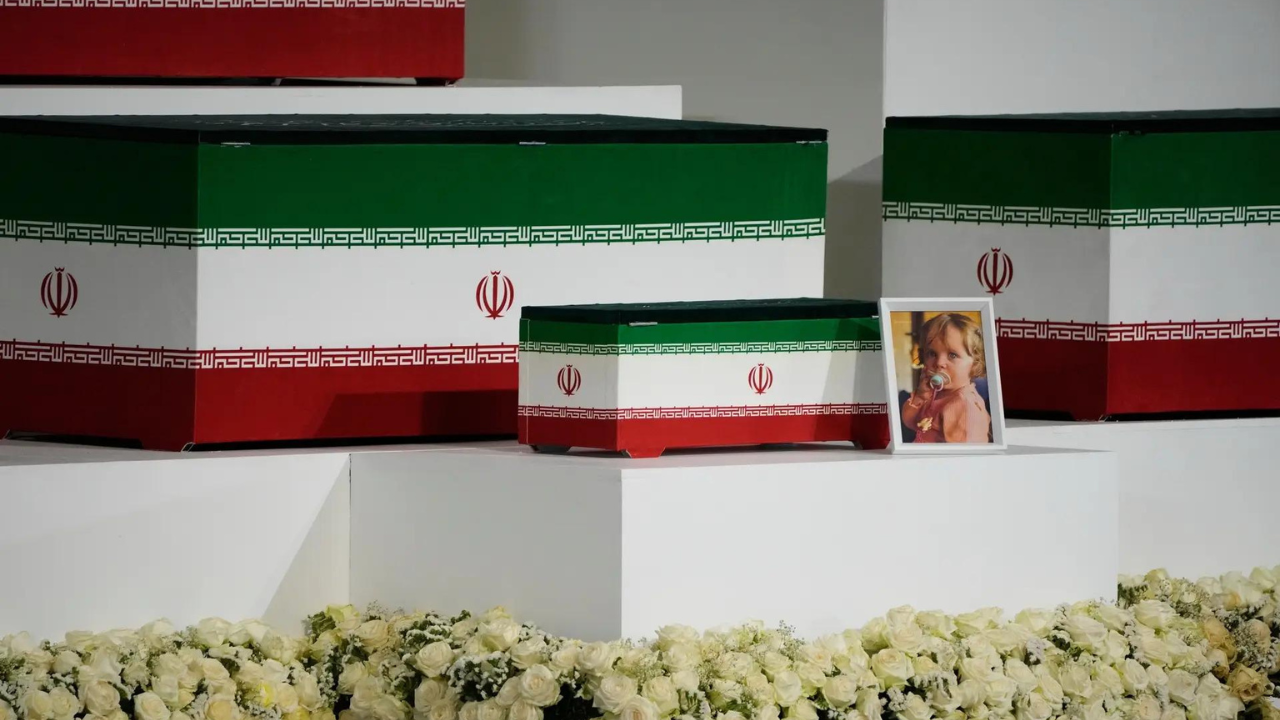
Thousands of people are standing in the pitch black of night outside the Grand Mosalla complex in Tehran. They aren't there for a festival or a political rally. They're waiting in massive overnight lines to pay respects to Khamenei, the late Supreme Leader whose 37-year rule ended abruptly following an intense military conflict. The doors aren't even scheduled to open until 6:00 AM, yet the crowds have been swelling since Friday evening.
You might think this is just standard state-mandated mourning. It isn't. To understand what's actually happening on the ground in Iran right now, you have to look past the official television broadcasts. This massive gathering isn't just about grief. It's a calculated, high-stakes demonstration of survival by a political system that just narrowly avoided total collapse.
The Reality Behind the Overnight Lines to Pay Respects to Khamenei
Mainstream media outlets love to paint these events with a broad brush. They either call it total public devotion or forced compliance. The truth is far more complicated.
For many in those long lines, the motivation is deeply personal and religious. You have people like Mobina Razaaghi, an 18-year-old student who stood crying in central Tehran, demanding justice for the leader's death. For these citizens, the Supreme Leader wasn't just a political chief. He was a religious authority figure.
But there's another side to this story. The government completely shut down the capital's streets and airspace for the duration of the ceremonies. They told all government employees to attend. If you work for a state agency, showing up isn't exactly optional. Many ordinary Iranians are watching the spectacle from their homes with a mix of anxiety and exhaustion. They just survived a devastating war. They don't want more conflict.
The sheer scale of the crowds serves a practical purpose for the ruling elite. The Islamic Republic needs to show the world that it still commands the loyalty of millions. By organizing a massive, multi-city farewell, the state is trying to project absolute stability during a terrifyingly fragile moment of transition.
Why This Funeral Took Four Months to Happen
If you've been following the news, you know that Ayatollah Ali Khamenei died back in February after a devastating airstrike targeted his compound in Tehran. Yet, the funeral is happening now, in July. Why the massive delay?
The answer lies in the sheer chaos of the recent war involving Iran, Israel, and the United States. You can't host millions of mourners in the streets while bombs are actively falling on the capital. The government had to wait for the geopolitical dust to settle. It took a heavily negotiated sixty-day ceasefire, signed in Switzerland, to finally clear the way for these ceremonies.
State officials also deliberately timed the event to follow the holy days of Muharram. They wanted to tie the memory of Khamenei directly to the historical martyrdom rituals of Shia Islam. It's a powerful symbolic move. It blends political mourning with deep-seated religious traditions to maximize the emotional impact on the population.
The Logistics of a Multi-City Farewell
The regime isn't keeping the ceremony confined to Tehran. This is a massive logistical operation designed to span two nations.
- The body lies in state at the Grand Mosalla of Tehran until Monday.
- The procession then moves to the holy city of Qom, the theological heart of Iran.
- Next, the remains travel across the border into Iraq, visiting the major Shia shrine cities of Najaf and Karbala.
- Finally, the burial will take place in Mashhad, at the iconic shrine of Imam Reza.
This cross-border route highlights the deep religious ties between the religious factions of Iran and Iraq. It sends a clear message to regional rivals. Iran's ideological reach remains intact despite the military strikes it suffered.
The Dangerous Political Transition Nobody Wants to Talk About
While the crowds chant in the streets, the real action is happening behind closed doors in Tehran. The passing of Ali Khamenei marks the most significant political shift in Iran since 1989.
His son, Mojtaba Khamenei, has been positioned as the successor. This moves the country away from a purely theological republic toward something resembling a dynastic dictatorship. It's a highly controversial transition that has sparked fierce debate among the ruling clerics themselves.
Security concerns are so extreme right now that reports indicate Mojtaba might skip portions of the public funeral ceremonies entirely. The threat of secondary strikes or internal sabotage is very real. The Revolutionary Guards are on high alert, patrolling every corner of the capital to prevent any disruptions that could shatter the image of total control.
A Massive Shift in Regional Diplomacy
If you want to know how much the regional dynamics have changed, look at the guest list for this funeral. When President Ebrahim Raisi died in a helicopter crash in 2024, the event saw a surprising turnout from neighboring Gulf states. Saudi Arabia, Qatar, and the UAE sent high-level diplomats to Tehran.
Not this time. The Gulf Cooperation Council states have largely skipped these ceremonies.
This total absence tells you everything you need to know about the lasting scars of the recent war. During the height of the conflict, Iranian missiles targeted various areas across the region, forcing the Gulf states to take a much harder stance on collective defense. The diplomatic warmth of 2024 is completely gone. Tehran finds itself increasingly isolated, relying almost entirely on a few specific international allies and non-state partners to maintain its global standing.
What Happens Next for the Region
The overnight lines will eventually disappear. The crowds will go home. When the week of mourning ends, the new leadership in Tehran faces a brutal reality.
The economy is struggling under the weight of severe sanctions and war damage. The public is deeply divided between hardcore loyalists and a quiet majority that desperately wants reform. The current ceasefire is incredibly fragile, and the new administration will have to navigate a tense relationship with both Washington and regional adversaries.
Watch the behavior of the Revolutionary Guards over the next few weeks. Their ability to maintain domestic order without triggering widespread civil unrest will determine whether the new government survives the year. Pay close attention to how the new Supreme Leader handles the ongoing diplomatic talks. The choices made in Tehran over the coming days will affect energy markets, international shipping lanes, and the stability of the entire Middle East.