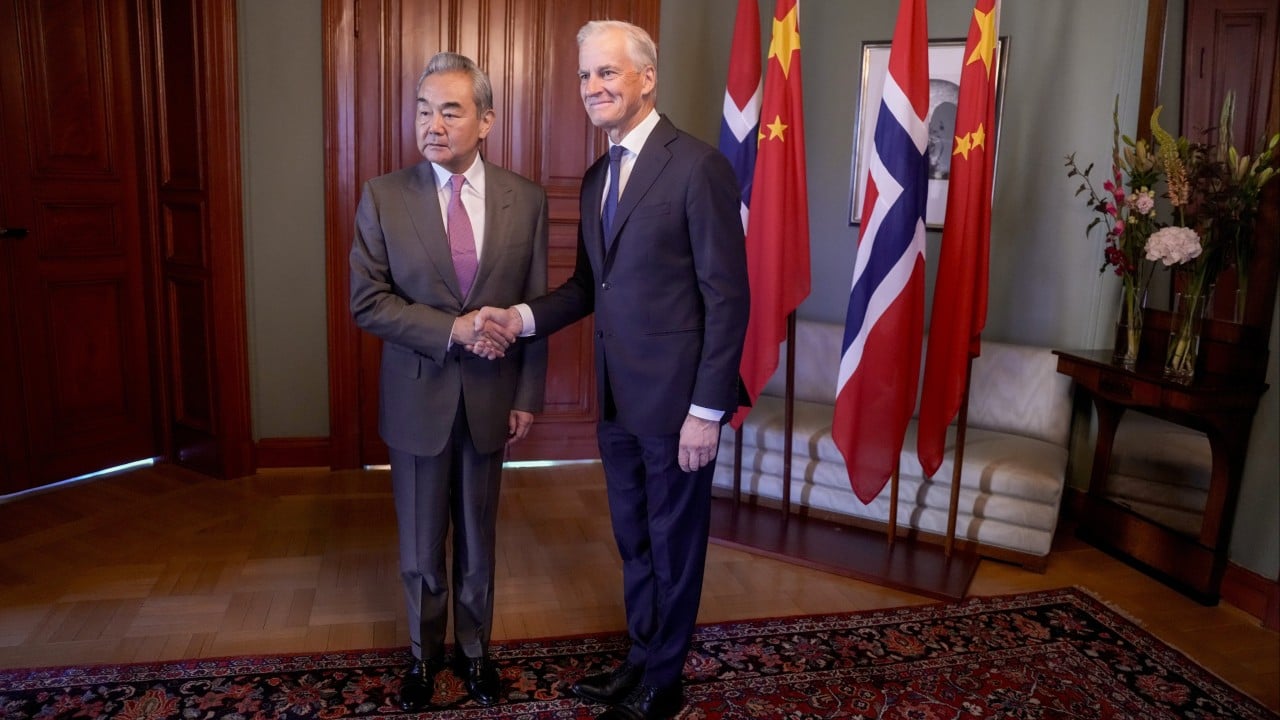
European leaders are finally saying out loud what everyone has known for years. If you want Vladimir Putin to sit down and talk peace, you don't look to Washington, London, or Brussels. You look to Beijing.
That's the clear message coming out of Oslo. Norwegian Prime Minister Jonas Gahr Stoere just threw down a diplomatic gauntlet during a direct meeting with Chinese Foreign Minister Wang Yi. He didn't use soft, coded language. He stated plainly that China has the most direct access to the Russian leadership, and it's time for Beijing to use it.
This isn't just another polite diplomatic photo op. It's a calculated, desperate push by a key European nation to force China into a corner where it has to choose between its economic future with Europe and its cozy partnership with a warring Russia. The timing isn't accidental either. With a major NATO summit kicking off in Turkey and Donald Trump bragging that a peace deal is closer than anyone thinks, Europe is trying to front-run the narrative.
Here is what's really happening behind closed doors and why this sudden pressure on China matters for the future of the war.
The Oslo meeting that flips the script on Ukraine peace talks
When Wang Yi arrived in Oslo after touring Denmark, Sweden, and Finland, he likely expected the usual talking points. He wanted to discuss trade, green technology, and climate cooperation. Norway had other ideas. Stoere and his Foreign Minister, Espen Barth Eide, turned the entire meeting into a heavy session on Ukraine.
Stoere didn't hold back. He told reporters right after the meeting that China is the only country with the kind of leverage that can actually move the needle in Moscow. The logic is simple. Russia's economy relies heavily on Chinese buyers for its oil and gas. Without Beijing's financial lifeline, the Russian war machine faces immediate gridlock.
Norway is using a clever carrot-and-stick approach here. Stoere explicitly warned Wang Yi that Europe-China relations have hit a hard ceiling. He told him that as long as this war drags on and Beijing remains a close partner to Russia, deep economic and technological cooperation between China and Europe is basically impossible.
It's a smart play. Europe is China's biggest export market. Beijing desperately needs European markets to absorb its manufacturing overcapacity, especially in electric vehicles and green tech. By tying future economic ties directly to Beijing's willingness to pressure Putin, Norway is trying to make China's stance on Russia too expensive to maintain.
Why the West is turning to Beijing instead of ignoring it
For the first two years of the conflict, the Western strategy was to isolate China and warn it against sending lethal aid to Russia. That approach failed to stop the conflict. Now, we are seeing a massive shift in strategy. European diplomats are realizing that isolating Beijing doesn't work, but exploiting its unique position might.
Eide mentioned that his dialogue with Wang Yi was constructive and promising. When reporters asked if China actually agreed to bring Russia to the table, Eide dropped a fascinating detail. He said he couldn't speak for Beijing, but there were definite hints in what they said during the private meetings.
What are those hints? China knows it can't play the neutral observer forever while its primary economic partners in Europe grow increasingly hostile. Beijing wants to look like a global peacemaker. It already brokered a surprise deal between Saudi Arabia and Iran a while back. It wants that same diplomatic prestige on the European stage, but only if it can do so without looking like it's bending to Western wills.
Norway is giving China an easy off-ramp. By framing Beijing as the indispensable superpower that can save the day, European leaders are appealing to China's desire for global status. They're telling Xi Jinping that he can be the hero who ended the biggest war in Europe since 1945.
The massive concession Ukraine is quietly offering right now
The biggest bombshell from the Oslo talks wasn't about China at all. It was about what Norway said regarding the starting point for peace negotiations. Stoere revealed that Norwegian officials believe talks should begin without any preconditions, starting with an immediate ceasefire based on the current front lines.
Think about what that actually means.
A ceasefire on the current front lines means Russian troops stay exactly where they are right now. They keep control of significant portions of eastern and southern Ukraine. Stoere admitted openly that this is a major concession from Ukraine's side. It means pausing the fight while Russian boots are firmly planted inside Ukrainian territory.
This is a massive departure from the official rhetoric we've heard from Kyiv and Washington for years, which always insisted on the total withdrawal of Russian forces before any real talks could begin. It shows that behind the scenes, the appetite for a prolonged war of attrition is dying out. Europe is exhausted. Ukraine is facing severe manpower shortages. The push for a realistic, frozen conflict scenario is becoming the dominant strategy, even if it means Ukraine losing temporary control of its land.
How Donald Trump and the upcoming NATO summit change the math
You can't look at Norway's sudden diplomatic push without looking at what's happening across the Atlantic. Donald Trump just announced that he held an 85-minute phone call with Vladimir Putin. He followed that up by claiming a resolution to the war is getting closer than people realize.
Trump is heading to Turkey for a critical NATO summit, where he is scheduled to meet Ukrainian President Volodymyr Zelenskyy. The rumor mill in diplomatic circles is spinning fast. Trump wants a quick win. He has repeatedly claimed he could end the war in 24 hours, and his plan likely involves forcing both sides to freeze the conflict along current lines by threatening to cut off US aid to Ukraine if they don't comply.
Norway knows this. European leaders are terrified that Trump will cut a deal with Putin over their heads, leaving Europe to deal with a emboldened Russia and a broken Ukraine. By pressuring China to step in right now, Norway is trying to create a multilateral peace process. They want China and Europe to have a seat at the table so Trump doesn't get to dictate the entire post-war security arrangement of Europe by himself.
It's a high-stakes chess game. If Europe and China can agree on a framework for a ceasefire, it dilutes Trump's ability to act as the sole arbiter of the conflict. It also ensures that any peace deal includes guarantees that protect European economic interests.
Why China remains silent on Russia while talking about green tech
If you look at the official Chinese state media reports regarding Wang Yi's trip to Norway, you won't find a single mention of Russia or Ukraine. The Xinhua news agency published a readout that focused entirely on trade, sustainable development, and green technology. Wang Yi talked about building a more just and reasonable governance system with Norway.
This silence is classic Beijing diplomacy.
China hates being publicly dictated to by Western nations. When a European prime minister stands up and says we expect and urge China to act, Beijing's instinctive reaction is to stay quiet to avoid looking like it's taking orders. They want the world to think their diplomatic moves are entirely their own idea.
But don't let the public silence fool you. The fact that Wang Yi spent the largest chunk of his time in Oslo discussing Ukraine proves that Beijing is paying close attention. They're running the numbers. They know that if Trump returns to the world stage with a sudden peace deal, China could be left out in the cold, losing its leverage over both Russia and Europe.
Xi Jinping wants to keep Russia dependent on China, but he doesn't want Russia to collapse or win so decisively that it destabilizes global trade entirely. A frozen conflict where China acts as the ultimate guarantor of peace is actually the best-case scenario for Beijing. It keeps Moscow dependent on Chinese cash while repairing China's broken relations with the European Union.
What actually happens next on the ground
The diplomatic maneuvering in Oslo is a clear sign that the war is entering its endgame phase. The rhetoric of total victory is being replaced by the hard reality of partition and ceasefires.
If you want to understand where this is heading, keep your eyes on two specific things over the next few weeks.
First, watch the readouts from the NATO summit in Turkey. Look for how Zelenskyy responds to the pressure regarding a ceasefire on current front lines. If he starts softening his stance on territorial integrity in exchange for ironclad security guarantees, you know the Norwegian plan is gaining traction.
Second, watch China's diplomatic travel schedule. If Beijing announces a special envoy trip to Moscow or hints at a new peace blueprint that aligns with a frontline ceasefire, it means Norway's warnings worked. China will have decided that saving its economic relationship with Europe is worth putting the squeeze on Vladimir Putin.
The era of open-ended Western funding for a endless war is ending. The future of Ukraine is being decided right now in quiet meetings from Oslo to Ankara, and China holds the deck of cards.