The mystery of who blew up the Nord Stream pipelines was never going to stay buried at the bottom of the Baltic Sea. For nearly four years, intelligence agencies whispered, politicians dodged questions, and armchair detectives pointed fingers at everyone from Washington to Moscow. Now, the German federal prosecutor has officially laid the blame on a former Ukrainian military officer.
Serhii K. faces formal charges. The indictment, handed down in July 2026, hits like a diplomatic sledgehammer. It names him as a co-perpetrator of a war crime, an attack on civilian infrastructure, and the coordinator behind the most audacious acts of maritime sabotage in modern history.
This isn't just a criminal trial. It is a geopolitical nightmare for Berlin and Kyiv.
If you think this is a simple case of tracking down a rogue saboteur, you are missing the bigger picture. The details coming out of Germany reveal a meticulously planned operation that sounds more like a cold war thriller than real-world military logistics. It forces us to confront an uncomfortable reality. A nation fighting for its survival may have crossed a red line that its closest European allies never expected.
Inside the Logistics of the Baltic Sea Bombing
Federal prosecutors in Karlsruhe aren't guessing. They have assembled a timeline that tracks the movement of a small team using a rented 50-foot sailing yacht named the Andromeda.
In September 2022, just months after Russia launched its full-scale invasion of Ukraine, a group of individuals entered Germany using forged Ukrainian passports. They rented the Andromeda from a German charter company in the port of Rostock. The crew wasn't a massive navy contingent. It was a lean, highly specialized cell consisting of a skipper, an explosives expert, four deep-sea divers, and an on-board coordinator.
Prosecutors name Serhii K. as that coordinator.
He didn't dive into the freezing waters himself. He managed the team. The group sailed out into international waters near the Danish island of Bornholm, carrying large quantities of military-grade explosives. The divers went down into the Baltic Sea, attached the explosive devices to the pipelines, and set time fuses.
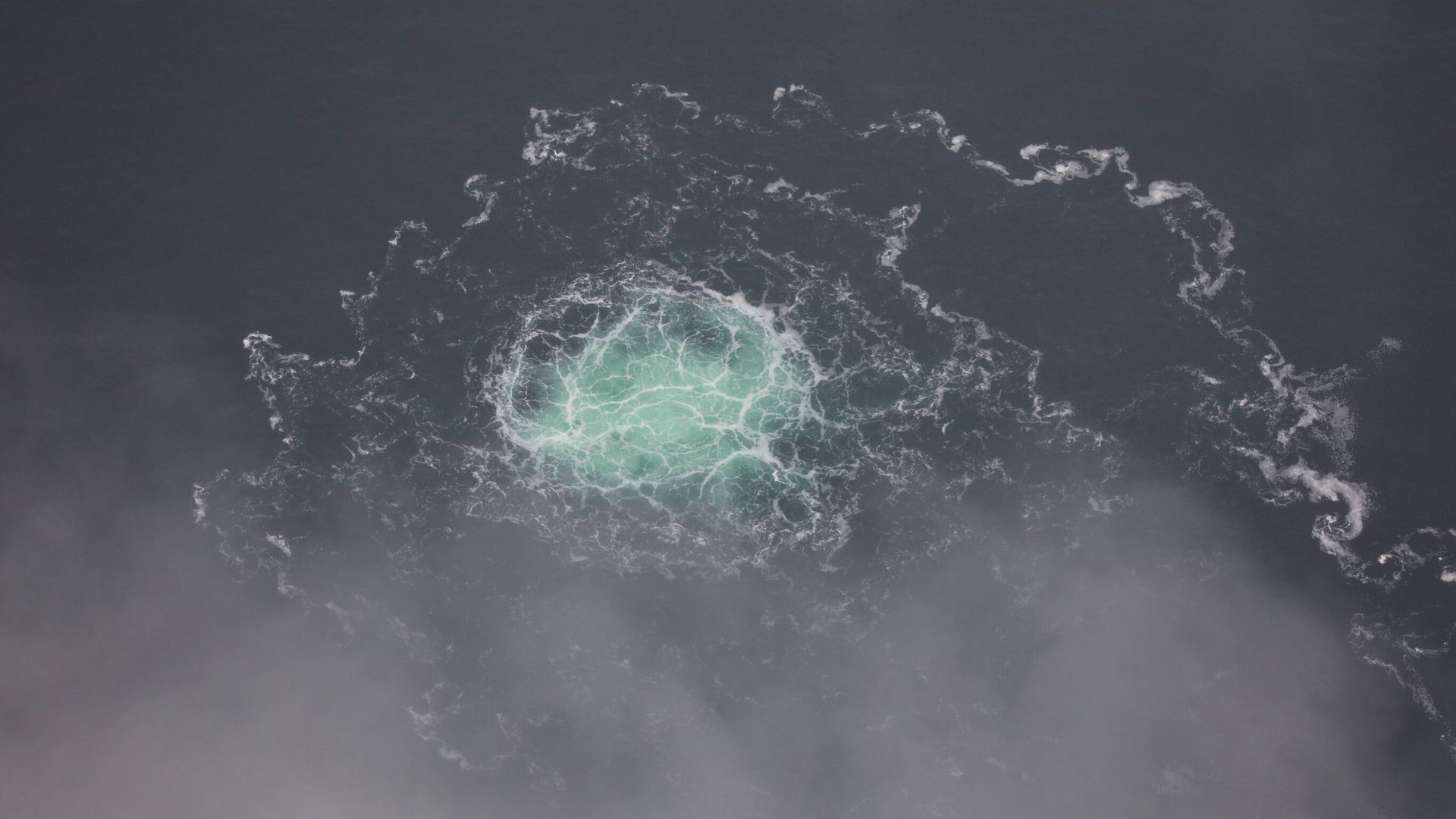
On September 26, 2022, the charges went off. Three of the four pipelines comprising Nord Stream 1 and Nord Stream 2 were ruptured. Huge plumes of methane gas boiled up to the surface of the ocean.
The audacity of using a pleasure yacht to pull off a strategic bombing of that scale is staggering. Many naval experts originally argued that a operation of this magnitude required a state-sponsored submarine or specialized military vessels. The German investigation shows that a handful of determined individuals with commercial diving gear and a rented boat managed to cripple Europe's energy architecture.
The Legal Trap of the War Crime Charge
The specific legal framing chosen by German prosecutors matters immensely. They didn't just charge Serhii K. with property damage or causing an explosion. They charged him with a war crime against civilian objects.
Under international humanitarian law, infrastructure that provides essential public services to civilians enjoys protected status. At the time of the attack, Russia had already throttled gas deliveries through Nord Stream 1, using technical excuses as a political weapon against Europe. Nord Stream 2 hadn't even entered commercial service because Germany halted its approval right before the invasion.
Even if the gas wasn't flowing, the pipelines were legally classified as civilian commercial infrastructure.
Germany claims jurisdiction because these lines terminate in Lubmin, a coastal town in the state of Mecklenburg-Vorpommern. The physical destruction directly impacted Germany’s internal safety and long-term energy security. By classifying the bombing as a war crime, German authorities are sending a clear signal. Sabotage of international energy grids during an active war cannot be brushed aside as justifiable collateral damage.
The defense team is already gearing up for a public fight. Nicola Canestrini, the lawyer who represented Serhii K. during his initial arrest in Italy, stated that they don't fear the indictment. They want the facts aired out in public. The suspect maintains his complete innocence, denying any role in the bombings.
The Silent Threat to the Berlin and Kyiv Alliance
The political fallout from this indictment could not come at a worse time for Ukrainian President Volodymyr Zelenskyy. Germany stands as the second-largest donor of military aid to Ukraine, trailing only the United States. Chancellor Olaf Scholz's government has sent tanks, air defense systems, and billions of euros to help Kyiv defend its territory.
Now, German prosecutors explicitly allege that Serhii K. acted on behalf of Ukrainian state entities.
That specific phrase is a diplomatic landmine. If a court confirms that the sabotage crew operated under orders from Kyiv, or even with the quiet nod of Ukrainian intelligence services, it validates the worst fears of the German public. It means a nation receiving billions in German aid actively destroyed German-owned energy assets.
Zelenskyy has moved quickly to handle the blowback. Speaking at a press conference, he emphasized that Kyiv has not received full official details of the indictment. He stated it is too early to speak on the matter until the relevant authorities communicate directly. The official line from Ukraine has always been a flat denial of state involvement.
Yet, European intelligence agencies have doubted that denial for years. Reports emerged as early as 2023 suggesting that Western intelligence had warned Kyiv against attacking the pipelines after learning of a plot. The arrest of Serhii K. in Italy last August, followed by his extradition to Germany in November, shows that German investigators chose to follow the evidence wherever it led, regardless of the political cost.
What Happens Next in the Hamburg Regional Court
The case is headed to a regional court in Hamburg, where the trial will eventually play out in the public eye. This won't be a quick process. The legal machinery of Germany moves slowly, methodically, and with extreme transparency.
The prosecution has to prove a few critical things to secure a conviction.
- They must definitively tie Serhii K. to the forged documents used to rent the Andromeda yacht.
- They need to present forensic evidence linking traces of explosives found on the boat to the residue left at the bottom of the Baltic Sea.
- They must establish the command structure to justify the claim that he operated on behalf of state entities.
We should also watch for other suspects. Serhii K. is the first person to face formal charges in custody, but he isn't the only name on the radar. German investigators previously issued a European arrest warrant for a Ukrainian diving instructor known as Volodymyr Z. That suspect managed to slip out of Poland and return to Ukraine in mid-2024 before authorities could grab him. Two other Ukrainian nationals, a married couple running a diving school, are also under intense scrutiny.
The Real Cost of the Nord Stream Blasts
The destruction of the pipelines permanently altered the European economic system. It forced an immediate, painful decoupling from cheap Russian natural gas. Germany had to spend hundreds of billions of euros to build LNG terminals, secure alternative supply lines from Norway, and subsidize soaring utility bills for its citizens.
The immediate crisis has stabilized, but the structural damage to Germany's industrial core remains. High energy costs continue to weigh down the country's manufacturing sector.
For the average German voter, the trial will serve as a stark reminder of that economic pain. If the evidence shows that Ukrainian actors caused that hardship, it will add immense fuel to domestic political factions demanding a reduction in aid to Kyiv. The far-right and far-left parties in Germany, which already oppose weapons shipments to Ukraine, will use every single day of this trial to score political points.
The German government finds itself trapped between two competing priorities. It must uphold the rule of law and investigate a massive attack on its infrastructure, while simultaneously trying to prevent that investigation from destroying the coalition supporting Ukraine's defense against Russia.
Your Steps to Track This Story As It Unfolds
This trial will stretch across months, if not years. To understand the real-world impact without getting lost in the propaganda from various state actors, focus on these specific markers.
- Monitor the evidentiary hearings in Hamburg. Look closely at the forensic links the prosecution introduces regarding the Andromeda yacht. The strength of that data determines if this case holds up.
- Watch the reactions of German political parties. Pay attention to how funding bills for Ukrainian aid move through the Bundestag during the trial. Any shift in rhetoric from the mainstream center-left or center-right parties indicates deep underlying trouble for the alliance.
- Track the status of the remaining suspects. Watch whether Ukraine cooperates with any future extradition requests or information sharing regarding Volodymyr Z. and the other named divers. Continued refusal to assist will strain diplomatic ties to the breaking point.
The coming months will prove that the explosions in the Baltic Sea didn't just tear through steel and concrete. They fractured the delicate trust between allies fighting a shared enemy.