After more than five years of agonizing questions, public protests, and intense legal battles, the case of Noah Donohoe has reached its critical turning point. The Noah Donohoe inquest jury is finally being sent out to deliberate in Belfast. This isn't just another standard legal procedure. It represents a massive moment for justice in Northern Ireland, testing the limits of how police forces are held to account when missing person searches go wrong.
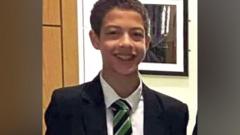
Everyone in Belfast knows the basic outline of the tragedy. A bright, talented 14-year-old boy leaves his home on a Sunday afternoon in June 2020, planning to meet friends. He never comes back. Six days later, his body is found deep inside a complex storm drain network. The community has spent years demanding answers, split between official police findings and countless theories. Now, eight men and two women must cut through the noise to answer a highly specific legal questionnaire. Recently making waves in related news: Why The New India Campaign For Unsc Non-permanent Seat Is A High Stakes Diplomatic Battle.
The core question isn't just about how Noah died. It's about whether the Police Service of Northern Ireland (PSNI) could have saved him if they acted differently.
Why the Noah Donohoe Inquest Jury Faces a Massive Timeline Puzzle
Mr Justice Rooney has spent days summing up 21 weeks of dense evidence. He made one rule completely clear to the ten jurors. They can only blame police errors if those mistakes happened before Noah actually died. Further information on this are detailed by The Guardian.
This makes the exact timing of Noah's death the most important factor in the whole case.
Medical experts who gave evidence throughout the six-month inquest provided conflicting timelines. Some argued that Noah likely drowned on Sunday, June 21, 2020, the very same day he went missing. If that's true, then any subsequent police blunders during the week wouldn't have changed the tragic outcome.
Other experts refused to rule out a longer survival window. They suggested Noah might have survived in that dark underground tunnel system until Monday or even Tuesday. If the jury decides he was alive into the start of the week, the entire focus shifts directly onto the police search timeline. Every hour lost due to a missed piece of CCTV or a delayed search deployment suddenly looks like a critical failure.
The Ten Failings and the Reality of Basic Policing Gaps
During the long-running hearings at Belfast Coroner's Court, the legal team representing Noah’s mother, Fiona Donohoe, laid out a stark list of ten distinct police failings. They didn't hold back. They pointed to a breakdown in standard operational procedures that left a grieving family searching for answers on their own.
A major point of contention centered on missed CCTV footage. An officer admitted on the stand that they completely missed vital footage showing part of Noah's journey on that fateful Sunday. The family's barrister openly called this a failure of basic police work.
Think about how search operations work in the real world. You rely on immediate, accurate data to map out where a missing person went. When a police force misses a camera angle showing a boy turning down a specific road, the entire search grid gets thrown off. Teams look in the wrong quadrant. Valuable tracking dogs get deployed to areas the missing person never even visited.
The jury has to look at these logged timeline gaps. They must decide if these actions, or lack of actions, contributed more than minimally to the final outcome. The coroner clarified that an error isn't just doing something wrong. It includes failing to do something that obviously should have been done.
Understanding the Journey into the Northwood Road Culvert
To understand what the jury is looking at, you have to look at the bizarre and tragic path Noah took. He didn't stay on his planned route to the Cavehill area. Instead, CCTV tracked him cycling along York Road before ending up on Northwood Road.
Witnesses and camera footage painted a deeply distressing picture of the teenager cycling naked on that road. Some residents reported hearing strange noises and screams that night. The jury has to piece together these fragments to figure out exactly how Noah entered the storm drain via a culvert hidden behind a residential property.
The physical environment of that storm drain system plays a huge part in the legal assessment. It was dark, restrictive, and completely hazardous. The fact that Noah's clothes were found away from his body has fueled half a decade of intense public speculation. Yet, the post-mortem examination concluded the actual cause of death was drowning.
The jury has to separate emotional speculation from the hard forensic facts presented by the medical examiners. They must stick strictly to what was heard inside that courtroom, not what has been shared on social media forums for years.
The Relationship Between the PSNI and the Donohoe Family
You can't talk about this case without talking about the trust gap. Recently, the senior police officer leading the investigation offered an explicit apology in court for a total breakdown in relations between the PSNI and Noah's family.
That admission speaks volumes. When a child goes missing, the family needs to feel like the police are an ally. Instead, delays in sharing information, disputes over withholding certain documents, and initial assumptions about the case created a wall of suspicion.
Fiona Donohoe has sat through every single day of this 21-week inquest. She has led a massive public campaign that kept Noah's name on billboards and front pages across Northern Ireland. Her legal team fought hard to ensure the questionnaire handed to the jury included specific, narrative prompts about police actions rather than simple yes or no boxes. This ensures the final record won't just be a statistical footnote. It will be a detailed account of how Belfast authorities handle a crisis involving a vulnerable child.
What Happens Next Inside the Deliberation Room
The jury starts their work on Tuesday morning. They have a massive stack of evidence to sort through. This includes testimonies from 76 live witnesses, written statements from 42 other individuals, police logs, maps, and expert hydraulic and medical reports.
They are not allowed to rush. The coroner told them to take all the time they need to achieve a unanimous verdict.
If you are following this case and looking for real ways to understand how these findings impact public safety, you need to watch how the jury handles the questionnaire. The specific answers they provide will serve as a blueprint for future police missing person protocols.
Pay close attention to the narrative responses they write regarding the culvert security and the speed of the initial PSNI response. If the jury finds that police actions did contribute to the death, it will trigger an immediate, mandatory overhaul of how the PSNI coordinates urban searches. It will also change how tech and CCTV assets are audited in the first critical twenty-four hours of a disappearance. Watch the court announcements closely over the coming days for the formal reading of the jury's verdict.