The federal government told you that one pill can kill. They plastered it on billboards. They drilled it into public awareness campaigns. Yet, while small-town families buried their children, federal drug enforcement agents spent two years watching millions of deadly fentanyl pills flood directly into New Mexico neighborhoods without putting a hand out to stop them.
This isn't a conspiracy theory. It's the reality laid bare by a massive whistleblower disclosure that has sparked a furious civil war between New Mexico leadership and federal law enforcement.
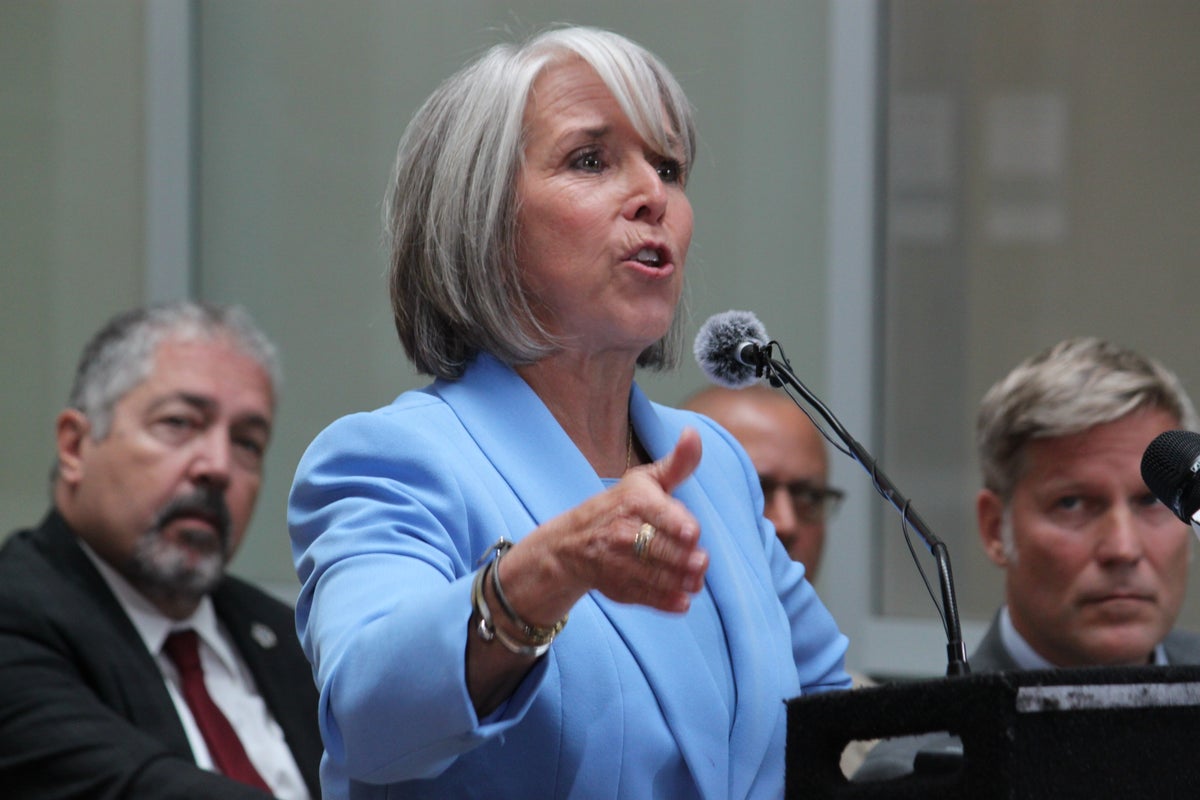
When federal agencies treat American communities like lab rats for reckless enforcement experiments, local governments have to push back. New Mexico Governor Michelle Lujan Grisham did just that by demanding a state criminal investigation into the federal agents involved and threatening to sue the federal government for billions of dollars in damages.
Inside the Shocking New Mexico DEA Fentanyl Scandal
The details of what happened between 2023 and early 2026 read like a bad crime drama, but the real-world consequences are devastating. According to an investigation initially sparked by DEA whistleblower David Howell, federal agents repeatedly chose to track major shipments of synthetic opioids rather than seize them immediately.
The rationale from the feds was a familiar one. They wanted the bigger fish. They wanted to follow the supply lines all the way to cartel kingpins.
In practice, that meant agents stood by and watched shipments move through local communities. In one documented instance, agents watched 74,000 fentanyl pills enter a mobile home park in Albuquerque. They monitored the drop, tallied the numbers, and let the drugs hit the pavement.
Even worse, the practice didn't stop when Howell first flagged it to his superiors in 2023. He was sidelined for speaking out, but the hands-off operations kept rolling across multiple presidential administrations. The largest single shipment documented in the scandal occurred two months into Donald Trump's second term, when the DEA chose not to intercept a staggering haul of 1.8 million fentanyl pills.
Think about that number. Millions of lethal doses were permitted to scatter into cities and rural towns because federal bureaucrats decided a hypothetical future arrest mattered more than the immediate safety of the public.
A Broken Enforcement Strategy That Cost Real Lives
Drug enforcement agencies have long argued that you can't stop every single transaction. They claim that targeting high-level leadership is the only way to make a permanent dent in international cartels.
Former U.S. Attorney Alex Uballez defended the strategy by pointing to limited resource pools and the traditional doctrine that dismantling an entire trafficking network has a wider impact than picking off low-level mules.
That theory falls apart when you look at the actual data. While the DEA was busy playing chess with cartel networks, New Mexico became a graveyard. Nationwide overdose deaths dropped by roughly 14% last year. In New Mexico, they spiked by 21%.
If letting millions of pills flood into the state was supposed to buy long-term security, the returns never showed up. New Mexico House Speaker Javier Martínez noted the obvious failure by pointing out that the feds didn't catch the big fish, and they let the little fish swim away with lethal merchandise.
The strategy draws eerie, uncomfortable parallels to past federal law enforcement disasters. It mirrors the notorious "Fast and Furious" gun-walking operation, where federal agents allowed thousands of firearms to flow into Mexico to track cartels, only for those weapons to show up at domestic murder scenes. It also mimics the heavy-handed tactics of the 1980s crack epidemic, which hollowed out urban neighborhoods while federal agencies focused on grand-scale conspiracies instead of public protection.
Local Communities Left to Clean Up the Mess
The sheer hypocrisy of the situation is what cuts deepest for local officials. The DEA has spent years pushing its "One Pill Can Kill" initiative, reminding the public that just two milligrams of fentanyl can end a life. Local law enforcement, health departments, and grieving parents took that message to heart, working tirelessly to distribute Narcan and fund addiction recovery.
While locals played by the rules, the federal government stacked the deck against them.
Albuquerque Mayor Tim Keller called the operation an undisciplined, uninformed experiment that used his citizens as collateral damage. Fentanyl drives the majority of the property crime, homelessness, and emergency medical strain in his city. Local resources were stretched to the absolute breaking point trying to fight a tide that federal authorities were actively letting through the floodgates.
The pain is even more concentrated in rural areas like Española, a northern New Mexico town hit hard by generational poverty and economic stagnation. Governor Lujan Grisham had to deploy the National Guard to the area last year just to help local police handle the overwhelming volume of opioid distribution and fatal overdoses.
The human cost isn't a statistic. It looks like the 15-month-old girl in Española who died last year after swallowing fentanyl left behind in her home. When federal agents choose to let 1.8 million pills pass by without an intervention, they're ensuring that stories like that continue to happen. New Mexican lives shouldn't be dismissed as an acceptable cost of doing business for federal agencies.
The Fight for Accountability and Restitution
New Mexico leaders aren't content with just issuing angry press releases. They are shifting the battleground to the legal arena.
First, the governor formally requested that New Mexico Attorney General Raúl Torrez launch a state-level criminal investigation into the federal officials involved. It's an extraordinary, aggressive move that challenges the traditional shield of federal immunity. The investigation aims to determine whether individual DEA agents or supervisors violated state laws by knowingly exposing residents to a substance the White House previously flagged as a weapon of mass destruction.
Second, the state is preparing to hit the federal government where it hurts most: the budget. New Mexico has poured more than $844 million since 2022 into rebuilding its shattered behavioral health and addiction recovery systems. State officials are now building a case to demand hundreds of millions, potentially up to billions of dollars, in civil damages and restitution from Washington.
The argument is simple. If federal negligence directly caused an inflation of the local drug supply, federal taxpayers should foot the bill for the clean-up, rehab clinics, and emergency services required to fix it.
The DEA has attempted to play damage control. Agency spokespeople claim that descriptions of the events are fundamentally inaccurate and that their operational choices were lawful and aligned with Justice Department guidance.
The Inspector General's office is stepping in to review the situation, but for residents who have spent the last three years watching their communities deteriorate, an internal federal audit feels like too little, too late.
Real Next Steps for Reforming Drug Enforcement
Fixing a structural failure of this size requires more than a standard bureaucratic shuffle. If you want to prevent federal agencies from treating local communities as low-priority testing grounds, several concrete changes must happen immediately.
- Mandatory Seizure Thresholds: Federal law enforcement guidelines must be rewritten to mandate the immediate seizure of synthetic opioids above a specific quantity when public exposure is imminent. The risk profile of fentanyl is too high to allow for traditional tracking methods.
- Local Law Enforcement Notification: Federal agencies should be legally required to notify state and local authorities whenever a controlled delivery of narcotics is being monitored within their jurisdiction. Local police shouldn't be left completely in the dark about major drug movements in their own backyards.
- Congressional Oversight Adjustments: The Senate Judiciary Committee must step up its investigation into whistleblower complaints like the ones brought by David Howell. Sidelining employees who flag public safety risks must carry severe professional and legal penalties for federal managers.
- Direct Financial Compensation: Federal funding structures should automatically allocate emergency health resources to states experiencing localized spikes in overdose metrics directly tied to ongoing federal investigations.
The New Mexico crisis proves that the old playbook of drug enforcement is broken. Chasing the top tier of a cartel network doesn't mean anything if you destroy the very communities you are supposed to protect along the way. New Mexico is forcing a conversation that Washington has avoided for decades, and the outcome will dictate how drug laws are enforced across the entire country.