The diplomatic floor just collapsed in the Persian Gulf. Early Sunday morning, a wave of ballistic missiles and explosive drones ripped across Middle Eastern skies, showing exactly how fast an unwritten peace can evaporate. The Islamic Revolutionary Guard Corps launched coordinated strikes targeting western military installations inside Kuwait and Bahrain. This massive escalation came as a direct retaliation after the United States bombed Iranian coastal military infrastructure hours earlier. The reality is clear, the regional conflict has hit a dangerous tipping point, and the short-lived truce between Washington and Tehran is basically dead.
If you want to understand why Iran attacks Kuwait and Bahrain in response to US strikes, you have to look at the shipping lanes. The violence did not happen in a vacuum. It is the explosive climax of a high-stakes chess match over who controls the Strait of Hormuz. If you liked this piece, you might want to check out: this related article.
The Incidents That Broke the Peace
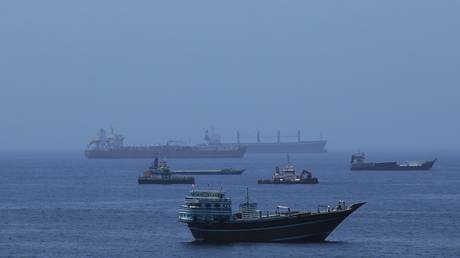
This weekend's violence started at sea. On Saturday morning at 4:30 AM Eastern Time, a one-way attack drone slammed into the Panamanian-flagged oil tanker Kiku. The ship was navigating near the Strait of Hormuz, carrying over two million barrels of crude oil. The cargo belonged to the state-run energy company of Qatar, which ironically has been acting as a primary mediator in diplomatic talks. For another perspective on this development, see the recent coverage from NBC News.
That ship strike followed a nearly identical attack on Thursday, when another Iranian drone hit a commercial vessel off the coast of Oman. The shipping industry was trying to use a newly expanded maritime route near Oman. This route allows inbound and outbound traffic to bypass the specific coastal waters that Tehran claims as its exclusive domain.
Tehran insists it has absolute authority over the narrow waterway. The US and its Gulf Arab allies say otherwise. By hitting the Kiku, Iran sent a clear message to regional negotiators. They will wreck the global energy supply before they let western forces dictate shipping paths.
Washington Hits Back Hard
The White House reaction was immediate. President Trump made it clear that the ship attacks directly violated the interim ceasefire agreement reached earlier this month. By Sunday morning, US Central Command sent waves of fighter jets and naval assets to strike back.
American precision munitions rained down on multiple targets along the Iranian coastline. Central Command confirmed it successfully targeted several key systems.
- Coastal surveillance radar sites near Bandar Abbas
- Early warning communication infrastructure in Sirik
- Specialized drone storage facilities and launch pads
- Active air defense installations on Qeshm Island
- Naval minelaying vessels docked near Jask
The damage to Iran's coastal defense network was extensive. In Sirik, local sources reported that a vital telecommunications tower and two massive water transport tanks were completely destroyed.
Trump took to Truth Social shortly after the bombs dropped, issuing a blunt ultimatum. He stated that the US military had hit critical assets because Iran chose to violate the ceasefire again. He warned that a moment is coming where Washington will stop being reasonable and will be forced to militarily finish the job. If that happens, he wrote, the Islamic Republic of Iran will no longer exist.
Tehran Fires Back at US Allies
Instead of backing down, Iran expanded the target zone. The Revolutionary Guard bypassed American assets in the immediate waters and struck the sovereign territories of two prominent US partners in the Gulf.
The Attack on Kuwait
Kuwaiti military command reported that its air defense arrays detected multiple incoming targets moving at high speed over the northern Gulf. Crews fired interceptor missiles, neutralizing at least two low-flying ballistic missiles and several kamikaze drones. The primary target appeared to be the Ali Al Salem airbase. This base hosts a substantial contingent of American personnel and heavy military equipment. Fortunately, early reports from Kuwait indicate no immediate personnel casualties or catastrophic structure damage from the falling debris.
The Attack on Bahrain
Further south, the situation turned far more chaotic. Residents in the Muharraq Governorate were woken up by the howling of emergency air-raid sirens. While local defenses managed to swat down several incoming threats, at least one drone or missile fragment slammed directly into an eight-story residential building located near the Bahrain International Airport.
Photos released by the Bahrain Interior Ministry show a scene of devastation. The entire top floor of the structure was obliterated, blowing out every window and showering the surrounding streets with concrete rubble and shattered glass. Miraculously, no deaths were reported in the immediate aftermath, though emergency crews are still clearing the upper apartments.
The choice of Bahrain was highly symbolic. The island nation serves as the headquarters for the US Navy Fifth Fleet, which oversees all maritime security throughout the Middle East. While the strike missed the main naval base in downtown Manama, it proved that Iran can hit deep within allied borders at a moment's notice.
The Internal Power Shift Driving the Chaos
To make sense of why Iran is taking such wild risks right now, you have to look at who is actually running the show in Tehran. The Islamic Revolutionary Guard Corps operates with massive autonomy. They answer directly to the Supreme Leader, Ayatollah Mojtaba Khamenei.
Regional intelligence reports indicate that the Guard has consolidated immense political and military power over the last few weeks. The hardline commanders view the interim ceasefire agreement as a strategic trap. They believe that agreeing to standard maritime rules makes them look weak to their regional proxy network. By striking the Kiku and firing missiles into Bahrain and Kuwait, the Guard is deliberately blowing up the negotiations. They want to show that diplomatic promises mean nothing if the military command disagrees.
The Guard released an official statement confirming their role in both operations. They warned that any further western aggression will face a crushing response. They explicitly stated that violating the ceasefire will lead to a complete halt of all ongoing diplomatic processes.
Real World Implications for Energy and Defense
This isn't just a localized military skirmish. It has direct, painful consequences for global energy markets and security strategies. If you are tracking these events, you need to prepare for the fallout.
[Ceasefire Signed] -> [Oman Route Created] -> [Iran Attacks Tanker] -> [US Air Strikes] -> [Iran Hits Gulf States]
Skyrocketing Marine Insurance
The immediate impact will hit your wallet through global shipping rates. Lloyds of London and other major maritime insurers are already rewriting their risk premiums for the Persian Gulf. Passing through the Strait of Hormuz will become prohibitively expensive for standard commercial fleets. Expect crude oil transport costs to jump significantly over the next forty-eight hours.
Forced Redirection of Military Hardware
Kuwait and Bahrain are no longer just safe staging areas. They are active frontlines. The US military will have to immediately redeploy Patriot missile batteries and advanced air defense systems to protect its domestic assets in these countries. This diverts critical defense equipment away from other vital sectors.
Total Collapse of the Peace Process
Pakistan and Qatar had spent months trying to broker a lasting settlement to end the wider regional war. This double-strike sequence effectively kills those efforts. It is almost politically impossible for the White House to return to the negotiating table after American bases came under direct ballistic missile fire.
How to Track Geopolitical Risk Moving Forward
If you need to monitor this situation for business, energy tracking, or security analysis, stop looking at vague political commentary. Watch these specific markers instead.
- Monitor Commercial Tanker Diverts: Watch live ship-tracking data. If major energy conglomerates start routing tankers entirely around the Cape of Good Hope instead of entering the Gulf of Oman, it means they expect prolonged, open warfare.
- Track the Movement of the USS Abraham Lincoln: Keep tabs on where US aircraft carrier strike groups are positioning themselves. If they move deeper into the Persian Gulf, offensive operations are likely being planned.
- Listen to Statement Variations from the Supreme Leader: Watch if Ayatollah Mojtaba Khamenei publicly validates or tries to distance his office from the Revolutionary Guard's aggressive statements. This will tell you if the political faction in Tehran has lost all control to the military generals.
The diplomatic window has slammed shut. With residential blocks damaged in Bahrain and American bases targeted in Kuwait, the Persian Gulf has re-entered a state of raw, uncontained military conflict.