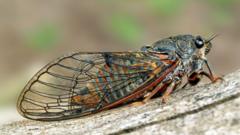
Britain lost its only native cicada decades ago. People assume extinction is a permanent state, a final chapter written in the history of a changing ecosystem. It isn't. Right now, a quiet, oddly secretive operation is underway to bring back the New Forest cicada, an insect that hasn't been reliably heard in the UK since the 1990s.
If you think insect conservation involves just a few people with butterfly nets wandering through meadows, you're wrong. The current mission to rescue this species feels closer to an international espionage operation than traditional biology. Read more on a similar topic: this related article.
The Secretive French Connection
Conservationists from the Species Recovery Trust recently found themselves navigating the strict security protocols of the Saint-Cyr Coëtquidan military academy in Brittany, France. To secure the donor population, volunteers had to surrender their identification papers at the guarded gate and endure a formal interview with a military Major.
Armed with high-frequency ultrasound detectors, the team spent hours creeping across the military base. They were listening for the incredibly high-pitched, metallic buzz of the male Cicadetta montana. This specific tone sits right at the upper threshold of human hearing, making it impossible for most people over forty to detect without digital assistance. Additional journalism by NBC News delves into related views on this issue.
The goal wasn't just to find the adults, but to secure egg-laden bracken stems. The team successfully gathered 20 distinct bracken samples showing definitive signs of egg-laying. This tactical extraction from a active French military zone is what is driving the entire UK resurgence framework.
The Waiting Game At Paultons Park
The retrieved French specimens didn't go straight into the wild. Instead, eleven female cicadas were transported to a secure, custom-built facility at Paultons Park zoo in Hampshire. Zoo manager Samuel Hunt had to design bespoke miniature water vases to keep the French bracken stems hydrated. The design is hyper-specific. If the emerging nymphs fall into open water, they drown immediately. The setup ensures that when the microscopic larvae hatch, they drop safely onto dry land.
[French Military Base Extraction]
               │
               ▼
   [Hydrated Brackenvases at Zoo]
               │
               ▼
 [Nymphs Drop Safely to Soil Surface]
               │
               ▼
 [4 to 10 Years Subterranean Growth]
This project requires extreme patience. Cicadas live the vast majority of their lives completely out of sight. Once the nymphs hatch, they burrow deep into the soil to feed on plant roots. They will stay down there for anywhere between four and ten years.
Biologists confirmed via microscopy that eggs from the initial phases have successfully hatched, meaning the larvae are already underground. Because of this lengthy subterranean growth phase, scientists will not officially know if the population is truly viable until at least 2029 or 2030.
Why The Cicada Vanished In The First Place
The New Forest cicada didn't die out because of a sudden cataclysm. It vanished because of subtle, systemic shifts in land management.
These insects require a very specific, delicate balance of sun-dappled woodland clearings, south-facing banks, and light grazing. During the latter half of the twentieth century, changes in traditional forestry practices and shifts in ancient commoner grazing regimes allowed the open canopies of the New Forest to close over. Dense, cold shade choked out the warm, shrubby microclimates the insects relied on to breed.
A warming climate, however, might actually tip the scales back in favor of the insect this time around. While Forestry England works to restore open, sunny glades to the landscape, rising average summer temperatures in southern England mean the habitat is becoming fundamentally more hospitable to a Mediterranean-adjacent species.
How To Support Local Insect Ecosystems
You don't need access to a foreign military base to assist with local entomological conservation. Small adjustments to land management can dramatically alter insect survival rates.
- Delay Autumn Mowing: Leave areas of tall grass and dead perennial stems standing until late spring. Countless native solitary bees and beetles overwinter directly inside hollow stems.
- Emulate Heterogeneous Ground: If you manage larger plots of land, avoid flattening the terrain. Varied topography with small ditches and mounds creates vital microclimates that retain soil moisture during droughts.
- Plant Native Scrub Borders: Establish transitions between open grass and woody areas using hazel, hawthorn, or wild raspberry canes. These sunlit edge habitats are the primary choice for egg-laying invertebrates.
The next phase of the project involves returning to the continent to secure a broader genetic mix. Conservationists cannot rely on a single year of data or one geographical batch of eggs to build a resilient population. The underground countdown has started, and the definitive proof will emerge from the Hampshire soil by the turn of the decade.