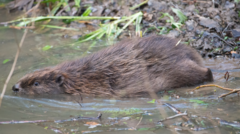
Britain’s rivers are broken, but a family of large rodents is fixing them.
The recent birth of three beaver kits inside the Wyre Forest enclosure isn't just a win for wildlife lovers. It's a proof of concept for a massive shift in how we manage our water, our forests, and our collapsing biodiversity.
When Forestry England, Natural England, and the Beaver Trust moved a family of Scottish beavers into a five-hectare enclosure in Worcestershire back in April 2024, critics wondered if the animals would adapt. The arrival of these three new kits answers that question definitively. They aren't just surviving. They're thriving.
Understanding why this matters requires looking past the cute factor. These animals are transforming the environment at a speed that puts human engineering to shame.
The Instant Transformation of Dowles Brook
Before the beavers arrived, the tributary feeding into Dowles Brook was a straightforward, fast-flowing stream. Water raced through the area, washing away nutrients and contributing to flash flooding downstream.
That changed almost overnight.
The adult pair and their older offspring got straight to work felling trees and moving mud. They built a massive 30-metre-long dam that completely re-engineered the local hydrology. Instead of a simple stream, the Wyre Forest now features a deep, complex wetland pool visible right from the forest road.
This structure acts like a giant sponge. During heavy rains, the dam holds back millions of litres of water, slowing the flow and protecting communities further down the River Severn catchment from flooding. During dry spells, the stored water keeps the local ecosystem hydrated. It's a completely self-repairing system that costs taxpayers absolutely nothing.
What Happens Inside the Lodge
Beaver families are incredibly close-knit. Unlike many rodents that scatter as soon as they can chew, beaver kits stay with their parents for at least two full years. They actually help raise the next generation.
The three new kits were born inside a complex lodge made from sticks, branches, and packed mud. Right now, they're learning the family business. They start by swimming in the safe channels inside the lodge before venturing out into the main pool under the watchful eye of their parents and older siblings.
The parents are currently bringing fresh willow and birch branches directly into the lodge to feed the growing kits. You won't see them easily during the day. They're mostly active at dawn and dusk, and they've already mastered the art of diving underwater the second they sense a human nearby.
The Ripple Effect on Forest Wildlife
Felling trees sounds destructive, but it’s actually a vital ecological process that British woodlands have missed for four centuries. By dropping trees like birch and willow, the beavers open up the dense woodland canopy.
Sunlight can finally hit the forest floor and the water's surface. This simple change triggers an explosion of life.
More Insects and Amphibians
The still, sunlit waters of the beaver pool provide the perfect breeding ground for dragonflies, damselflies, and water beetles. Frogs, toads, and newts have already moved into the shallows in record numbers.
A Feast for Birds and Bats
With an explosion of insect life comes the predators. Local rangers have noted increased activity from bats and insect-eating birds that hunt over the newly created wetlands.
Fungi and Deadwood Specialists
The trees that beavers kill or leave rotting in the water aren't wasted. Deadwood is a scarce resource in tidied-up British forests. It provides essential habitat for rare fungi, wood-boring beetles, and the birds that feed on them.
The Complicated Reality of Wild Releases
Right now, these beavers live inside a massive, secure five-hectare enclosure. This is intentional. Current government policy in England generally limits beaver reintroductions to enclosed spaces to prevent conflict with local landowners.
Beavers don't respect property lines. If left completely wild, they can flood productive agricultural land, block drainage ditches, and chew through valuable timber. Landowners and farmers are understandably anxious about the prospect of unregulated wild releases.
The Wyre Forest project serves as a controlled laboratory. Scientists are monitoring exactly how the water quality changes, how much silt the dams trap, and how the local fish populations react. The evidence gathered here will weigh heavily on future decisions regarding full wild releases across England.
Managing a Growing Family
A five-hectare enclosure sounds huge, but it has its limits. Beavers are fiercely territorial animals. When these three new kits reach maturity in about two to three years, they will need to find their own space.
If they stay in the enclosure, violent fights could break out between the maturing young adults and the dominant parents. Forestry England already has a plan for this.
As the kits grow, some of the older siblings or the new kits themselves will be carefully trapped and relocated to other enclosed projects or wild release schemes across the UK. Their genetics will help strengthen populations in places like Yorkshire, the Forest of Dean, or even urban rewilding sites like Ealing in London.
How to Spot the Wyre Forest Beavers
If you want to catch a glimpse of the new family, you need patience and the right timing. Don't expect them to waddle up to the fence.
- Location: The enclosure is situated in the Experimental Pool area, along a tributary near Dowles Brook, just north of the disused railway line.
- Time: Your best bet is at first light or right as the sun goes down. They spend the middle of the day sleeping inside the safety of their mud lodge.
- Signs: Even if you don't see the animals, you can't miss their work. Look for the massive 30-metre dam, pointed tree stumps that look like sharpened pencils, and floating branches stripped completely clean of their bark.
- Etiquette: Keep your noise to an absolute minimum. If you bring a dog, keep it on a short lead. Loud noises and barking will keep the kits hidden inside the lodge for hours.
Your Next Steps
The success of the Wyre Forest project shows that nature can heal itself if we simply step out of the way and provide the right conditions.
If you want to support the project or learn more about the data being gathered, visit the Forestry England Wyre Forest hub. You can also check out the Beaver Trust to see how they work with farmers and landowners to manage beaver-human conflicts across the country. Get out into the forest, look for the chew marks on the trees, and see the work of these incredible engineers for yourself.