Playing movie music on a public sidewalk shouldn't land you in handcuffs. Yet that's exactly what happened to Washington, D.C. resident Sam O'Hara when he decided to soundtrack a military patrol with the fictional villain theme of the Galactic Empire. The city just agreed to pay a hefty price for that mistake.
The District of Columbia has finalized a major settlement with O'Hara after local police illegally detained him for trailing National Guard troops while blasting the Star Wars Imperial March from his phone. It's a classic case of government overreach hitting a brick wall built by the First Amendment. If you think street performance is just noise, this case proves it can be a potent tool of political dissent.
The American Civil Liberties Union of the District of Columbia announced the partial settlement following months of legal wrangling. While the city is writing a check to clear its officers, the legal battle isn't entirely over. An out-of-state National Guard soldier remains in the crosshairs of the federal lawsuit. The details of this case expose a messy intersection of federal power, local policing, and the fundamental right to mock the government.
The sidewalk showdown on Q Street
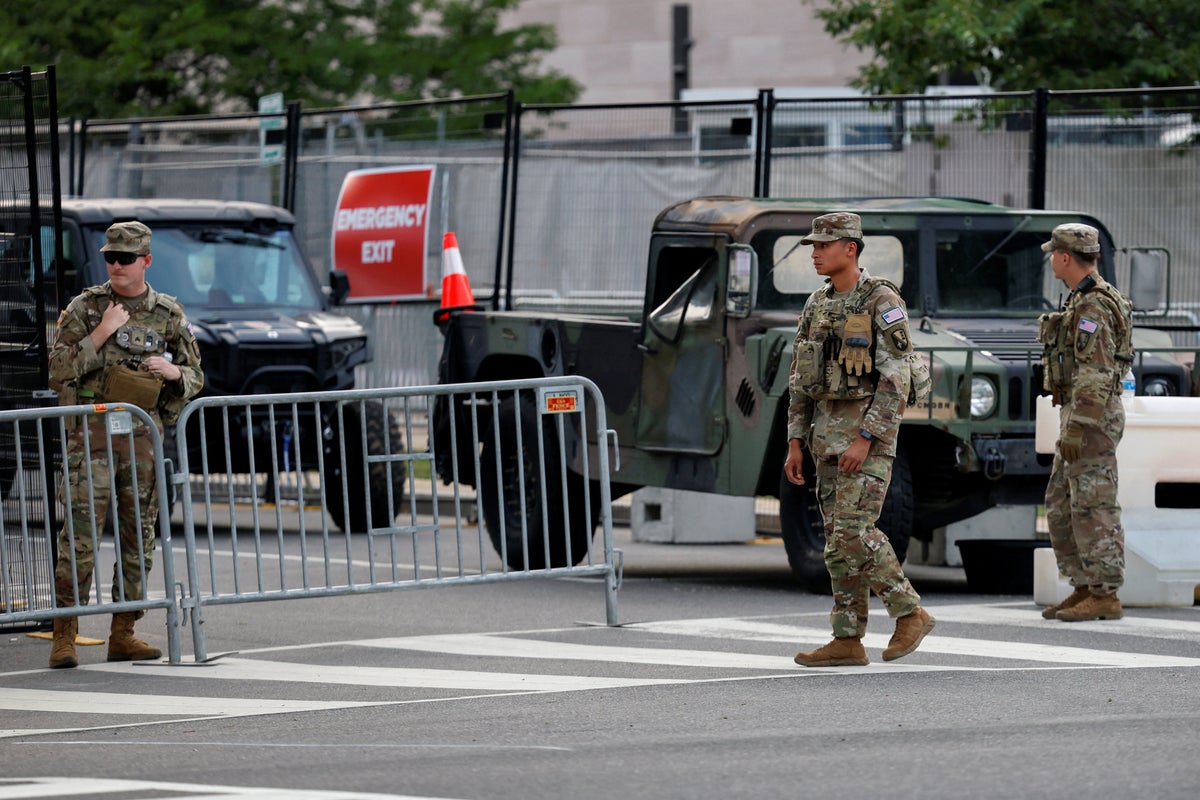
The flashpoint occurred on September 11, 2025. O'Hara, an artist working in the hospitality industry, spotted an Ohio National Guard patrol near the intersection of 14th and Q Streets NW. He did what he had been doing for weeks. He turned on his phone speaker, queued up the ominous John Williams score, and walked behind the troops.
He didn't block their path. He didn't touch them. He didn't threaten anyone. He just provided a satirical soundtrack that framed the deployment exactly how he saw it: an occupying force acting like cinematic stormtroopers.
Ohio National Guard Sergeant Devon Beck didn't appreciate the irony. Beck confronted O'Hara and warned him that he would call local authorities to deal with him if the music didn't stop. When O'Hara refused to silence his phone, Beck summoned the Metropolitan Police Department.
D.C. police officers arrived quickly. Instead of de-escalating a peaceful situation, they grabbed O'Hara, slapped handcuffs on his wrists, and forced him to wait on the pavement. One officer accused O'Hara of harassing the troops. They kept him restrained for fifteen to twenty minutes. They didn't have a crime to charge him with. Eventually, they let him go, but the damage to his constitutional rights was already done.
Why the deployment sparked outrage across Washington
To understand why O'Hara was out there with a speaker, you have to look at the political environment gripping the nation's capital in the summer of 2025. President Donald Trump had issued an executive order declaring a crime emergency in the District of Columbia. His solution was to flood the city streets with hundreds of out-of-state National Guard troops and federal agents to assist with daily patrols.
The decision infuriated local residents and city leaders. D.C. police data actually showed that crime rates were declining at the time. Many viewed the deployment as a heavy-handed, politically motivated stunt that trampled on local autonomy. Washington is a heavily Democratic city, and the sight of camouflaged soldiers patrolling residential neighborhoods created immediate friction.
O'Hara started his musical demonstrations to channel that widespread community frustration. His videos documenting the interactions racked up millions of views on TikTok. He repeatedly clarified that his intent wasn't to degrade individual service members. Instead, he wanted to highlight the absurdity of using military personnel to police American citizens on public streets.
The legal mechanics of the D.C. police payout
When the ACLU-D.C. filed suit on O'Hara's behalf in October 2025, they targeted both the District of Columbia and individual officers. The lawsuit claimed clear violations of the First Amendment right to free speech and the Fourth Amendment right against unreasonable seizures. It also cited local laws against false arrest.
The legal reality here is straightforward. The government cannot arrest you simply because they dislike the message you're broadcasting. Public sidewalks are traditional public forums. In these spaces, speech protections are at their highest level.
The city quickly realized it had a losing hand. By February 2026, court records indicated a settlement in principle had been reached, pausing active litigation while attorneys hammered out the fine print. The final terms require O'Hara to dismiss his claims against the district and the four involved MPD officers.
How much did the city pay? The exact dollar figure remains hidden under a confidentiality clause to protect O'Hara's privacy. However, ACLU-D.C. Legal Director Scott Michelman confirmed the financial payout represents a significant amount that his client is highly satisfied with. The city attorney general's office has remained completely silent on the matter, refusing requests for comment.
Why Sergeant Devon Beck is still facing federal court
While D.C. taxpayers are footing the bill for the police misconduct, the instigator of the arrest isn't off the hook. The settlement does not resolve O'Hara's claims against Sergeant Devon Beck of the Ohio National Guard.
Beck's legal team is fighting hard to get the case thrown out. They argue that the sergeant was merely executing his assigned operational duties. Their court filings stress that the encounter wasn't a random sidewalk disagreement but a direct consequence of Beck's official presence in the city. They claim immunity from personal liability.
The survival of this part of the lawsuit hinges on a critical question: Can a military official weaponize local police to silence a civilian critic? The ACLU argues that Beck directly caused the illegal detention by calling in a false complaint to suppress protected speech. If the judge allows the claims against Beck to advance, it could set a major precedent regarding the accountability of National Guard troops deployed domestically.
Satire is a protected constitutional right
This case highlights a long history of American courts defending satire and mockery as core forms of political expression. The Supreme Court has repeatedly ruled that speech doesn't lose protection just because it's offensive, annoying, or deeply embarrassing to government officials.
When an MPD officer told O'Hara he was harassing the troops, the officer fundamentally misunderstood the law. True harassment requires a pattern of behavior that includes credible threats or direct interference with a person's movement. Playing a song from a globally recognized movie franchise while walking on a public path doesn't clear that bar.
The ACLU's complaint summed it up perfectly by noting that while the law might tolerate such authoritarian behavior in a galaxy far, far away, the American Constitution strictly forbids it here. The government can't create an artificial bubble around its personnel to shield them from peaceful mockery.
How to handle law enforcement encounters during a peaceful protest
If you find yourself demonstrating in a public space, you need to understand your rights to avoid becoming a victim of illegal retaliation.
Keep your distance physically. You have every right to stand on a sidewalk and express your views, but you cannot physically obstruct an officer or a soldier from doing their job. Stepping in front of a patrolling unit or blocking a vehicle gives authorities a legitimate reason to intervene.
Record everything openly. You have a clearly established First Amendment right to film police officers and military personnel performing their duties in public. Keep your camera visible and stay back. If an officer tells you to stop recording, they are violating standard legal protocols.
Do not consent to searches. If police detain you, ask if you're free to go. If they say no, you are being detained. State clearly that you do not consent to any searches of your person, your phone, or your bag. They may perform a basic pat-down for weapons if they have reasonable suspicion, but they cannot search your digital data without a warrant.
Remain silent if arrested. If you're placed in handcuffs, stop talking. You don't need to argue your case on the street. Say out loud that you are exercising your right to remain silent and that you want an attorney. Anything you say on the scene or in the back of a squad car can be used to justify their actions later.
What happens next for public demonstrations
Sam O'Hara has stated publicly that this settlement won't stop him from continuing his creative demonstrations. The hundreds of National Guard troops deployed by the executive order are still walking the streets of Washington with no official departure date in sight.
This settlement sends a direct warning to the Metropolitan Police Department and other local law enforcement agencies. If federal forces call for assistance to silence peaceful critics, local officers must refuse to act as compliance tools. If they choose to ignore constitutional boundaries to soothe the bruised egos of federal authorities, the city will end up paying for it out of the public treasury.
The broader lesson is simple. Constitutional protections don't disappear just because the government declares a vague emergency or deploys troops to your hometown. Satire remains one of the most effective ways to challenge power, and the courts just reminded the city that a speaker and a movie theme song can hold the line against state overreach.