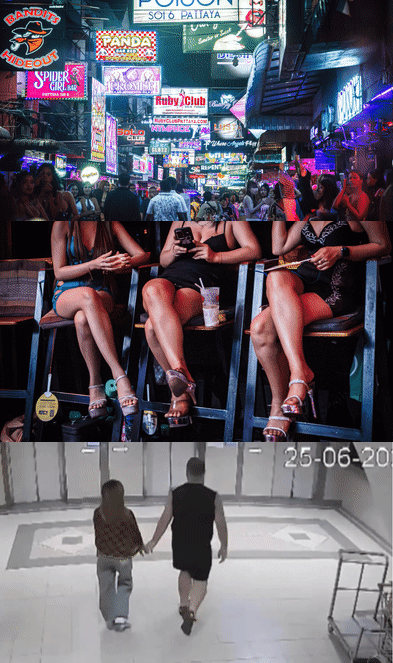
The neon lights of Soi 6 don't care about your budget. To a certain class of western tourist, the seaside city of Pattaya represents the ultimate playground where currency conversion feels like a superpower. You step off the bus from Bangkok, change a few hundred dollars into thick stacks of Thai baht, and suddenly feel invincible. Everything feels transactional, disposable, and deeply cheap.
But that illusion of cheapness carries a staggering human toll that hits the local population hardest.
The brutal reality broke wide open when the naked body of 17-year-old Tunchanok "Cake" Donhomla was discovered stuffed inside a black suitcase next to a Pattaya railway line. Police arrested 45-year-old Australian national Simon Peter Carman at Suvarnabhumi Airport as he tried to catch a flight back to Perth.
The catalyst for this horrific crime? A petty argument over a few hundred baht. Initial police reports indicate the dispute escalated because Carman allegedly refused to pay the agreed price for her time, offering just 500 baht—roughly 15 dollars—instead of the promised 1,000 baht.
When you treat a human being like a budget commodity, the baseline of basic human respect completely erodes.
The Deadly Economics of an Unequal Playground
Pattaya functions on a stark economic imbalance. Western tourists arrive with savings that stretch for months in Southeast Asia, while local workers migrate from impoverished northeastern provinces like Isan to support their families.
Tunchanok’s father, Thongchai Donhomla, shared the devastating reality of their lives after her death. She had no mother, and she constantly looked for ways to earn money to help him pay the bills. That financial pressure pushes young, vulnerable people directly into high-risk environments where foreign visitors hold all the financial leverage.
Consider the mechanics of the average holiday interaction here. A tourist pays a "bar fine" to an establishment to allow a worker to leave their shift. The transaction feels institutionalized, almost sanitized by the sheer volume of venues doing the exact same thing. This commercialization creates a dangerous psychological buffer. The buyer starts viewing the person not as an individual with an independent life, family, and rights, but as a service they've rented.
When that service doesn't perfectly align with the buyer's expectations, or when a minor financial disagreement happens, things turn violent fast. Carman claimed to police that he acted in self-defense after a struggle broke out, dismissing the deep scratches on his neck and arms as "spider bites." CCTV footage captured a vastly different narrative: the pair walking hand-in-hand into the condominium complex, followed hours later by Carman dragging a heavy suitcase out to a motorbike alone.
Moving Beyond the Clichés of the Red Light District
The international media loves to focus on the sensational, seedy underbelly of Thailand. They write about the sprawling go-go bars, the cheap beer, and the older western expats living out their retirements. But focusing purely on the salacious details misses the systemic failure of protection.
Child protection advocates have repeatedly warned that thousands of underage youths remain incredibly vulnerable in tourist hubs. The legal age of consent in Thailand is 16, but involving minors under 18 in the sex trade is strictly illegal and classified as human trafficking. Yet, systemic enforcement gaps and the sheer volume of transient tourists make monitoring these spaces incredibly difficult.
Charges Faced by Suspects in Minor Exploitation Cases:
- Premeditated or intentional murder
- Concealment, moving, or destruction of a body
- Abduction of a minor between 15 and 18 for indecent purposes
The maximum penalty for murder under the Thai criminal code is death. While execution is rarely carried out in modern Thailand, the legal system takes crimes against minors by foreign nationals intensely seriously.
What the Budget Tourist Mindset Distorts
If you talk to expats who have lived in Chonburi province for decades, they'll tell you the city has tried to reinvent itself as a family-friendly resort destination. They built massive water parks, upscale shopping malls, and luxury beachfront hotels. Yet the shadow economy persists because the demand from foreign budgets never dries up.
The fundamental mistake is confusing low living costs with a lack of consequence. Some travelers step off the plane and assume local laws don't apply to them, or that money can buy an escape from any bad situation. They ignore the local culture, disregard basic safety boundaries, and put themselves and others in extreme danger.
True systemic change won't come from just updating tourism brochures. It requires aggressive, consistent enforcement of child protection laws, real economic alternatives for rural families, and a complete rejection of the predatory mindset that treats vulnerable people as cheap vacation entertainment.
Crucial Steps for Responsible Travel in Thailand
If you want to visit Southeast Asia without contributing to predatory systems, you need to change how you interact with the local economy.
- Support ethical community initiatives: Direct your travel spend toward locally owned guesthouses, restaurants, and tour companies that pay fair living wages to their staff.
- Report suspicious activity immediately: If you suspect a minor is being exploited or trafficked in a commercial venue, do not look the other way. Contact the Thailand Tourist Police by dialing 1155 or reach out to child protection NGOs like the Freeland Foundation or Destiny Rescue.
- Respect local legal boundaries: Remember that you are a guest subject to local laws. Extravagant behavior, disrespecting local cultural norms, and engaging in illicit markets carry severe legal consequences, including long-term imprisonment in facilities that lack western comforts.
The tragedy of Tunchanok Donhomla shouldn't be filed away as just another dark piece of news from a resort town. It stands as a horrific reminder of what happens when the human cost of a cheap holiday is ignored.