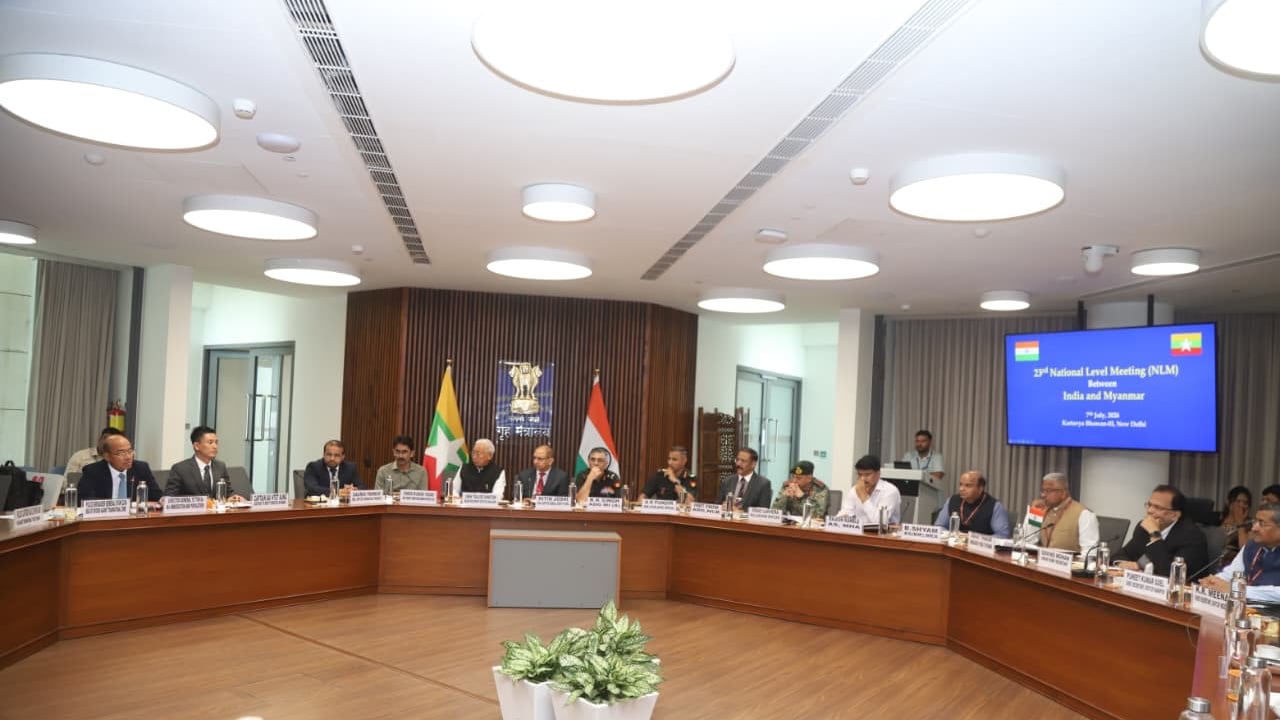
Diplomatic promises often sound nice on paper but fail when they hit reality. When the 23rd national-level meeting between India and Myanmar wrapped up in New Delhi on July 8, 2026, the big headline was familiar. Myanmar gave a firm security assurance to India that its soil won't be used for activities targeting Indian interests. It's an easy statement to make. Acting on it is a completely different story.
You have to look at the messy reality of the 1,643-kilometer shared border to understand why this matters. It's a border carved through dense jungles, rugged mountains, and regions where neither government has total control. For decades, insurgent groups from Northeast India have slipped across this line to find safe havens. They set up camps, train, and launch attacks before melting back into the wilderness. This latest meeting wasn't just a routine diplomatic chat. It was a high-stakes strategy session between India's Union Home Secretary Govind Mohan and Myanmar's Deputy Home Affairs Minister Major General Min Thu. They are trying to fix a security gap that has leaked for generations.
The Reality Behind Myanmar's Security Assurance to India
If you look at the official statements, everything sounds perfectly managed. The Ministry of Home Affairs stated that both sides agreed to scale up intelligence sharing and operational coordination. But let's be honest about the situation on the ground. The military regime in Myanmar is fighting for its survival against various rebel groups across its own country. Their control over the border areas next to Mizoram, Manipur, Nagaland, and Arunachal Pradesh is shaky at best.
When Myanmar promises that its territory won't harm Indian security, New Delhi accepts it with a healthy dose of skepticism. India knows that the junta can't always enforce its will in the remote hills of the Sagaing Region or Chin State. Yet, keeping the lines of communication wide open with Naypyidaw is the only practical choice India has. If India pulls back, a strategic vacuum opens up. Neighbors with conflicting interests are always ready to step in and fill that space.
Stopping the Northeast Insurgent Safe Havens
For years, groups like the United Liberation Front of Asom (ULFA) and various Naga faction splinters used western Myanmar as a backyard. When the Indian Army turned up the heat in Assam or Nagaland, these fighters simply walked across the border. They knew the Myanmar army was too busy or too far away to bother them.
This dynamic has shifted lately. India has put intense pressure on Myanmar to launch coordinated sweeps. The security assurance to India isn't just about military camps anymore. It covers a growing web of black-market networks. Insurgents don't just carry guns. They run multi-million dollar smuggling rings that fund their operations.
Cracking Down on the Border Smuggling Networks
The border isn't just a transit point for fighters. It's a highway for illicit trade. We are talking about military-grade weapons, synthetic drugs like methamphetamine, and poached wildlife products. The intelligence sharing mentioned in the Delhi meetings is aimed directly at these supply lines.
When drug cartels operate freely in the border states, the cash flow trickles down to insurgent groups. It creates a cycle where regional instability feeds criminal profits, and criminal profits buy more weapons to fight the state. Breaking this loop requires real-time information exchange, not just occasional meetings.
The New Cyber Scam Crisis in the Border Regions
Security threats have evolved beyond jungle warfare. The rise of sophisticated cyber scam factories along Myanmar’s border zones has emerged as a massive problem for Indian law enforcement. These aren't small operations run from a basement. They are massive, heavily guarded compounds where criminal syndicates hold thousands of foreign workers captive, forcing them to run internet frauds targeting people worldwide.
Over the last 18 months, India successfully brought back 2,411 citizens who were lured to Myanmar under the pretense of legitimate tech jobs, only to end up trapped in these modern slave camps. Another 150 Indians are currently being tracked for repatriation. This issue dominated the recent talks because it directly impacts ordinary Indian families.
Indian security agencies are pushing Myanmar to take immediate military action against these specific compounds. The syndicates often operate under the protection of local ethnic militias who don't answer to the central government. This makes enforcement incredibly complicated. It's a dark network where human trafficking meets digital financial fraud.
The Status of Strategic Infrastructure Projects
Security directly impacts India's big economic plans for the region. You can't build highways or run ports if the surrounding hills are controlled by armed rebel factions. The talks highlighted two massive infrastructure goals that have faced constant delays.
The Kaladan Multi-Modal Transit Transport Project
This project is designed to connect India's eastern ports with the Sittwe seaport in Rakhine State, Myanmar. From Sittwe, the route goes up the Kaladan River to Paletwa, then connects to Mizoram by road. It's India's alternative route to the Northeast, bypassing the narrow Siliguri Corridor.
Progress has been painfully slow. Rebel advances in Rakhine State have halted construction at multiple points. In the recent meetings, Indian officials pushed for guaranteed security corridors to protect construction workers and engineers trying to finish the transport links.
The India Myanmar Thailand Trilateral Highway
This ambitious road network aims to connect Moreh in Manipur with Mae Sot in Thailand via Myanmar. It's the crown jewel of India's Act East policy, designed to open up land trade with Southeast Asia.
Large sections of the highway run through areas where fighting between the Myanmar military and anti-junta forces is intense. Every time a bridge gets blown up or a highway checkpoint changes hands, the project stalls. India needs a stable partner across the border to keep these construction sites safe, which explains why New Delhi continues to engage with the generals in Naypyidaw despite international criticism.
India's Balancing Act Between Strategy and Ethics
Western nations have largely isolated Myanmar since the 2021 military coup, using heavy economic sanctions to punish the regime. India takes a completely different path. New Delhi follows its Neighborhood First and Act East policies.
India-Myanmar Strategic Relationship
│
├── Border Security (1,643 km shared frontier)
├── Counter-Insurgency (Denying safe havens to ULFA/Naga groups)
├── Counter-Transnational Crime (Drug corridors & cyber scam compounds)
└── Connectivity Projects (Kaladan Project & Trilateral Highway)
India's approach is driven by cold, hard realism. You don't choose your neighbors. When you share a massive, porous land border, cutting off ties isn't a viable option. If India ignores Myanmar, it creates an open field for rival regional powers to build military and economic influence right on India's doorstep.
Furthermore, the stability of Northeast India depends entirely on what happens across that border. Total isolation of the Myanmar regime could push the country into complete state collapse. That scenario would flood India's border states with millions of refugees and create a lawless zone ruled entirely by armed gangs and drug lords. New Delhi chooses engagement because it's the only way to protect its own territory.
What Happens Next on the Border
The joint statement from the meeting talked about satisfaction with the results and plans for regular training programs. But the real measure of success won't be found in diplomatic texts. It will show up on the ground over the next few months.
Watch the border checkpoints carefully. If Myanmar follows through on its security assurance, we should see an increase in coordinated border patrols. We should also see fewer cross-border attacks by insurgent groups and quicker action against the cyber scam compounds holding Indian citizens. If the camps remain open and the smuggling continues at the same pace, it means the assurances were just empty words used to get through a stressful meeting.
The Indian government needs to hold Myanmar accountable to these promises. They must back up the diplomatic talk with solid border defenses and better technological surveillance. Build the fences where they can be built. Use drones to monitor the remote gaps. Keep the pressure on Naypyidaw to deliver on their words. True security along the frontier isn't won at the negotiating table in New Delhi. It's built mile by mile along the border.

:max_bytes(150000):strip_icc()/TAL-nassau-bahamas-BEAUTCARIB0323-4fbfce903e5a4418b895e03717e3de0d.jpg)