The annual Eleventh Night bonfires in Northern Ireland have always been a visual spectacle, a flashpoint for political tension, and a deeply entrenched cultural tradition. But events in Moygashel, County Tyrone, have pushed the custom into dangerous new territory. When organizers placed a detailed replica of a mosque atop a towering pyre of wooden pallets, they did not just create a local controversy. They triggered a complex, high-stakes standoff involving anti-hate laws, human rights conventions, and an advanced police operation that ended with the structure being torched a day ahead of schedule.
If you are trying to understand why this specific incident has caused such an uproar across the UK and Ireland, you have to look past the surface-level shock value. This isn't just about people burning things they don't like. It's a calculated escalation that forces a hard look at where cultural expression ends and criminal intimidation begins.
The Moygashel Standoff Exploded a Day Early
The Police Service of Northern Ireland (PSNI) found themselves in a race against time. Recognizing the display as a severe escalation, senior officers launched what they described as a "significant and complex policing operation." The explicit goal was to secure the site and strip the hate display from the top of the pyre before the traditional Eleventh Night lighting.
They didn't get the chance.
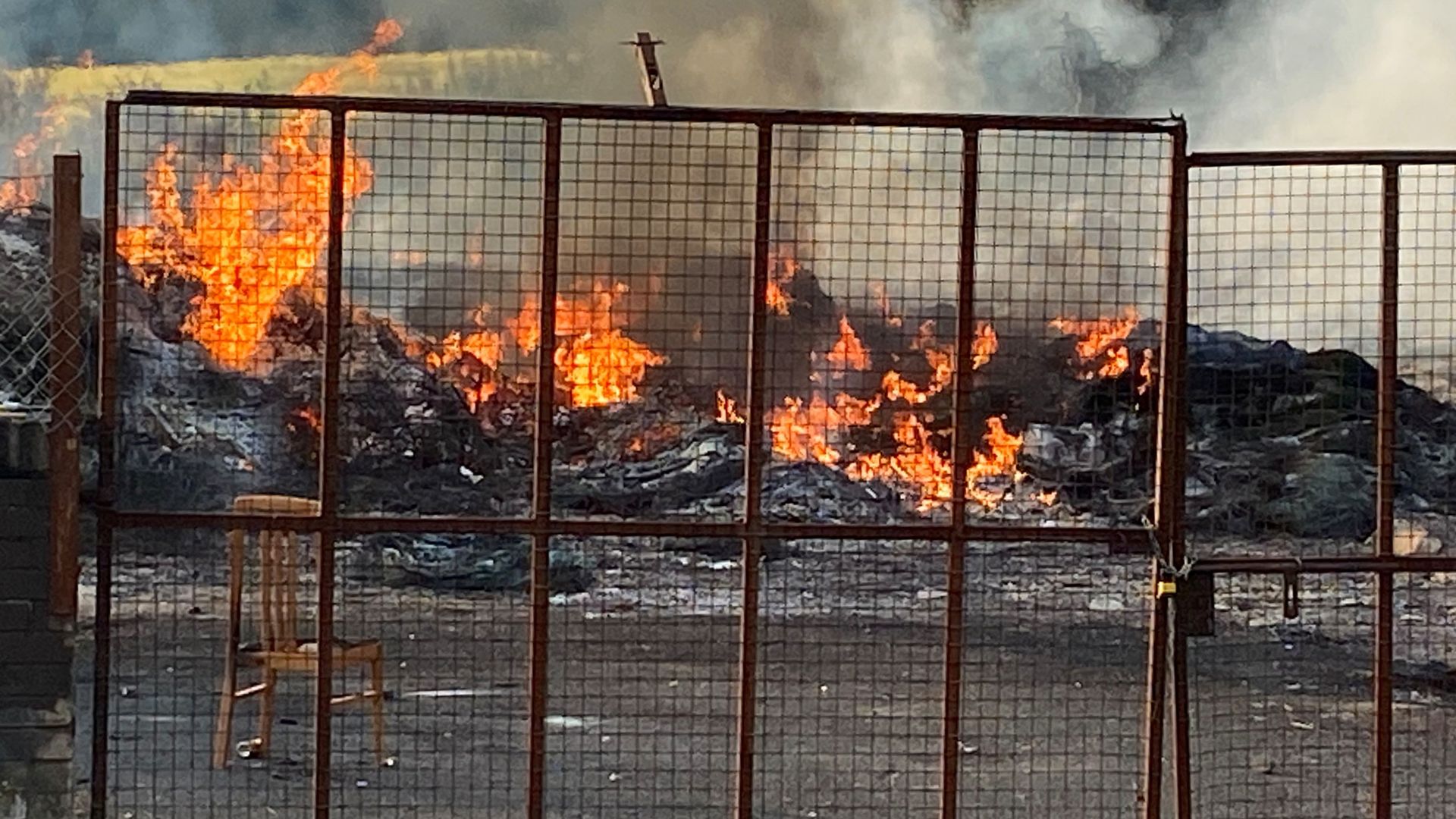
As police advanced their operation to secure the perimeter, bonfire builders caught wind of the move. In a bid to protect their work and seize control of the narrative, organizers set the entire structure ablaze a day ahead of schedule. Massive flames consumed the replica mosque, along with banners reading "Secure our borders" and "End the threat of radical Islam." Inside one of the replica's windows, an effigy holding what looked like a knife went up in smoke.
While the physical evidence burned, the legal fallout was already in motion. The PSNI had already arrested a 56-year-old local man, later charging him with incitement to hatred. Investigators made it clear that while the physical material is gone, the investigation into the criminal intent behind the display continues.
Understanding the Real Intent Behind the Fire
To make sense of why this happened in Moygashel, you have to look at the group behind it. The Moygashel Bonfire Association didn't stumble into this controversy by accident. They planned it. After the fire, they released a statement defending the display as a legitimate "political protest" aimed at "uncontrolled illegal mass immigration" and the government's failure to deport foreign criminals.
They even attempted a legal shield, citing Article 10 of the European Convention on Human Rights (ECHR), which protects freedom of expression. Their argument is straightforward: the display might shock or outrage, but it targets an ideology and a government policy, not individuals.
But that argument completely ignores the local reality. This isn't happening in a vacuum. Just a month earlier, Belfast and several nearby towns were rocked by intense race riots and anti-immigrant unrest following a high-profile knife attack. To the local Muslim community, seeing a place of worship turned into fuel for a public bonfire isn't an abstract debate about border policy. It feels like a direct, physical threat.
Kashif Akram of the Belfast Islamic Centre cut through the legalistic excuses, noting that using a mosque this way serves only to deepen the anxiety and fear already felt by minority families living in the area.
A Tradition Testing Its Own Boundaries
Eleventh Night bonfires traditionally mark the historic 1690 victory of the Protestant King William III over the Catholic King James II at the Battle of the Boyne. Historically, the targets of bonfire anger were Irish tricolours, nationalist political posters, or effigies of Catholic figures. While those displays have long drawn criticism, they stayed within the predictable lines of Northern Ireland's traditional sectarian divide.
Lately, though, the target has shifted. The Moygashel site has a track record of adapting its displays to target newer minorities:
- 2023: The group burned an effigy depicting dark-skinned mannequins in a lifejacket-laden boat, targeting cross-Channel migrants.
- 2024: Similar anti-immigrant and anti-refugee themes surfaced across various regional pyres.
- Recent Weeks: Police had to step in to remove "Muslims not welcome" banners from a children's playground right in Moygashel.
This evolution from traditional anti-Catholic sentiment to explicit anti-Muslim and anti-immigrant rhetoric has deeply fractured the broader unionist and loyalist community. Even David Campbell, the chair of the Loyalist Communities Council, came out to condemn the mosque effigy. He pointed out that targeting a place of worship completely violates the principles of religious liberty that the Twelfth of July celebrations are supposed to honor in the first place. When mainstream loyalist leadership and rights groups like Amnesty International are using the same word—"vile"—to describe a display, a line has clearly been crossed.
Where the Line in the Pallets is Drawn
The core issue that this incident forces into the open is the practical limit of policing cultural expressions in divided spaces. For years, authorities have taken a largely hands-off approach to bonfires, preferring community mediation over physical intervention to avoid sparking wider riots.
By launching an explicit tactical operation to strip the mosque replica from the pyre, the PSNI showed that certain displays will break that policy of strategic tolerance. When a display directly mimics a place of worship and pairs it with weapon-wielding effigies during a period of high racial tension, it crosses from offensive political theater into outright criminal intimidation. The fact that organizers burned their own creation down just to keep the police from touching it proves how thin that legal defense really was.
If you want to see how the community reacted right after the site was set ablaze, you can watch this footage detailing the immediate aftermath and local response: Moygashel bonfire escalation coverage. This report captures the immediate impact of the early lighting and the visible tension on the ground.
Moving forward, the focus shifts directly to the courts. The prosecution of the 56-year-old man charged with incitement to hatred will serve as a massive test case for how Northern Ireland's legal system handles hate speech wrapped in the banner of cultural tradition. Organizers might claim their fire was a protected protest, but the soot left behind in Moygashel suggests a much darker trajectory for local community relations.
:max_bytes(150000):strip_icc()/TAL-nassau-bahamas-BEAUTCARIB0323-4fbfce903e5a4418b895e03717e3de0d.jpg)