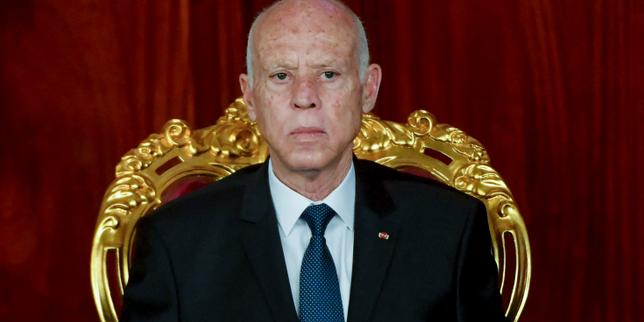
Mourad Zeghidi isn't asking for a favor. He isn't begging for mercy, nor is he appealing to the paternal benevolence of Tunisian President Kaïs Saïed. From his cell in Mornaguia prison, the Franco-Tunisian journalist is doing something much more dangerous. He's holding a mirror up to the regime and demanding it live up to its own rhetoric.
Zeghidi just published an open letter directly addressing Saïed. He signs it under his official institutional identity: Mourad Ben Salah Zeghidi, inmate number 406532. The letter is a tactical masterstroke. It uses the president’s own public promises as a legal crowbar to demand immediate release. If you liked this article, you might want to look at: this related article.
This case is about the absolute dismantling of the independent press under Saïed’s rule. It shows how the state uses judicial acrobatics to keep critics behind bars indefinitely. If you want to understand how dissent is crushed in Tunis today, look no further than inmate 406532.
The Words That Trapped a President
On June 10, 2026, Kaïs Saïed delivered one of his characteristic televised speeches. He was speaking about his signature penal reconciliation project. This mechanism allows individuals accused of financial crimes to escape prison by paying back allegedly stolen funds to the state. During the broadcast, Saïed made a definitive statement. He declared that anyone who has settled their dues must leave the darkness of prison. For another perspective on this development, see the latest coverage from NBC News.
Zeghidi listened closely from his cell.
In his open letter, published by his family and the "Free Mourad Zeghidi" campaign, the journalist points out a massive contradiction. He already did exactly what the president demanded. In January 2026, Zeghidi concluded a formal reconciliation agreement with the Ministry of Finances. He settled every single millime the tax administration claimed he owed.
His family had to scramble. They took on heavy financial debts to gather the required funds within the strict deadlines imposed by the government. Yet, despite paying his dues, Zeghidi remains locked up.
His defense isn't arguing sentimentality. It's arguing logic. If the state creates a mechanism where payment equals freedom, keeping a man imprisoned after he pays turns the entire legal system into an arbitrary trap. It makes the law look like a tool for personal vendettas rather than a mechanism for state recovery.
The Endless Legal Loop
The state’s strategy against Zeghidi reveals a repetitive pattern of judicial harassment. He was first arrested on May 11, 2024. The original pretext was Decree 54, a notorious piece of legislation passed in 2022 ostensibly to fight cybercrime. In reality, the state uses Decree 54 to criminalize independent political commentary. Zeghidi, a prominent sports and political analyst on IFM radio, had dared to analyze Tunisian politics without the mandatory praise expected by the presidential palace.
He was sentenced to eight months. He served his time. He was supposed to walk out a free man in January 2025.
The authorities changed the rules of the game at the finish line. Just weeks before his scheduled release, in December 2024, the judiciary hit him with a new arrest warrant. This time, the charge was money laundering and tax evasion.
Suddenly, a routine tax assessment disagreement became a heavy criminal enterprise. The prosecution focused heavily on funds Zeghidi earned while working legally abroad. He spent three and a half years working in Qatar as a sports media executive for Canal Plus Afrique and other international networks, earning a documented salary of $4,500 per month.
The defense presented clear paperwork showing that the money in his accounts came entirely from these legitimate professional fees. Financial experts from the Ministry of Finance investigated the files. They found zero financial damage to the Tunisian state. Even so, the courts pushed forward. In May 2026, an appeals court handed down a harsh sentence of three and a half years in prison for money laundering stemming from tax evasion.
The Broader Campaign Against Free Speech
Zeghidi is not an isolated casualty. His arrest occurred on the exact same day authorities detained his media colleagues, including political commentator Borhen Bssais and lawyer Sonia Dahmeni. Dahmeni was dragged out of the lawyers' union headquarters by masked security agents in a scene that shocked the remaining pockets of civil society.
Independent journalism can no longer function normally inside the country. Human rights organizations, including Reporters Without Borders and the International Federation for Human Rights, have repeatedly called out the systematic targeting of media professionals.
The strategy is simple but highly effective. First, silence them using political decrees. If that draws too much international scrutiny, pivot to financial investigations. It changes the narrative from political persecution to anti-corruption, which plays much better to the president’s populist base.
The weaponization of the judiciary has reached unprecedented levels. Just days before Zeghidi's letter, the veteran activist Sihem Ben Sedrine, former head of the Truth and Dignity Commission, was sentenced to a staggering 25 years in prison. The message from the state is unmistakable. No one is safe, and past status offers zero protection.
Why Penal Reconciliation is Failing its Own Test
Saïed has framed his penal reconciliation program as a populist triumph. He promises it will recover billions from corrupt elites to fund local development. The reality has been a bureaucratic mess that brings in very little money while functioning primarily as a mechanism for judicial blackmail.
Zeghidi's letter puts the structural flaws of this system on display. If a citizen cooperates with the Ministry of Finance, satisfies the financial demands, and complies with the framework, the state must honor its side of the bargain.
When the state pockets the money and keeps the citizen behind bars anyway, the system loses all credibility. Why would anyone else agree to a financial settlement with the government if it doesn't guarantee their freedom?
The journalist explicitly noted that his letter is not a plea for a presidential pardon. A pardon implies guilt and asks for mercy. Zeghidi is demanding structural consistency. He's asking for the uniform application of legal principles to every single citizen, regardless of whether their commentary pleases the government.
What Happens Next
The defense team is currently preparing to take the case to the Court of Cassation. At the same time, the family intends to apply for conditional release, which Zeghidi is legally eligible to receive shortly under Tunisian law.
Legal steps inside a compromised system can only do so much. The real pressure will depend on whether Tunisian civil society and international partners can force the executive branch to respect its own decrees.
To challenge this blatant judicial overreach, look up the active updates from the Syndicat National des Journalistes Tunisiens. Support independent regional media outlets that still report on these trials despite constant police intimidation. The worst thing that can happen to inmate 406532 is silence.