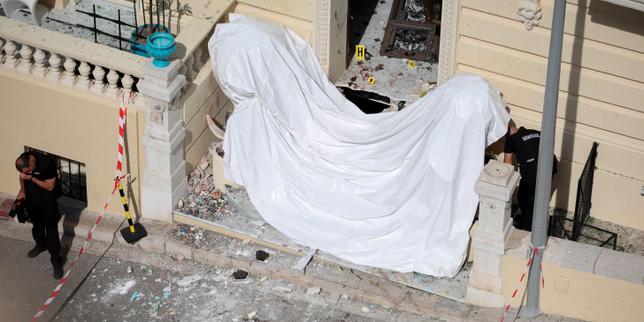
Monaco doesn't do bombs. The ultra-wealthy playground thrives on total security, making the sudden explosion on Monday night a brutal wake-up call. Around 9 p.m. on June 29, 2026, a hidden explosive package tore through the lobby of a luxury residential building on Rue Révérend Père Louis Frolla. The target wasn't a local prince. It was Vadim Ermolaev, a controversial Ukrainian-born tycoon who thought he bought safety on the French Riviera. Instead, the blast left him and his partner fighting for their lives, while his thirteen-year-old son sustained injuries from the flying debris.
Security footage showed a lone suspect fleeing toward the French border town of Beausoleil. The device wasn't a warning. Packed with bolts and industrial pellets, it was engineered as an anti-personnel weapon designed to kill. This wasn't random street crime. It looks like a targeted assassination attempt that shattered the illusion of safety for a whole class of exiled billionaires.
The Shock Wave in Monte Carlo
Monaco prides itself on being one of the most heavily policed territories on earth. It has a high concentration of surveillance cameras and zero tolerance for chaos. This blast changes the narrative instantly. Prince Albert II called the criminal explosion a massive shock for the entire community. Monaco prosecutors immediately launched a massive manhunt in coordination with French authorities, locking down borders to trace the suspect.
Beyond the three family members directly struck, emergency teams treated four other residents for severe shock. The physical blast was loud, but the political aftershocks are louder. It proves that the bitter, shadowy conflicts of Eastern Europe can easily spill over into Western Europe's most exclusive sanctuaries.
Who Is Vadim Ermolaev
You don't get onto the Forbes list of the richest Ukrainians without making plenty of enemies along the way. Born in 1968, Ermolaev built his massive empire in the industrial hub of Dnipro. He started from nothing right after the collapse of the Soviet Union. Through his real estate and manufacturing conglomerate, Alef, he effectively redesigned the skyline of Dnipro with commercial centers and massive residential towers.
An anonymous business associate from Dnipro recently mentioned that Ermolaev was incredibly ambitious but always carried a dark reputation. He had so many enemies over the years that people were practically lining up for a shot at him. He became one of the key figures in the infamous Battalion Monaco. That's the biting term Ukrainian media uses for the ultra-rich elites who packed their bags and moved to luxury Mediterranean villas while ordinary citizens stayed behind to fight the Russian invasion.
The Dangerous Double Game and Sanctions
Kyiv doesn't look kindly on tycoons living the high life abroad, especially when their money trails get messy. In December 2023, Ukrainian President Volodymyr Zelensky hit Ermolaev with a harsh ten-year sanction decree. The official accusation was clear. Kyiv alleged that Ermolaev kept running his lucrative wine and spirits businesses in Russian-occupied Crimea, effectively paying taxes into the Kremlin's war chest while his home country bled.
Ermolaev publicly denied this, claiming it was legally impossible for him to operate in Crimea. He even pointed out that he donated 83 million hryvnias to the Ukrainian war effort and lost his private plane to a Russian bombardment. But the suspicions stuck. He chose to ditch his Ukrainian passport back in 2017 for a Cypriot nationality, explicitly telling reporters he wanted international protection because the Ukrainian tax and judicial systems weren't objective.
A History of Financial Scandals
The Monaco explosion didn't happen in a vacuum. Ermolaev's financial footprint has been setting off alarm bells across Europe for nearly a decade. Look at what happened in Estonia. In 2018, the European Central Bank shut down Versobank, a financial institution co-owned by Ermolaev, over systematic money laundering breaches.
The family legal troubles escalated dramatically earlier in 2026. His son, Artur Ermolaev, pleaded guilty in Estonia for his role in running a massive fake investment phone scam from Ukraine. That operation managed to swindle victims out of roughly 100 million euros. When you combine allegations of Russian collaboration, a multi-million euro fraud conviction, and a trail of disgruntled post-Soviet business rivals, the list of potential suspects grows long very fast.
What This Means for Exiled Elites
If you're a wealthy expatriate living in Western Europe with a complicated past, the Monaco blast should terrify you. It shows that private security guards and gated communities cannot guarantee safety when sophisticated actors want you gone. The assumption that European borders offer absolute immunity from foreign scores is officially dead.
Keep a close eye on how Monaco and France handle this investigation. Watch the security updates from the public prosecutor's office, because the diplomatic fallout between France, Monaco, and Ukraine will likely tighten rules for wealthy exiles seeking residency. If you have assets tied up in Eastern European businesses, now is the time to audit your security protocols and ensure your legal compliance is spotless. The era of hiding in plain sight on the Riviera is over.