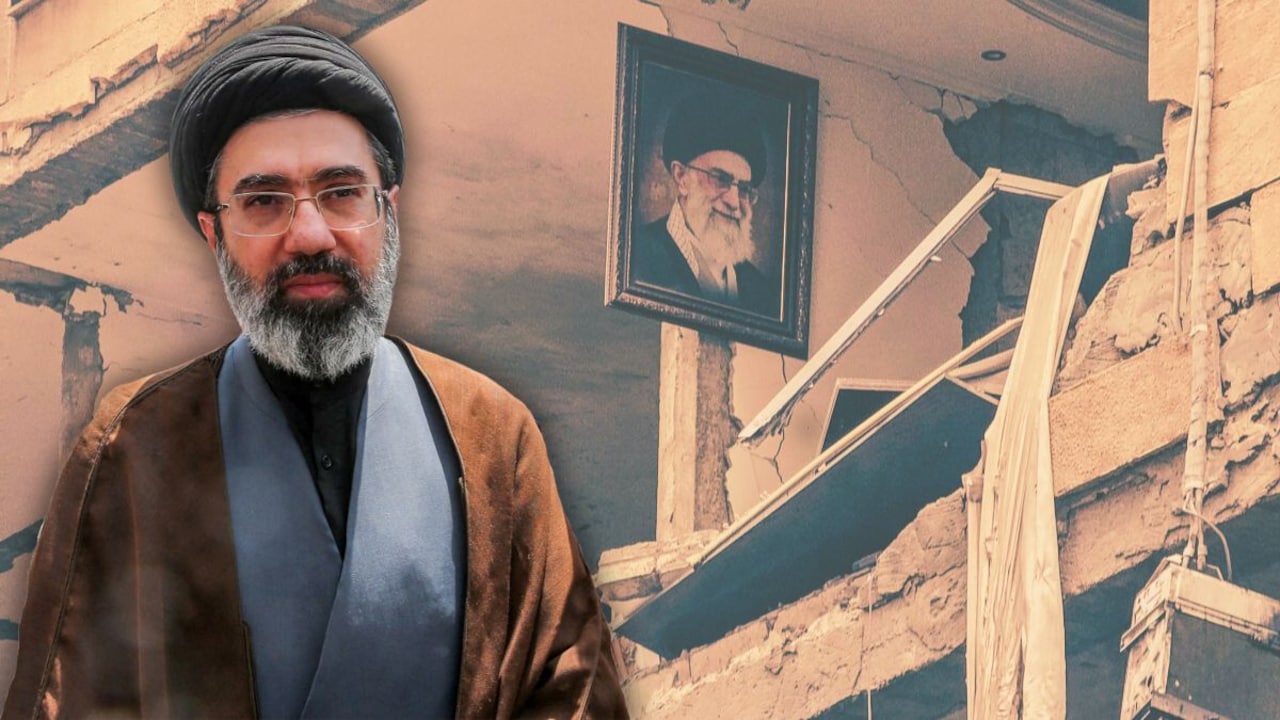
A massive six-day state funeral is about to take over Iran, but the most important man in the country won't be there.
Mojtaba Khamenei, the newly minted Supreme Leader, is officially skipping the funeral of his father, Ayatollah Ali Khamenei. Think about that for a second. In Shia Islam and Iranian state tradition, the public mourning of a supreme patriarch isn't just a family duty. It's the ultimate display of state legitimacy.
Yet, Mojtaba is staying in the shadows.
The official line from Ayatollah Hakim Elahi, Mojtaba's representative in India, points directly to severe security risks and intense Israeli surveillance. But this isn't just about security logistics. It's a glaring window into a raw, unresolved power dynamic following the US-Israeli airstrikes that killed the elder Khamenei on February 28.
If you want to understand where Iran is heading next, you have to look at why the country's new ruler can't even stand beside his father's coffin.
The Threat That Forced a Supreme Leader Into Hiding
Let's look closely at the timing because it tells you everything. Just days ago, Israeli Defence Minister Israel Katz publicly declared that Mojtaba Khamenei is marked for death. It wasn't a vague warning. It was a direct, targeted threat.
Iranian Foreign Minister Seyed Abbas Araghchi fired back on X, demanding that US President Donald Trump muzzle its pets in Tel Aviv. Araghchi pointed to the 14-point Islamabad Memorandum of Understanding (MoU) designed to stop the fighting in West Asia. According to Tehran, the US promised to hold Israel back under that deal.
But words don't stop a drone strike.
Mojtaba isn't taking any chances. Don't forget that the devastating February 28 airstrike that leveled the central Tehran compound didn't just kill his father. It killed Mojtaba's wife, Zahra Haddad-Adel, and left Mojtaba himself injured. He already skipped his wife's funeral due to safety fears. Standing out in the open during a massive public procession is a tactical nightmare for his security team.
There's another twist. Rumors have swirled for months about Mojtaba's actual physical condition. Some US officials have publicly speculated that he might be in a coma. By staying completely out of sight, the regime leaves these massive questions about his health and his grip on power completely unanswered.
Inside the Unprecedented Six-Day Funeral Procession
The sheer scale of this funeral shows how desperate the regime is to project strength. Usually, Islamic law requires quick burial, often within 24 hours. The state held onto Ali Khamenei's body for over four months because of the war. Now that a temporary truce is holding, they are making up for lost time with a massive logistical operation.
- The Schedule: Ceremonies start on Friday morning in Tehran with public viewings. Over the weekend, events shift to the Imam Khomeini Grand Mosalla.
- The Route: On July 7, the procession moves south to the holy city of Qom. The body then travels to Iraq on July 8 for major Shia rituals before returning for a final burial on July 9 in Mashhad, the late leader's hometown.
- The Numbers: Tehran municipality officials say they expect anywhere from 20 million to 35 million mourners across the different cities. If they hit those numbers, it will completely eclipse the 10 million people who showed up for Ayatollah Ruhollah Khomeini's funeral back in 1989.
Tehran has announced complete public closures from Saturday through Tuesday to manage the crowds. The Basij paramilitary is deploying across all 22 districts of the capital just to prevent crowd crushes and maintain order.
The Diplomatic Game Behind the Mourning
While millions prepare to march in the streets, the real action is happening behind closed doors. More than 100 countries are sending delegates. Foreign Ministry spokesman Esmaeil Baghaei confirmed that heads of state, parliament speakers, and special envoys are arriving in droves.
Iranian President Masoud Pezeshkian even extended a direct invitation to Indian Prime Minister Narendra Modi. Pakistani Prime Minister Shehbaz Sharif is also expected to attend.
Why is everyone showing up now? Because the funeral is a front for high-stakes diplomacy.
Right now in Doha, negotiators from Qatar and Pakistan are shuttling between US and Iranian officials. They're trying to lock down a permanent peace deal based on the 14-point MoU. Sharif recently noted that the two sides are incredibly close to a framework that could end three months of brutal war.
Foreign leaders are flying into Tehran to read the room. They want to see who is actually running the show if the new Supreme Leader is too compromised or too terrified to show his face.
What This Means for Iran's Immediate Future
By hiding Mojtaba, the regime protects its raw asset but severely damages its own narrative of absolute control. You can't claim to lead a regional axis of resistance when you're afraid to step outside.
The next few days are critical. Keep a close eye on these three specific pressure points:
- Watch the Military Leadership: Pay close attention to which Islamic Revolutionary Guard Corps (IRGC) generals stand closest to the coffin during the televised ceremonies. They are the ones holding the real leverage while Mojtaba remains isolated.
- Monitor the Doha Peace Talks: Look for updates right after the July 9 burial. Qatari mediators have already stated that official diplomatic meetings will resume the second the funeral finishes. See if Israel's targeted threats derail the 14-point MoU.
- Track State Media Propaganda: Watch how Iranian state TV frames Mojtaba's absence. If they heavily feature pre-recorded messages or attempt to explain away his isolation, it means the internal panic over his legitimacy is real.


.jpg)