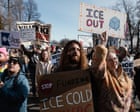
Defending democracy is a comforting, high-minded theory when you read about it in a textbook. It feels like something handled by suited lawyers in mahogany courtrooms, or election judges verifying barcodes on paper slips. But on the pavement of Minneapolis and St. Paul, things look entirely different. When federal boots are on your street, democracy isn’t an abstract idea. It’s an exercise in survival.
Earlier this year, a massive wave of federal immigration agents flooded Minnesota under a White House initiative called Operation Metro Surge. The operation wasn't just a policy shift. It was a sledgehammer. It left two local residents dead, tore hundreds of families apart, and shattered the baseline sense of security for thousands of immigrant families.
In response, an organic, block-by-block network of ordinary neighbors materialized overnight. They didn’t wait for national nonprofits to save them. They organized child care, coordinated school runs, and deployed community observers to track federal vehicles through encrypted group chats.
Now, those exact same neighborhood networks are pivoting to a new, equally urgent frontline. They aren’t just looking out for immigration vans anymore. They are preparing for an entirely different kind of state-sponsored disruption: the potential subversion of the upcoming November midterm elections.
From Cop Watching to Ballot Watching
The evolution from tracking immigration agents to defending local polling stations is a natural step for community organizers on the ground. When you spend months learning how to document federal overreach legally, those observation skills don't disappear. You just redirect them.
Unidos MN, a prominent social justice organization in the state, launched an initiative called Monarca. Since late April, they’ve been running ground-level democracy defense trainings aimed at preparing regular citizens for worst-case political scenarios. Hundreds of locals have already gone through the program.
The logic behind this shift is simple. The tactics used to intimidate vulnerable communities during the immigration crackdown are the same mechanisms that can be deployed to suppress votes.
Think about it. If a community is terrified to leave the house because federal agents are roaming the neighborhood, they aren't going to stand in line for three hours at a local precinct to cast a ballot. Fear is a highly effective voter suppression tool.
Organizers aren't just dealing with typical political apathy. They are fighting engineered panic. Luis Argueta Jr, the communications director for Unidos MN, noted that concerns about immigration agents showing up near polling locations have been a continuous, exhausting source of anxiety for families across the Twin Cities.
The Threat Model for November
What does a ground-level assault on an election actually look like? It doesn't always involve dramatic, armed standoffs. Most of the time, it looks like administrative chaos designed to make people give up and go home.
During the Monarca project's training sessions, leaders like David Brauer walk participants through highly specific, calculated threat scenarios. They use theoretical exercises to strip away complacency. In one training simulation, organizers mapped out a scenario where the Department of Justice suddenly announces a brand-new, mandatory federal voter roll right before early voting begins.
The immediate result of a move like that is pure, unadulterated confusion. Poll workers don't know which list to follow. Voters get turned away. The lines get longer, the day gets hotter, and working-class people who can't afford to lose an entire day of wages leave the queue.
We’ve already seen previews of this disruption strategy. Earlier this season, the White House directed a flood of misleading claims directly at California’s primary elections, triggering operational friction and public distrust on the ground. When the highest office in the country uses its platform to systematically erode faith in the mechanics of voting, local networks have to fill the vacuum.
"We don't need perfect leaders. We just need a regular person that can take responsibility of something, anything, whether it's a smaller block or a small floor in a building."
— Local organizer training in Minnesota
The Weaponization of the Legal System
Stepping up to defend the vote in 2026 comes with severe personal risk. The administration isn't just ignoring these grassroots networks; it's actively trying to dismantle them using the power of federal indictments.
In mid-June, federal prosecutors leveled serious criminal charges against 15 anti-ICE activists in Minnesota, accusing them of interfering with federal immigration enforcement operations. It was a jarring escalation. Civil rights lawyers view these indictments as a blueprint for wider intimidation tactics ahead of November.
Jess Marsden, counsel for the anti-authoritarian non-profit Protect Democracy, pointed out that this is a classic "disrupt" strategy. The goal isn't necessarily to secure 15 convictions in a court of law. The goal is to send a chilling message to anyone thinking about organizing a neighborhood voter drive or acting as a non-partisan poll monitor. If you stick your neck out, the state will tie you up in federal litigation that could ruin your life.
It's a heavy psychological burden for a community that is already deeply exhausted. Activists have been running on pure adrenaline for months, managing the fallout of Operation Metro Surge, attending funerals for neighbors killed in federal operations, and trying to keep their own families intact. Burnout is real, and it's a structural advantage for an administration that wants people to stay home and stay quiet.
Moving Beyond the Checklist
During a recent training session held in a church basement, Brauer challenged the participants to rethink what activism means in an era of political instability. He warned against being a "checklist person"—someone who believes that if you just finish five pre-determined tasks, you magically save democracy and win the game.
Real community defense doesn't fit neatly into a corporate checklist. It's fluid, messy, and hyper-local. The Monarca program isn't trying to fix the deep, structural flaws of American governance. Instead, it focuses on building an elastic, immediate network capable of reacting to whatever operational hurdles are thrown at the state this fall.
The actionable tactics being taught on the ground are decidedly unglamorous, but they are highly effective:
- Block-by-block mutual aid routing: Ensuring every single person on a street has a confirmed, safe ride to their polling place, bypassing areas with heavy law enforcement presence.
- Poll position monitoring: Placing trained, calm community observers a legal distance away from voting lines to watch for unauthorized state interference or civilian intimidation tactics.
- Bureaucracy buffering: Training bilingual community members to serve as official election judges, ensuring that complex ID requirements aren't weaponized against non-native English speakers.
- Rapid response verification: Creating localized communication hubs to quickly debunk viral disinformation about polling place closures or sudden rule changes before panic spreads through immigrant neighborhoods.
State-level officials in some regions are trying to erect legislative barriers against federal overreach. They are reinforcing local election security and trying to clarify voting rules for the public. But laws on paper require enforcement, and when federal agencies are the ones doing the overreaching, top-down state protections can crumble quickly. That's why bottom-up, block-level defense is the ultimate insurance policy.
Actionable Steps for Community Defense
You don't need a background in constitutional law to build a resilient neighborhood structure. The organizers in Minnesota are winning because they focused on proximity and basic logistics. If you want to protect the ballot in your own community, forget about national talking points and start at the micro-level.
Step 1: Map Your Immediate Block
Get to know the twenty houses or apartments closest to you. Identify who has mobility issues, who lacks a reliable vehicle, and who will need language assistance at the polls. Don't rely on digital spreadsheets that can be tracked or hacked; keep it conversational and built on direct, personal trust.
Step 2: Sign Up as an Election Judge
Do not leave poll management to chance. The most direct way to stop voter suppression is to be the person checking the IDs and handing out the ballots. States are facing massive shortages of poll workers, leaving vacancies that partisan actors are eager to fill. Step into those roles early.
Step 3: Establish a Local Verification Protocol
Work with local civil rights groups to establish a clear, verified line of communication for election day. If someone claims a polling place has been shut down or that immigration agents are checking documents at the door, do not repeat it on social media until a designated, trained observer has physically verified the claim. Baseless rumors suppress votes just as effectively as real threats.
The lesson from the Twin Cities is stark. When the systems designed to protect you are weaponized against you, your neighbors are your only real safety net. Democracy isn't saved by a grand, sweeping gesture from a savior politician. It is saved or lost on the block.