Four months ago, a weapon built by the United States government and paid for by American taxpayers brought down the concrete roof of an elementary school in southern Iran. It crushed dozens of children to death.
This is not a matter of speculation or a piece of wartime propaganda. It is a documented fact. On February 28, 2026, during the opening salvo of the U.S.-Israeli military campaign against Iran, a U.S. Tomahawk cruise missile tore through the Shajareh Tayyebeh Elementary School in Minab, a city in the Hormozgan province. The strike killed 156 people. Among the dead were 120 schoolchildren.
Yet today, Washington is playing a familiar game of linguistic gymnastics. Dictatorships cover up their atrocities with total media blackouts. Western democracies do it with bureaucratic delays, ongoing investigations, and carefully timed political deflections. If you are looking for accountability for the families in Minab, you will not find it in the official press briefings. You have to look at the horrifying reality of what happened on the ground and the systemic intelligence collapse that caused it.
The Morning the Roof Collapsed
The attack happened during the morning school session. Saturday is a standard school day in Iran. The Shajareh Tayyebeh school was a bustling, two-story building where boys and girls were taught on separate floors.
Around 10:23 a.m., the first missile struck the walled complex. It did not completely destroy the school, but it blew apart outer walls and sent a shockwave through the classrooms. The school principal acted quickly. She scrambled to herd a large group of terrified children into an interior prayer room, which she believed offered the best protection. She then began making frantic phone calls to local parents, telling them to run to the school and rescue their kids.
Then came the second and third missiles.
Military strategists call this a triple-tap strike. It is a tactic designed to maximize destruction by hitting the exact same target multiple times in rapid succession. The subsequent strikes made a direct hit on the very prayer room where the students had taken shelter. The concrete roof collapsed inward. It buried teachers and children under tons of jagged rebar and pulverized stone.
By the time the dust cleared, more than half of the school building was gone. Parents who had rushed to the scene after the first blast arrived only to find a smoking crater and the screams of survivors trapped beneath the debris.
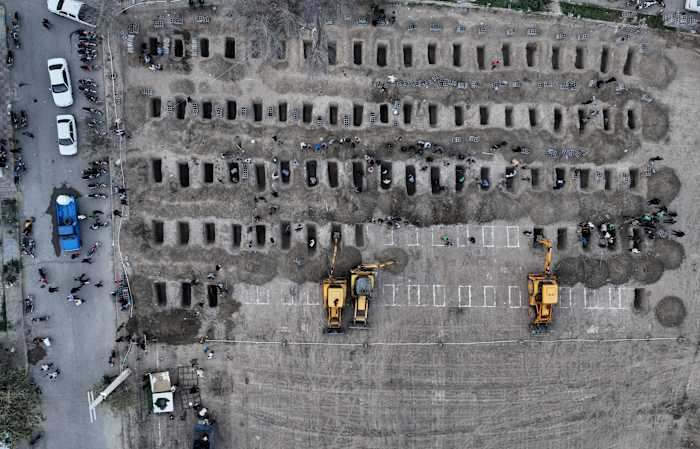
The final casualty list from that morning is staggering. Out of the 156 verified deaths, 120 were students between the ages of 7 and 12. The victims included 73 boys and 47 girls. Every single one of the 26 teachers killed was a woman. The blast also killed seven parents who had arrived to collect their children, a school bus driver, and a pharmacy technician from a nearby clinic who had rushed over to help.
The Anatomy of an Outdated Target Package
The Pentagon knew almost immediately that American forces had struck a civilian school. They had the telemetry data. They had the satellite feeds. Publicly, however, the official response was a wall of silence.
The defense establishment has blamed the tragedy on an intelligence failure. The school sat on a city block directly adjacent to a military compound used by the Islamic Revolutionary Guard Corps (IRGC) Navy. This naval base was an active target for U.S. Central Command (CENTCOM).
The critical error lies in how the Defense Intelligence Agency (DIA) classified the school building itself. More than a decade ago, the structure had been part of that military installation. The Iranian government decommissioned the building and turned it into a public civilian school over ten years ago.
The DIA never updated its target coding.
When CENTCOM planners drew up the strike packages for the February 28 operation, they pulled stale data from their databases. The automated systems flagged the old school building as a legitimate military structure belonging to the IRGC. Officers at CENTCOM fed these coordinates directly into the guidance systems of Tomahawk cruise missiles without verifying the current status of the building against updated satellite imagery.
Anyone looking at basic open-source satellite data from the last several years could see that the building was a school. It had a brightly painted courtyard. It had school buses parked outside. It had children playing in the yard during recess. The U.S. military possesses some of the most advanced surveillance capabilities on earth, yet its targeting pipeline failed to notice a decade-long change in a building's civilian use.
The failure becomes even more troubling when you look at the technology driving modern American warfare. Just weeks after the attack, CENTCOM Commander Brad Cooper confirmed that the military was relying heavily on advanced artificial intelligence tools to process massive amounts of operational data. When you feed outdated intelligence into high-speed military software, the system does not pause to ask ethical questions. It simply optimizes the destruction of the coordinates it is given. The reliance on automated targeting data did not prevent a catastrophe. It accelerated it.
The Shifting Rhetoric from Washington
The political response to the Minab strike has morphed from quiet deflection to outright denial.
During the G7 summit in France in June, President Donald Trump briefly acknowledged the incident when pressed by reporters. He called the bombing a mistake and insisted that nobody did it on purpose. He shrugged off the civilian casualties with a chillingly blunt assessment, stating that mistakes are made and war is nasty.
A few days later, the narrative shifted entirely. By late June, the administration began backtracking on its admission of error. Trump publicly cast doubt on whether an American weapon was even involved, claiming he had seen nothing to prove U.S. responsibility. He pointed out that there were missiles flying all over the place from multiple nations, concluding with a simple dismissal: "I don't think it was us."
This rhetorical pivot creates a dangerous accountability vacuum. The Pentagon has elevated its internal probe into the strike, but it has refused to release any preliminary findings or accept formal blame. Human rights organizations like Amnesty International have pointed out that this delay is a deliberate strategy to let the incident fade from global news cycles.
Independent verifications have already closed the loop that Washington wants to keep open. Outlets like Sky News and the BBC have analyzed the weapon fragments, verified CCTV footage of the missile trajectories, and mapped the exact coordinates of the strike. The evidence points to a coordinated American strike on a protected civilian object. Under international humanitarian law, failing to take proper precautions to verify a target before launching an attack is a serious breach that borders on a war crime.
Why Stale Data is Not a Legal Excuse
There is a dangerous myth in modern warfare that if a tragedy is caused by bad data, it is just collateral damage. That is a lie.
The laws of war require military forces to do everything feasible to verify that targets are not civilian objects. You cannot just look at a digital map from 2015 and call it a day. The fact that the school had been a civilian institution for more than ten years means that the U.S. military exhibited gross negligence in its targeting process.
Iran has naturally capitalized on this tragedy for its own political theater. The Iranian government released CCTV footage of the strike, held highly publicized mass funerals, and used the deaths to rally domestic support for its war effort. Iran's Foreign Minister, Abbas Araghchi, labeled the bombing a deliberate crime against humanity during a speech at the UN Human Rights Council.
The politicization of the tragedy by Tehran does not absolve the United States of its responsibility. The families of the 120 children who died do not care about geopolitical posturing. They are stuck in a vacuum of grief, trapped between a theocracy that uses their dead children as political leverage and a superpower that refuses to admit its mistakes.
Real Actions Needed Next
True accountability for the Minab school bombing will not come from standard government press releases. The current strategy of delay and denial must be challenged by independent bodies and the public. To ensure this tragedy is not completely buried, several concrete actions must happen immediately.
- Declassify the CENTCOM Targeting Logs: Congress must use its oversight power to force the Pentagon to release the specific target package used for the February 28 strikes. The public needs to see exactly who approved the coordinates and why the DIA's outdated database was never cross-referenced with live satellite surveillance.
- Halt the Use of Automated Target Selection Tools: The military must suspend the use of automated data-processing and target-generation software until an independent review can determine how these systems handle outdated or conflicting intelligence data. If algorithms are speeding up the targeting process at the expense of human verification, they are too dangerous to use.
- Establish an Independent International Investigation: Because neither the United States nor Iran can be trusted to provide an unbiased account of the events, a neutral third-party body must be granted access to the physical site and the electronic data to compile a definitive report on the civilian casualties.
- Provide Transparent Reparations: The U.S. government must establish a formal mechanism to offer compensation to the families of the victims in Minab. Acknowledging the harm through financial restitution is a standard legal remedy for accidental civilian deaths, and hiding behind wartime secrecy to avoid it is unacceptable.
The bodies of 119 identified children have been laid to rest in the Hormozgan province. Their families have no legal recourse, no answers, and no apologies. Allowing the Pentagon to hide behind the chaos of a broader war sets a terrifying precedent for the future of digital conflict. If a military can wipe out an entire school because of an unclicked checkbox in a database and face zero consequences, then no civilian anywhere on earth is safe from the next intelligence glitch.