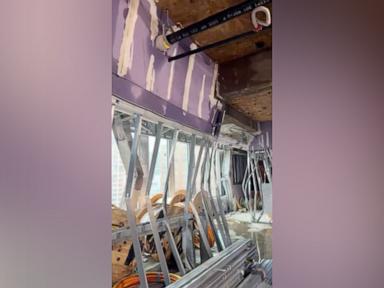
A massive high-rise construction project in Midtown Manhattan went from an engineering marvel to a neighborhood nightmare in minutes. On Tuesday morning, structural support beams on the 21st floor of a 37-story commercial building began to buckle. The building, located at 235 East 42nd Street, is the former Pfizer headquarters. It was in the middle of being converted into residential apartments.
Emergency crews rushed to the scene around 8:11 a.m. after receiving panicked calls about bricks raining down on the pavement below. The structural failure on the 21st floor caused a chain reaction, making floors 21 through 26 sag and start to cave under intense structural stress.
First responders didn't hesitate. The New York City Fire Department and Department of Buildings quickly cleared out the active job site and ordered the evacuation of nine surrounding buildings, including a Hampton Inn and a school packed with 400 students. Multiple blocks near the United Nations headquarters are shut down, leaving Midtown East trapped in gridlock. Thankfully, nobody has been hurt, and all construction workers made it out alive. Still, this structural disaster raises serious questions about the massive wave of office-to-housing conversions hitting major cities.
The Real Cost of Retrofitting Concrete and Steel
Everyone wants office-to-residential conversions to work. Cities need housing, and commercial real estate is hurting. Transforming an empty 37-story office tower into an apartment complex looks brilliant on paper. But in practice, it's an engineering minefield.
Commercial buildings are built radically differently than apartment complexes. They feature deep floor plates, heavy core structures, and centralized heating and cooling zones. When you start ripping out massive commercial infrastructure to run plumbing lines, individual vents, and new electrical grids for hundreds of apartment units, you alter how weight moves through the building.
At 235 East 42nd Street, two crucial interior columns buckled. Union representatives on the scene noticed the structural damage early. Cliff Johnsen, a business agent for Steamfitters Local 638, reported that workers were yanked from the building when the steel began to visibly warp. Johnsen noted that the entire north side of the tower appeared to be crumbling because the job site hadn't been shored up correctly.
When you cut into an old building's structure without proper temporary bracing, gravity wins every single time.
What Went Wrong at 235 East 42nd Street
The Department of Buildings is currently investigating the exact trigger, but the physical reality of the site tells a clear story.
- The Sagging Effect: When support columns buckle on a high floor like the 21st, the weight of the stories above compresses down instantly. The sagging on floors 21 through 26 indicates that the vertical load-bearing capacity of the tower was severely compromised.
- Falling Bricks: Exterior masonry and facades are attached to the internal steel skeleton. When the internal skeleton warps, the exterior skin pinches and shears off, sending heavy bricks plunging 20 stories to the street.
- Shoring Failures: Early reports point toward non-union contractors failing to implement proper structural shoring while modifying the building’s layout. If you remove or alter a structural element before the secondary load path is fully secured, the remaining columns bear the brunt of the weight.
New York City Mayor Zohran Mamdani confirmed that city engineers and inspectors are scrambling to stabilize the structure. Drones and specialized cameras will likely have to inspect the interior spaces because sending humans into a building where five consecutive floors are actively sagging is suicidal.
The Office Conversion Trend Face a Reality Check
Cities across America are pushing tax incentives to convert empty downtown offices into apartments. It’s a trendy solution to the housing crisis. But what happened in Midtown East shows why developers usually prefer to build from scratch.
Ripping apart the interior of a 30-plus story tower requires meticulous care. You aren't just putting up drywall. You are dealing with decades-old steel under immense tension. If a contractor takes shortcuts, uses substandard shoring, or miscalculates the load distribution during demolition, the results can be catastrophic for an entire metropolitan block.
Immediate Steps for Commuters and Residents in Midtown East
If you live, work, or commute anywhere near Midtown East, don't expect a quick fix. This isn't a minor traffic incident. Securing a buckling skyscraper takes days, if not weeks.
Avoid 42nd and 43rd Streets between First and Third Avenues entirely. The NYPD has closed these blocks to both vehicles and pedestrians. Expect heavy delays on the FDR Drive and surrounding avenues.
If your office or apartment building was one of the nine properties evacuated by the FDNY, do not attempt to return to retrieve belongings until the Department of Buildings issues an official all-clear. The city won't let anyone back inside until engineers can prove those buckled 21st-floor columns won't trigger a progressive collapse of the upper levels.
Keep an eye on official updates from the FDNY and the New York City Department of Buildings. This incident serves as a stark warning to the construction industry. Converting real estate requires expert engineering and flawless execution, not just ambition.