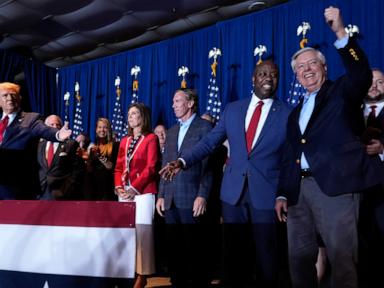
South Carolina politics just got thrown into an absolute blender. The sudden passing of Senator Lindsey Graham from an aortic dissection at age 71 leaves a massive vacuum in Washington and a chaotic scramble at home. For over two decades, Graham was an unmovable fixture in American foreign policy and conservative judicial battles. Now, state leaders are forced to navigate a legal maze and a political civil war to find his replacement.
If you think this will be a clean, orderly transition, you don't know South Carolina politics. The state is facing compressed deadlines, clashing federal mandates, and a long line of ambitious Republicans eager to grab a seat that rarely opens up.
Here is exactly how the process will unfold, the legal traps waiting to spring, and the real contenders who want the job.
Governor Henry McMaster and the Caretaker Dilemma
The first move belongs entirely to Governor Henry McMaster. Under state law, the governor has the sole authority to appoint a temporary replacement to finish out Graham's current term, which runs until January 3, 2027. Unlike some states that force a governor to pick from a list provided by the deceased senator's political party, South Carolina gives McMaster total freedom. He can pick anyone he wants.
But that freedom is a curse. McMaster faces a fundamental choice. Does he appoint a quiet caretaker who promises not to run for the full term, or does he appoint a heavy hitter and give them an immediate advantage in the upcoming special primary?
The pressure from Mar-a-Lago is already intense. Graham managed to transform himself from a fierce critic of Donald Trump into one of his closest confidants on Capitol Hill. Trump has a massive stake in who fills this seat. If McMaster picks a favorite, it could alienate huge factions of the state's Republican apparatus. If he picks a placeholder, he delays the real fight by just a few weeks.
Insiders suggest McMaster is looking closely at his own inner circle, but the ticking clock means he can't sit on this decision for long. The Senate majority is razor-thin. Washington needs that vote immediately.
The Scrambled Election Calendar and the Federal Law Trap
This is where the situation turns into a bureaucratic nightmare. Graham was running for his fifth term this November and had easily won his June primary against businessman Mark Lynch. Because his death occurred before the general election, South Carolina law triggers a very specific, ultra-fast special election timeline to choose a new Republican nominee.
The statutory calendar looks like this:
- July 21: The official one-week filing period opens on the second Tuesday following the senator's passing.
- July 28: The filing window slammed shut.
- August 11: The special Republican primary election takes place.
- August 25: A primary runoff occurs if no single candidate gets above 50% of the vote.
The winner of this rapid-fire sprint will face Democratic nominee Dr. Annie Andrews on the November ballot.
But there is a massive legal glitch that most national commentators are completely missing. Federal law, specifically the Military and Overseas Voters Empowerment (MOVE) Act, requires states to mail out general election ballots to military personnel and overseas citizens at least 45 days before a federal election. For the upcoming November election, that drop-dead deadline is in mid-September.
If South Carolina Republicans are tied up in a bitter primary runoff until late August, the state election commission will have a nearly impossible window to certify the results, handle any legal challenges, print the physical ballots, and mail them out to comply with federal law. We are looking at a guaranteed collision course between state election rules and federal mandates. Expect election lawyers to make a fortune over the next month.
The Big Names Eyeing the Seat
The rumor mill in Columbia is spinning out of control. Because Senate seats in South Carolina are usually lifetime appointments, every ambitious politician in the state is calculating their odds. A few key players are already dominating the conversation.
Lieutenant Governor Pamela Evette
Pamela Evette has spent nearly eight years serving right alongside McMaster. She had the governor's blessing during her recent bid for the gubernatorial nomination, but she suffered a painful loss in the June runoff to Attorney General Alan Wilson. Despite that setback, her allies are already pushing her name hard. She has deep fundraising connections and strong name recognition across the state. Stepping into the Senate seat would be the ultimate political redemption, and it would give McMaster a trusted ally in Washington.
Representative Nancy Mace
Nancy Mace never shies away from a fight, and she loves the spotlight. She has already publicly acknowledged that she would be remiss if she didn't consider a run for the seat. Mace chose not to seek reelection to her House seat this cycle, meaning she is completely free to launch a statewide campaign without abandoning an active legislative seat. Her independent streak sometimes irritates the hard-right faction of the party, but her media savvy and fundraising muscle make her an instant heavyweight in a compressed primary.
Representative Russell Fry
The two-term congressman from the Myrtle Beach area is a pure product of the modern MAGA movement. He entered Congress by ousting a Republican who voted to impeach Trump, and he has maintained ironclad loyalty to the America First agenda ever since. Fry has the youth, the regional base, and the potential backing of Trump's inner circle. If Trump decides to intervene directly with an endorsement, Fry could easily surge to the front of the pack.
The House Majority Problem
You might wonder why sitting House members like Joe Wilson aren't being considered for the immediate gubernatorial appointment. The answer is simple math. Republicans hold a tiny, fragile majority in the U.S. House of Representatives. Pulling a sitting congressman out of their seat to put them in the Senate creates an immediate vacancy in the House, shrinking that majority even further. Congressman Joe Wilson went so far as to post on social media that he personally assured Trump he would stay in the House to protect that tiny margin. Running in the August primary is one thing, but accepting the temporary appointment is a non-starter for active House members.
A Once in a Generation Power Shift
To understand why this race will be so vicious, look at the history. South Carolina simply does not change senators. Whoever wins this seat will be only the third person to hold it since 1956.
For nearly half a century, the legendary Strom Thurmond occupied the seat. When he finally stepped down, Graham won it in 2002 and held it with an iron grip for 24 years. Ambitious politicians in this state know that if they miss this train, they might not see another open Senate seat for the rest of their natural lives. Tim Scott holds the other seat, and he isn't going anywhere anytime soon.
This reality guarantees that the upcoming primary won't be a polite policy debate. It will be an absolute brawl. Candidates have less than a month to build a statewide campaign infrastructure, raise millions of dollars, and convince voters who are still mourning Graham's death that they are the rightful heir to his legacy.
What Happens Next
The political machinery is already moving. Watch for these exact next steps over the coming days to see which way the wind is blowing:
- The Caretaker Announcement: Watch Governor McMaster's press conferences this week. If he appoints a retired elder statesman or a non-political figure, it means he is letting the primary field play out on a level playing field. If he appoints someone young and ambitious, he has chosen his horse for the race.
- The Trump Factor: Keep an eye on Truth Social. A single post from Donald Trump can completely reshape this primary field, clearing out minor candidates and instantly solidifying a frontrunner.
- The Legal Clarity: Watch for the State Election Commission to issue guidance on how they plan to reconcile the August 25 runoff date with federal overseas ballot deadlines. Any sign of a lawsuit will signal a protracted legal fight.