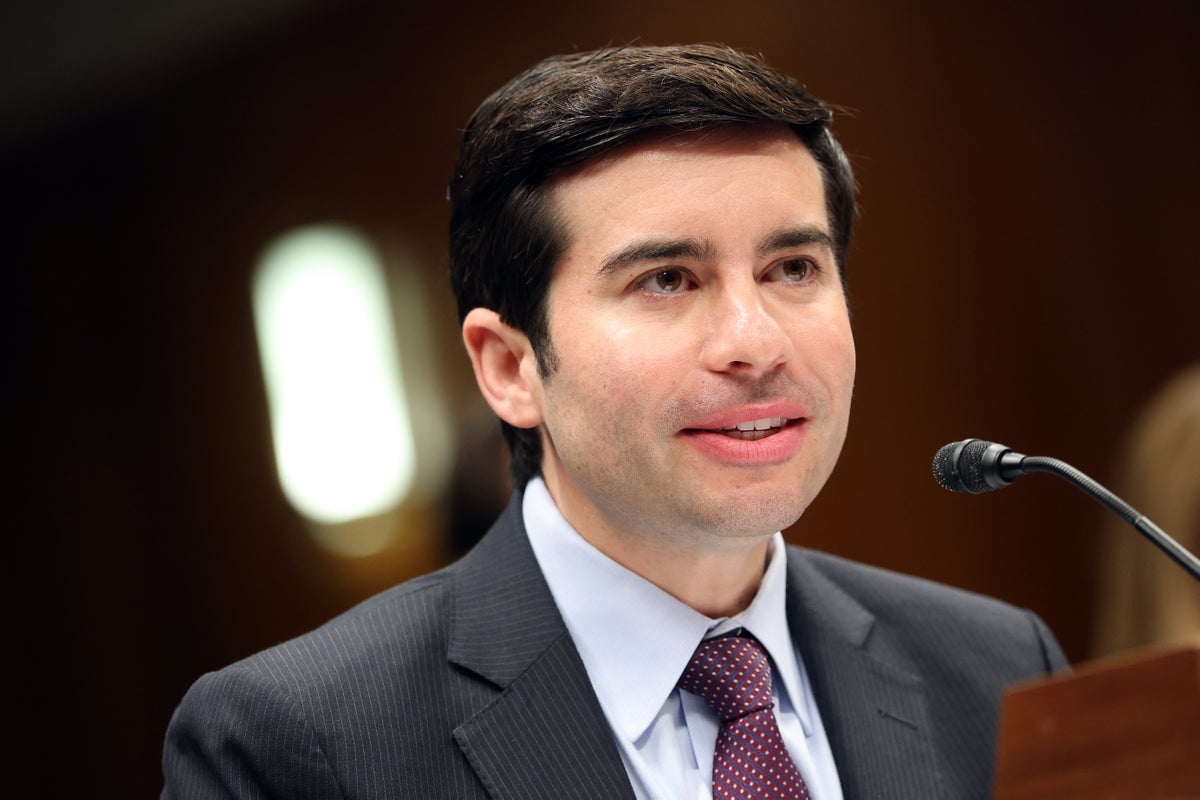
The Department of Labor has been a chaotic mess for months. On Monday, June 29, 2026, the White House finally made a definitive move to stop the bleeding. When Trump nominates acting director Keith Sonderling as labor secretary, it sends a clear signal that the administration wants a sharp, calculated bureaucrat who knows how to wield executive power rather than another headline-grabbing politician. Sonderling has been running the agency in an acting capacity since April, following the disastrous and scandal-ridden exit of former Secretary Lori Chavez-DeRemer. This permanent promotion isn't just a routine personnel update. It represents a massive shift toward aggressive federal oversight, targeting state-level welfare programs and restructuring the federal workforce.
You want to know what this nomination means for your business, your union, or your paycheck. The short answer is that Sonderling is a hyper-focused enforcement hawk disguised as a traditional corporate lawyer. He is not a newcomer. He knows the Department of Labor inside out, having served across multiple administrations in various roles, from the Wage and Hour Division to the Equal Employment Opportunity Commission. This deep familiarity with the inner workings of the state makes him far more dangerous to his opponents than a political outsider would be. He knows exactly which buttons to push to get things done.
The Scandal That Forced a Shift at Labor
To understand why Trump nominates acting director Keith Sonderling as labor secretary right now, you have to look at the wreckage left behind by Lori Chavez-DeRemer. Her tenure was brief, explosive, and deeply embarrassing for the administration. She resigned in April 2026 after a flurry of internal investigations exposed rampant misconduct. The Labor Department's inspector general unearthed evidence that Chavez-DeRemer and her top aides routinely treated the agency as a personal fiefdom.
The allegations were wild. Investigators reviewed messages showing she used young staff members to run personal errands, like picking up liquor. She reportedly drank alcohol while on duty. Worse, she faced accusations of maintaining an inappropriate sexual relationship with a member of her own security detail. Her husband, Shawn DeRemer, was also dragged into the mud, facing separate allegations of sexually assaulting two female staff members. Official business trips were frequently used as thin covers for personal travel. While Chavez-DeRemer denied the claims, the political pressure became too heavy. She had to go.
Sonderling stepped into that vacuum as acting secretary. He had already been serving as the deputy labor secretary since his confirmation in March 2025. In reality, he was already running most of the daily operations because Chavez-DeRemer was so frequently absent or distracted by her compounding legal troubles. When Trump made the official announcement on Truth Social, he called Sonderling outstanding and praised his dedication to delivering results for working people. It was a clear attempt to put the previous scandals in the rearview mirror.
Putting Governors on Notice Over Unemployment Fraud
Sonderling did not waste any time when he took the acting wheel. He immediately went on the offensive, demonstrating the exact kind of aggressive executive action that defines Trump's second term. On June 17, 2026, Sonderling sent formal letters to 53 states and territories. He demanded immediate action to combat what he described as widespread waste, fraud, and abuse within the state-administered unemployment insurance programs.
He did not just ask nicely. He threatened to pull their federal administrative funding. That is a historic escalation. No labor secretary has ever used that specific financial threat before. Sonderling openly stated that the American people would no longer tolerate the blatant theft of taxpayer dollars, warning governors that if they allowed fraud to continue, they would face severe consequences.
He took his campaign straight to cable news, appearing on Fox News to single out Democrat-led states. He pointed fingers directly at California, New York, and Illinois, claiming they harbored the highest rates of unemployment fraud. He did not provide hard, specific data on air to back up the immediate claims, but the political message was received loud and clear. By threatening to cut off administrative funds, Sonderling is effectively saying he is willing to break the state-level systems entirely to force compliance. If you run a business or manage a state workforce agency in those regions, your world is about to get a lot more complicated.
A Track Record of Agency Restructuring
Critics are terrified of Sonderling because of what he did at other federal agencies over the past year. During this administration, Sonderling did not just hold the labor portfolio. He concurrently served as the acting director of the U.S. Office of Government Ethics and the Institute of Museum and Library Services.
His actions at the library agency showed just how far he is willing to go to execute executive orders. Last year, when the administration targeted several small agencies for complete closure, Sonderling took a sledgehammer to the Institute of Museum and Library Services. He placed a massive portion of the staff on administrative leave. He issued termination notices to most of the workforce. He began tearing up active grants and contracts, and he summarily fired every single member of the National Museum and Library Services Board.
A federal judge eventually stepped in and blocked those firings, and that legal battle is currently playing out on appeal. That aggressive, borderline-illegal approach tells you everything you need to know about his management style. He does not wait around for consensus. He acts, and he lets the courts sort it out later. That is exactly the mindset he brings back to the permanent role at Labor.
The Legal Mindset Shaping the Workplace
Before he became a fixture in Washington, Sonderling was a corporate lawyer. He made his name as a partner at Gunster, one of the largest and oldest law firms in Florida. His job was defending employers and fighting labor unions in court. He knows every trick in the book because he used to write them for private clients.
Later, Trump appointed him to the Equal Employment Opportunity Commission, where he served from 2020 to 2024. During his time at the EEOC, Sonderling focused heavily on how companies use artificial intelligence and automated systems to hire, fire, and monitor workers. He wrote extensively about the legal dangers of algorithmic bias. He warned that corporate leaders could not hide behind software when making discriminatory choices.
This background gives him a unique edge. He understands the corporate world, but he also understands how technology is transforming employment law. He isn't a typical union-busting Republican who wants to eliminate all regulations. Instead, he wants to redirect those regulations. Expect him to ease up on corporate compliance rules while shifting the entire weight of federal enforcement toward union accountability and state compliance.
What Happens Next in the Senate Confirmation
The nomination now moves to the U.S. Senate for confirmation. Because Sonderling was already confirmed as deputy secretary in 2025 by this same Senate, his path to the top spot should be relatively smooth. Republicans hold the majority, and they are eager to stabilize the Labor Department after the Chavez-DeRemer disaster.
Democrats will undoubtedly use the confirmation hearings to grill him on his controversial actions at the Institute of Museum and Library Services. They will paint him as an ideological hatchet man who cares more about dismantling government agencies than protecting workers. Labor unions will also lobby hard against him, pointing to his history as a corporate defense attorney and his recent threats to cut off state unemployment funds.
Despite the noise, Sonderling has the institutional backing and the track record to secure the votes. He has already proven he can do the job on an acting basis, and the administration wants him installed permanently before the midterms.
How to Prepare for the Sonderling Era
If you are an employer, an HR professional, or a labor leader, you cannot afford to ignore this transition. The days of a distracted Labor Department are over.
- Review your state unemployment compliance: If your business operates in California, New York, or Illinois, expect intense federal audits. Ensure your reporting systems are flawless because the federal government is looking for reasons to penalize state programs.
- Audit your workplace AI tools: Sonderling has a long memory regarding algorithmic discrimination. Make sure your automated hiring or performance tracking software complies with federal guidelines, as this will remain a quiet pet project of his.
- Expect shifting enforcement priorities: The focus will shift away from aggressive corporate wage-and-hour crackdowns and toward strict oversight of union finances and public sector labor groups. Adjust your compliance strategies accordingly.
The era of scandal at the Labor Department is transitioning into an era of aggressive, legally sharp federal intervention. Sonderling knows the rules, knows the systems, and isn't afraid to break things to achieve his goals. Watch the Senate hearings closely, but start adjusting your operations today.