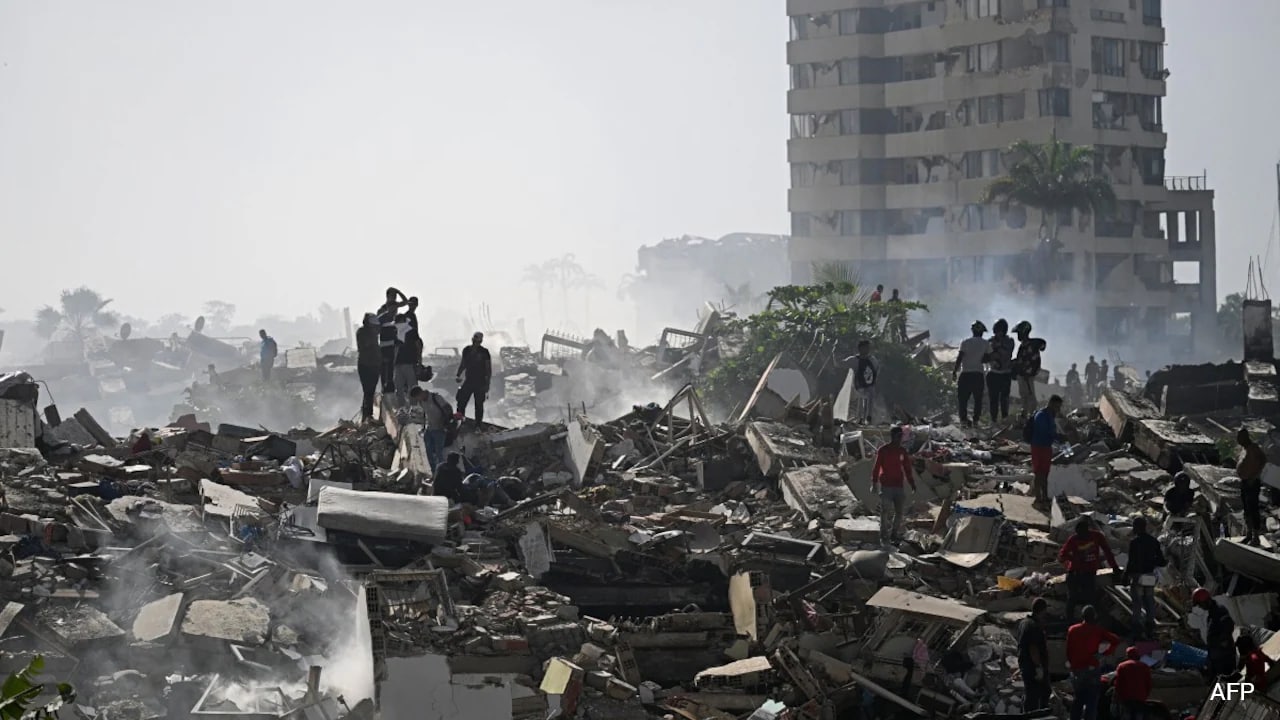
The ground beneath Latin America is fundamentally unstable. When the twin 7.2 and 7.5 magnitude earthquakes rattled the coast of Venezuela and shook buildings in Caracas on Wednesday, it wasn't a freak anomaly. It was just the latest chapter in a brutal seismic history. Emergency workers are still clearing rubble in Catia La Mar, and the death toll has already climbed past 180 people.
People look at these tragedies and ask the same questions every single time. Why are these tremors so devastating? Is it just bad luck, or is there something fundamentally wrong with how we build our cities?
The truth is a mix of both. Latin America sits squarely on some of the world's most aggressive tectonic boundaries. The Ring of Fire wraps right around its western coast, while complex fault lines cut through the Caribbean and northern South America. But magnitude numbers only tell half the story. The real killer isn't the shaking itself. It's the infrastructure. When fragile buildings meet violent soil dynamics, you get a catastrophe.
To understand the real danger, you have to look back at the historical precedents. The data from the US Geological Survey (USGS) and regional seismology centers paints a grim picture. Let's break down the most destructive events on record and look at why they happened.
The Brutal Reality of Latin America Deadliest Earthquakes
When you rank these events by human cost, the results are deeply disturbing. Some of the highest death tolls came from medium-strength tremors that hit vulnerable population centers, while massive megaquakes offshore sometimes spared lives simply due to geography or strict building codes.
Haiti 2010
- Magnitude: 7.0
- Estimated Deaths: Over 300,000
This remains the most horrific example of why infrastructure matters more than magnitude. A 7.0 tremor is powerful, but it shouldn't completely erase a nation. It struck just 15 miles from the incredibly crowded capital of Port-au-Prince. The city had no enforced building codes. Most structures were made of poor-quality concrete and heavy slag, which collapsed instantly into compact slabs, trapping residents inside. The government estimated economic losses at 8 billion dollars, effectively wiping out more than a year of the country's economic output.
Peru 1970
- Magnitude: 7.9
- Estimated Deaths: 66,000 to 70,000
The Ancash earthquake didn't just shake buildings down; it altered the geography of northern Peru. The epicenter was offshore, but the violent motion destabilized the northern wall of Mount Huascarán. A massive glacier sheared off, mixing with mud, ice, and rock. This avalanche rushed down the valley at speeds exceeding 100 miles per hour, completely burying the town of Yungay and killing thousands of people in a matter of minutes. It showed that secondary geological hazards are often deadlier than the initial tremor.
Ecuador and Colombia 1868
- Magnitude: 7.7
- Estimated Deaths: 70,000
A series of violent jolts tore through the Andes mountains on August 15 and 16, 1868. The city of Ibarra was completely leveled while its residents slept. Historical records show the town became an instant graveyard, with adobe homes offering zero resistance to the shaking. Entire mountain communities were cut off for weeks by massive landslides, making rescue work impossible with nineteenth-century technology.
Chile 1939
- Magnitude: 8.3
- Estimated Deaths: 28,000 to 30,000
The Chillán earthquake fundamentally changed how Chile approached disaster readiness. It struck the agricultural heart of the country in the middle of the night. Millions of tons of brick, mortar, and heavy tiled roofs collapsed onto sleeping families. The sheer scale of the ruins forced the Chilean government to implement some of the world's earliest rigid construction guidelines, forming the foundation of their modern seismic survival strategy.
Guatemala 1976
- Magnitude: 7.5
- Estimated Deaths: 23,000
This disaster highlighted the harsh economic divide of natural events. Locals called it the "class-quake" because it disproportionately killed the poor. While modern concrete high-rises in Guatemala City survived with minor cracking, the adobe houses in the slums and rural highlands crumbled instantly. Over a million people lost their homes in seconds.
Mexico 1985
- Magnitude: 8.1
- Estimated Deaths: 10,000 to 12,000
The geometry of Mexico City makes it an absolute trap for seismic waves. The 1985 tremor struck hundreds of miles away off the Pacific coast, yet it devastated the capital. Why? Because the city is built on an old, soft lakebed. The loose soil acted like jello, amplifying the seismic waves and causing mid-rise buildings to sway violently until they collapsed.
Nicaragua 1972
- Magnitude: 6.2
- Estimated Deaths: 6,000 to 9,000
This is proof that a relatively small tremor can destroy a society if it hits a vulnerable spot. The shallow fault line sat directly underneath Managua. The city's core was filled with cheap wood-frame and mud buildings that didn't stand a chance. The resulting fires burned out of control for days because the water mains fractured immediately.
Ecuador 1949
- Magnitude: 6.8
- Estimated Deaths: 5,000 to 6,000
The Pelileo tremor shook the central Andean valley of Ecuador, causing massive hillside failures. Entire villages slid into valleys. The shaking fractured roads and shattered irrigation channels, triggering secondary flash floods that drowned survivors who had managed to escape the falling masonry.
Chile 1960
- Magnitude: 9.5
- Estimated Deaths: 1,600 to 2,000
This was the largest instrumentally recorded event in human history. The Valdivia megaquake ruptured a 600-mile stretch of the subduction zone. While the death toll sounds low compared to Haiti or Peru, that's purely due to low population density in southern Chile and the fact that residents knew to run outside immediately. The real destruction came from the massive 30-foot tsunami that crossed the Pacific, killing people as far away as Hawaii and Japan.
El Salvador 2001
- Magnitude: 7.7 and 6.6
- Estimated Deaths: 1,200
Two separate tremors struck the country within a month of each other. The primary destruction came from massive terrain failures. In the neighborhood of Las Colinas, an entire hillside liquefied and slid down, burying hundreds of suburban homes under tons of mud in seconds.
Why Some Countries Survive and Others Don't
Look at the contrast between Chile and Haiti. In 2010, Chile took an 8.8 magnitude hit. It was hundreds of times more powerful than the Haiti tremor that same year. Yet, Chile lost just over 500 people, while Haiti lost hundreds of thousands.
That gap isn't a fluke. It's the direct result of strict legal engineering requirements. Chile enforces a code where buildings must be constructed using reinforced concrete and internal steel frames designed to sway without snapping. If a developer cuts corners, they go to prison.
In contrast, many parts of Latin America still struggle with informal construction. People build their own homes out of heavy materials without engineering oversight. When the ground moves, those heavy roofs become deadly weapons.
Concrete Steps for Surviving the Next Big Shift
You can't stop tectonic plates from moving. If you live or travel in a known seismic zone, you have to accept the reality of the landscape and take personal precautions.
- Audit your living space: Walk through your home and look for heavy furniture, bookshelves, or mirrors that aren't anchored to the wall. If a major shock hits, these will fall and block your exits. Secure them with simple metal brackets.
- Know your structural weak points: If your building relies on a "soft story" layout, like an open ground-floor parking lot with apartments above it, it's highly susceptible to collapse. Talk to your building association about structural retrofitting.
- Drop, Cover, and Hold On: Forget the old myth about standing in a doorway. Doors in modern buildings aren't stronger than the rest of the structure. Get under a heavy table, cover your head, and stay put until the shaking stops. Most injuries occur when people try to run out of shaking buildings and get hit by falling exterior glass or masonry.
- Keep a physical communication plan: The recent events in Venezuela showed that cell networks and power grids die instantly during a crisis. Have a designated family meeting spot away from power lines and structures, and don't rely on your phone for emergency coordination.