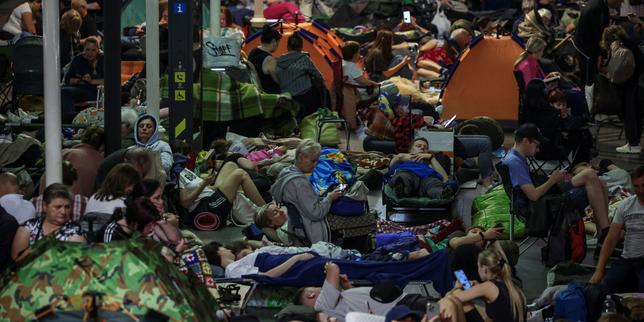
Kyiv residents woke up to the all-too-familiar sound of air defense sirens and heavy explosions tonight. Russian forces launched a coordinated strike using a wave of attack drones, targeting the heart of the Ukrainian capital.
The immediate result? Debris rained down on multiple central districts. A major fire broke out on the roof of a hotel along the prominent Shevchenko Boulevard in the city center. While local authorities initially labeled the location a non-residential building, local reports and eyewitness footage confirmed the structure on fire was a central hotel asset.
This isn't just another routine headline about the war. It's a clear signal that the logistical and strategic battle over the skies of Ukraine is shifting. Here is what happened on the ground and what it actually means for the conflict moving forward.
The Details of the Overnight Strike on Kyiv
The attack materialized late in the evening. Mayor Vitali Klitschko took to Telegram to warn residents that the city was under fire from incoming drones and ballistic threats.
Within minutes, explosions echoed across the western and central districts of the capital. According to the State Emergency Service of Ukraine, air defense systems engaged multiple targets successfully, but falling fragments caused significant damage.
- Shevchenko Boulevard: Drone debris struck the roof of a hotel, igniting a severe fire that lit up the central skyline. Emergency crews rushed to the scene to contain the blaze.
- Suburban Impact: Debris also hit a northeastern suburb, scattering wreckage across open areas.
- The Subway Shelters: Photos shared on local Telegram channels showed hundreds of residents crowding back into underground metro stations for protection.
President Volodymyr Zelenskyy cut short a diplomatic visit to Dublin to return to Ukraine, citing intelligence reports that pointed to a massive impending wave of overnight bombardments.
Reading Between the Lines of the Target Selection
Many mainstream outlets simply report these events as random acts of terror. That's a mistake. The timing and choice of targets reveal a deeper tactical reality.
Russia is attempting to exhaust the ammunition supplies of Kyiv's Western-supplied air defense systems like the Patriot and NASAMS. By forcing Ukraine to fire expensive interceptor missiles at cheaper, mass-produced drones, Moscow hopes to open up gaps in the defense network.
The fact that debris hit a hotel on a central boulevard shows that despite high interception rates, the sheer volume of incoming threats makes total protection impossible. When a drone is shot down, hundreds of pounds of metal, fuel, and unexploded ordnance still have to land somewhere.
What This Means for the Global Conflict Landscape
This strike comes on the heels of a massive report from the Center for Strategic and International Studies (CSIS), which highlighted that total military casualties in this conflict have now surpassed two million when combining both sides. The study noted that Russia has borne the brunt of the human cost, losing an estimated 400,000 to 450,000 soldiers killed in action.
Yet, despite these staggering losses, Moscow's ability to manufacture and deploy hundreds of long-range strike drones remains intact. This highlights a critical truth that many Western analysts miss: personnel losses aren't stopping the factory lines.
Ukraine has responded by scaling up its own drone program, launched daily deep-tier strikes against Russian oil refineries and logistics hubs. We're seeing a brutal equilibrium where both capitals are now dealing with regular aerial threats.
Next Steps for Following the Situation
If you're tracking the development of the air war in Ukraine, don't rely solely on initial morning reports. Follow these specific steps to get an accurate picture of the strategic impact:
- Monitor Official Interception Data: Check the morning briefings from the Air Force of Ukraine. Look at the ratio of drones launched versus drones downed. A drop in the interception rate indicates ammunition shortages.
- Track the Type of Munitions Used: Pay attention to whether Russia is mixing drones with ballistic missiles like the Kinzhal or Iskander. Mixed-wave attacks are designed to overwhelm radar systems.
- Watch the Energy Grid: Watch the local statements from Ukrenergo. If strikes shift away from central Kyiv and toward regional thermal power plants, expect immediate rolling blackouts to follow.