If you have spent any time working toward an allied health degree recently, you know the quiet nightmare of mandatory unpaid placements. You are expected to work forty hours a week at a hospital or clinic, often far from home, while somehow paying rent and buying groceries without a steady paycheck.
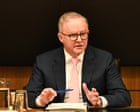
The Labor government is finally expanding its paid work placement program to cover ten additional allied health fields, offering students up to $338.60 per week starting July 1, 2027. Prime Minister Anthony Albanese framed the policy shift as a direct response to voter anxiety ahead of the ALP National Conference. But while the expansion delivers long-overdue relief to thousands of trainees, it also exposes the intense political balancing act currently playing out inside the ruling party.
Between factional disputes over foreign policy, mounting union demands for resource taxes, and a cost-of-living squeeze that threatens to erode Labor's working-class base, this policy announcement is as much about political survival as it is about health policy.
What the Paid Work Placement Expansion Covers
When the federal government first introduced placement stipends, the safety net was strictly limited to teaching, nursing, midwifery, and social work. That decision left thousands of essential health trainees out in the cold.
Under the newly announced expansion, students in ten extra disciplines will qualify for financial support during their mandatory clinical units. The list includes vital healthcare roles that have suffered severe workforce shortages across regional and metro centers alike:
- Clinical psychology
- Physiotherapy
- Occupational therapy
- Speech pathology
- Paramedicine
- Radiography
- Pharmacy
- Rehabilitation therapies
- Audiology
- Podiatry
Eligible students will receive up to $338.60 per week during their mandatory training periods. The payments mirror the benchmark rate already established for teaching and nursing trainees, designed to offset lost wages from part-time retail or hospitality jobs that students usually have to abandon while completing full-time clinical rotations.
The timeline matters here. The funding won't kick in until July 1, 2027. That gap leaves current cohorts stranded, but for future university intakes, it fundamentally changes the financial math of entering health professions.
Why Placement Poverty Became a Political Flashpoint
You cannot understand this policy shift without looking at the grassroots campaign that forced the government's hand.
For years, students faced a stark choice: drop out, run up massive credit card debt, or rely on family wealth. Independent crossbenchers David Pocock and Helen Haines pushed the issue into the spotlight last month after tabling a petition signed by more than 43,000 citizens. The petition detailed harrowing stories of students skipping meals, sleeping in cars near rural hospitals, or delaying graduation simply because they couldn't afford to work for free.
Labor backbenchers started hearing the same anger in their electorate offices. Allied health peak bodies pointed out an obvious contradiction in federal policy: the government complained about shortage of speech pathologists and physiotherapists in public hospitals, yet maintained a training system that financially punished anyone trying to join those professions.
The political calculation for Albanese was simple. Ignoring the crossbench campaign would give independent candidates and minor parties a stick to beat Labor with in suburban and regional seats. By adopting the policy ahead of the party conference, the leadership neutralizes a major line of attack.
The Broad Policy Platform and Conference Dynamics
The placement announcement serves as the policy sweetener for a national conference shadowed by difficult internal debates. Labor conference floors are rarely quiet affairs, and the draft platform reflects competing pressures from unions, rank-and-file members, and factional leaders.
Rising Tension Over Gaza Policy
Foreign policy threatens to overshadow domestic economic announcements. Draft platform amendments regarding Australia's stance on the Israel-Palestine conflict have drawn sharp critique from both sides of the debate.
The Israeli embassy in Canberra took the unusual step of issuing a formal four-page statement criticizing the draft text. The diplomatic mission argued that the proposed platform places disproportionate blame on Israel while failing to adequately address the actions of Hamas. Simultaneously, pro-Palestine delegates within the party are pushing to toughen the text further, demanding immediate sanctions and stronger action against settlement expansions.
Party managers are trying hard to broker a compromise that avoids open floor fights on national television, but the raw emotion surrounding the conflict makes a neat resolution difficult.
Resource Taxes and Union Demands
On the economic front, powerful affiliated unions are flexing their muscles. The Australian Manufacturing Workers Union (AMWU) came into the conference demanding a tax structure that hits resource exporters far harder.
Draft platform text now includes high-level commitments to increase taxes on gas exports and wind back fuel tax credits. While a platform commitment doesn't bind the cabinet to immediate legislative action, it sets a clear expectation for future budgets. Treasurer Jim Chalmers faces growing pressure from the party base to turn those resource tax motions into actual revenue to fund public health, housing, and education programs.
Real Impact on Healthcare Workforces
Putting $338.60 a week into a student's bank account isn't going to make them rich. It won't cover Sydney or Melbourne rent on its own. What it does is keep a student from drowning.
Take a clinical psychology student required to complete hundreds of hours of unpaid placement. Many of these students are mature-age trainees with children, mortgages, or existing study debt. Asking them to take several months off paid work creates an insurmountable barrier. The exact same problem plagues paramedicine and radiography degrees, where clinical hours are non-negotiable.
By lowering the barrier to entry, the government hopes to fix retention rates in university courses. Drop-out rates during placement terms have historically spiked because students hit a financial wall mid-degree. Keeping those students enrolled means more qualified workers hitting hospital wards and community clinics two to three years down the track.
The danger lies in the delayed implementation. Waiting until mid-2027 means three more academic years of students navigating unpaid work. University administrators report that some prospective students are already asking if they should defer their degrees until the payment kicks in, which could create a short-term drop in enrolments right when the system needs workers immediately.
How the Opposition and Crossbench are Reacting
Opposition figures argue the government is offering too little, too late, while recklessly expanding public expenditure without addressing underlying inflationary pressures. They point out that a stipend starting in mid-2027 offers zero relief to families struggling right now.
Meanwhile, crossbenchers who drove the original petition are celebrating the policy win while calling out the start date. They plan to move amendments to bring the implementation date forward to 2025 or early 2026.
The political battle lines are clear. Labor wants credit for fixing a systemic flaw in tertiary education. The Coalition wants to paint the policy as delayed election bribery. The crossbench wants the cash delivered faster.
Practical Steps for Allied Health Students
If you are currently enrolled or planning to study an allied health degree, here is how you should prepare for these changes:
- Audit your placement schedule. Check your university syllabus to see exactly which semester your mandatory placements fall into. If your clinical units fall on or after July 1, 2027, you will likely be eligible for the new weekly stipend.
- Track your course code. Make sure your specific discipline falls under the ten newly added fields (psychology, physio, OT, speech pathology, paramedicine, radiography, pharmacy, rehab therapies, audiology, podiatry) or the original four (teaching, nursing, midwifery, social work).
- Monitor Centrelink and university portals. The Department of Education will establish the administrative framework over the next eighteen months. Keep your contact details updated with your university's placement office to receive notifications about application procedures.
- Plan for the gap. If you have placements scheduled before July 2027, do not rely on this stipend. Look into existing state-based bursaries, university hardship grants, or rural placement subsidies that might apply to your specific situation.