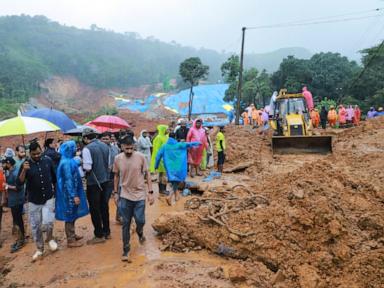
Rain alone didn't bury those workers in Wayanad. While early reports point to the intense monsoon skies over southern India, looking closely at the July 2026 disaster reveals a completely different reality. Rescue crews are searching for five missing people after a deadly landslide in India's Kerala state, turning over massive mounds of thick mud near an under-construction tunnel road project. The tragedy has already claimed at least three lives, left several injured, and sparked an intense battle over who is to blame.
When you look at how infrastructure projects get pushed through ecologically fragile zones, this wasn't an unpredictable act of God. It was a tragedy waiting to happen.
On Tuesday morning, a massive wall of mud and excavated earth came crashing down near the Meenakshi Bridge at Kalladi. The site is part of the ambitious Anakkampoyil-Kalladi-Meppadi tunnel road project, designed to connect the Wayanad and Malappuram districts. Within seconds, the collapsing hillside swallowed heavy machinery, workers' vehicles, a church, and a nearby home. It even swept away a large fuel tanker truck, a scene captured in terrifying CCTV footage that quickly spread across social media.
The Human Cost of Blatant Regulatory Neglect
Emergency teams from the National Disaster Response Force, the local fire services, and police have split the disaster site into four separate search zones. They brought in sniffer dogs and heavy earth-moving equipment, working through the night despite relentless downpours that threaten to trigger further collapses.
We already know the identities of the three men confirmed dead. They weren't locals. They were migrant workers who travelled across the country to work on this project. Chandraban was an excavator operator from Madhya Pradesh. Bikash Kumar was a civil foreman from Bihar. Anmol was a laborer from Jharkhand.
Seven other workers are fighting for their lives at the Meppadi WIMS Hospital and Dr. Moopen’s Medical College Hospital, with at least one person in critical condition.
The immediate priority is finding the five people still buried under the soil. But the local population is furious, and they have every right to be. This disaster happened less than a month before the second anniversary of the catastrophic Mundakkai-Chooralmala landslides of July 2024, which wiped out entire villages and killed over 200 people in the exact same district. You would think the authorities and contractors might have learned something from that horror. They didn't.
An Environmentally Insane Construction Scheme
The state government is trying to distance itself from the mess, flatly labeling the incident a man-made disaster. Agriculture Minister T. Siddique, who represents the local area in the state legislature, didn't mince words. He stated that the collapse resulted from the unscientific dumping of massive amounts of excavated earth right above the tunnel portal.
Local administration officials claim they saw this coming. Kerala Chief Minister V.D. Satheesan revealed that both the Disaster Management Authority and the District Collector issued a strict order back on June 20, demanding the immediate removal of accumulated soil from the hillside. Public Works Department Minister P.K. Basheer had also inspected the site on June 25 following frantic complaints from residents.
The contractor ignored them. They left a ticking time bomb of loose, heavy mud sitting on a steep slope during the peak of the monsoon season.
Predictably, the construction firm denies everything. The company's general manager claims the landslide originated way above their designated work site and had nothing to do with their operations. They argue that the project is heavily monitored by regulatory bodies, including a Supreme Court-appointed committee. But anyone who understands hill-station geology knows that piling tons of loose earth on top of an already unstable, saturated slope is a recipe for catastrophic failure. The piled-up debris might not have started the slide, but it gave the mudslide the sheer volume and momentum needed to crush everything in its path.
The Problem With Extreme Weather Politics
Wayanad is stunningly beautiful, but its steep terrain and thick forests hide a fragile ecosystem. The area recorded a massive 226 mm of rain in the 24 hours leading up to the disaster.
Climate change plays a massive role here, and denying it is foolish. The South Asian monsoon is shifting wildly. Instead of steady, predictable rainfall spread out over months, Kerala now experiences dry spells followed by sudden, violent cloudbursts that dump insane amounts of water in a matter of hours. The ground simply cannot absorb it.
But blaming climate change entirely is a coward's way out for corporate entities and silent regulators. When you know the weather is becoming more erratic, your safety margins must increase, not decrease. You don't leave giant piles of excavated earth sitting at the mouth of a tunnel project when a red alert for heavy rainfall is active.
Local plantation workers described hearing a deafening roar that sounded exactly like an explosion before the entire slope gave way. A couple waiting at a nearby bus stop managed to run for their lives just seconds before the mud engulfed the structure. If they had hesitated for three seconds, they would be part of the body count.
What Needs to Change Right Now
We can't keep treating these infrastructure failures as unavoidable accidents. If building a multi-million dollar tunnel road means burying laborers under the mud because safety protocols are treated as optional suggestions, the project shouldn't exist.
If you want to track the ground-level reality of these rescue operations, watch this detailed broadcast tracking the Wayanad Landslide Emergency Response, which shows the hazardous conditions rescuers are facing on day two.
First, the Meppadi police need to follow through with the criminal case they registered. Holding corporate executives personally and financially liable for ignoring direct disaster management orders is the only way to stop this pattern.
Second, the state needs a total freeze on major earth-moving construction in the Western Ghats during peak monsoon months. The ground is too unstable, the rains are too unpredictable, and the cost in human lives is far too high.
Stop treating environmental regulations like red tape to be bypassed. They are the only thing keeping the hillside from burying the next community.