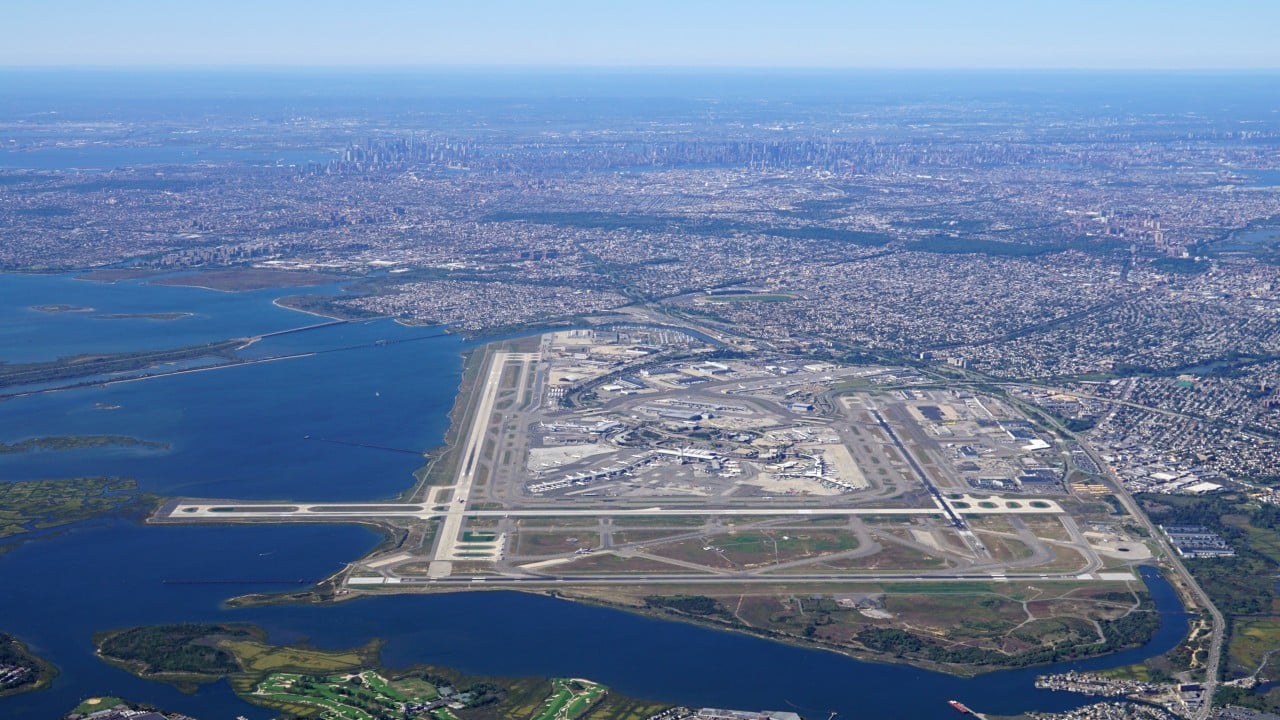
A commercial airliner descending toward New York just had a terrifying reminder that our skies are getting crowded, and not in a good way. On Monday morning, June 29, 2026, JetBlue Flight 948 was cruising at 3,000 feet, lining up its final approach to John F. Kennedy International Airport. Then came the thud.
Right above the cockpit, something smacked the Airbus A321.
"We collided with a drone back there in the turn," the pilot calmly told air traffic control, according to recorded audio from ATC.com. The flight had just come in overnight from Las Vegas, carrying up to 220 passengers. It landed safely at Terminal 5 a few minutes later, and miraculously, technicians found no physical damage. No dent, no shattered glass, no blood from a bird.
JetBlue immediately pulled the plane from service for a deep inspection, and the Federal Aviation Administration opened an official investigation. Everyone got off the plane safely, but we shouldn't let the lack of a smoking crater fool us. This incident is a massive wake-up call. We are flying blindly into a future where hobbyist toys can threaten multi-million-dollar passenger jets, and the current rules aren't stopping it.
The 3000 Foot Problem
Let's look at the math here because it reveals a glaring loophole in how we police our airspace. By law, consumer drones in the United States are supposed to stay below 400 feet. They are completely banned from flying anywhere near commercial airports without explicit, automated authorization through systems like LAANC.
Yet, this JetBlue pilot reported the impact at 3,000 feet. That is more than seven times the legal limit.
How does a drone even get that high? Easily. If you buy a standard consumer drone off the shelf, the software usually blocks you from flying past a certain altitude. But the internet is full of simple workarounds, custom firmware hacks, and DIY kits that let anyone bypass these safety walls. A drone weighing just five pounds can easily climb thousands of feet into the air if the operator removes the digital leash.
The risk isn't isolated. Just two days before this JFK scare, a United Airlines Boeing 737 pilot reported a near-miss with a drone just 100 feet below the aircraft while descending into Newark Liberty International Airport. That same night, a GoJet Airlines crew spotted another unauthorized drone hovering around 2,000 feet in the same New Jersey airspace.
We aren't dealing with a rare glitch. We are dealing with a pattern.
Why Plastic and Metal Don't Mix with Jet Engines
A lot of drone hobbyists think a small piece of plastic can't hurt a massive airliner. They point to the fact that planes hit birds all the time and keep flying. That is a dangerous misunderstanding of basic physics and materials science.
Birds are soft tissue and water. Jet engines are tested extensively to ingest birds and survive, or at least contain the damage safely. Drones are entirely different animals. They contain dense electric motors, copper wiring, structural carbon fiber, and worst of all, lithium-ion batteries.
Think about what happens when a dense metallic object enters a jet engine spinning at thousands of revolutions per minute. The fan blades can shatter. If those fragments pierce the engine housing, they can cut hydraulic lines, destroy the wing structure, or spark an uncontained fire.
If a drone hits the cockpit windshield directly at 250 knots, it can crack or penetrate the glass, incapacitating the pilots. The JetBlue flight got lucky because the object struck a reinforced section of the fuselage right above the glass, and it might have been a glancing blow. Next time, a flight coming into New York or Los Angeles might not be so fortunate.
The Failure of Enforcement
The FAA receives over 100 reports of unauthorized drone sightings near airports every single month. The agency knows there's a problem. In April 2026, the government even launched a new initiative called the Drone Expedited and Targeted Enforcement Response program, or DETER.
The DETER program was designed to speed up how law enforcement tracks down illegal drone operators, especially with major crowded events like the World Cup taking over North American stadiums. If you fly a drone in restricted airspace, you face thousands of dollars in fines, the confiscation of your gear, and actual jail time.
The problem is catching them.
When a pilot reports a drone at 3,000 feet, that drone is likely miles away from the person holding the controller on the ground. By the time local police drive to the suspected launch area, the operator has packed their bag, thrown the drone in the trunk of their car, and driven away.
Remote ID technology was supposed to fix this. The law requires newer drones to broadcast their location and the pilot's position via radio signals. But older drones don't have this tech built-in, and anyone building a custom drone from scratch can simply leave the transmitter off. It is an honor system implemented in a world where not everyone has honor.
What Needs to Happen Next
We can't just keep waiting for the FAA to write reports after the fact. If you fly drones, or if you simply fly on commercial flights, here is what needs to change right now.
First, manufacturers must be held to a stricter standard regarding geofencing. If a drone's software can be cracked with a basic download from an online forum, that software isn't good enough. Geofencing should be hardcoded into the flight controller hardware itself, making it impossible to take off within airport boundary zones regardless of firmware modifications.
Second, airports need to accelerate the deployment of counter-drone defense systems. Technologies exist that can detect the radio frequencies used by drones, track the operator's exact GPS coordinates instantly, and even safely jam the signal to force the drone to land. Right now, these systems are mostly used by the military or at high-security government facilities. They need to become standard infrastructure at every major commercial airport hub globally.
Finally, stop treating drone violations like minor traffic tickets. If an operator flies a drone into the approach path of a commercial airliner, they aren't making a silly mistake. They are risking hundreds of human lives. Prosecutors need to treat these incidents as federal felonies with mandatory prison time, and those cases need to be publicized heavily to deter the casual hobbyist who thinks it is just a game.
Check your local airspace maps before you fly your drone. Use apps like B4UFLY. If you see someone operating a drone near an airfield, call local law enforcement immediately. The aviation industry has spent decades building the safest transportation system in human history, and we can't let irresponsible hobbyists tear it down for a cool aerial video.