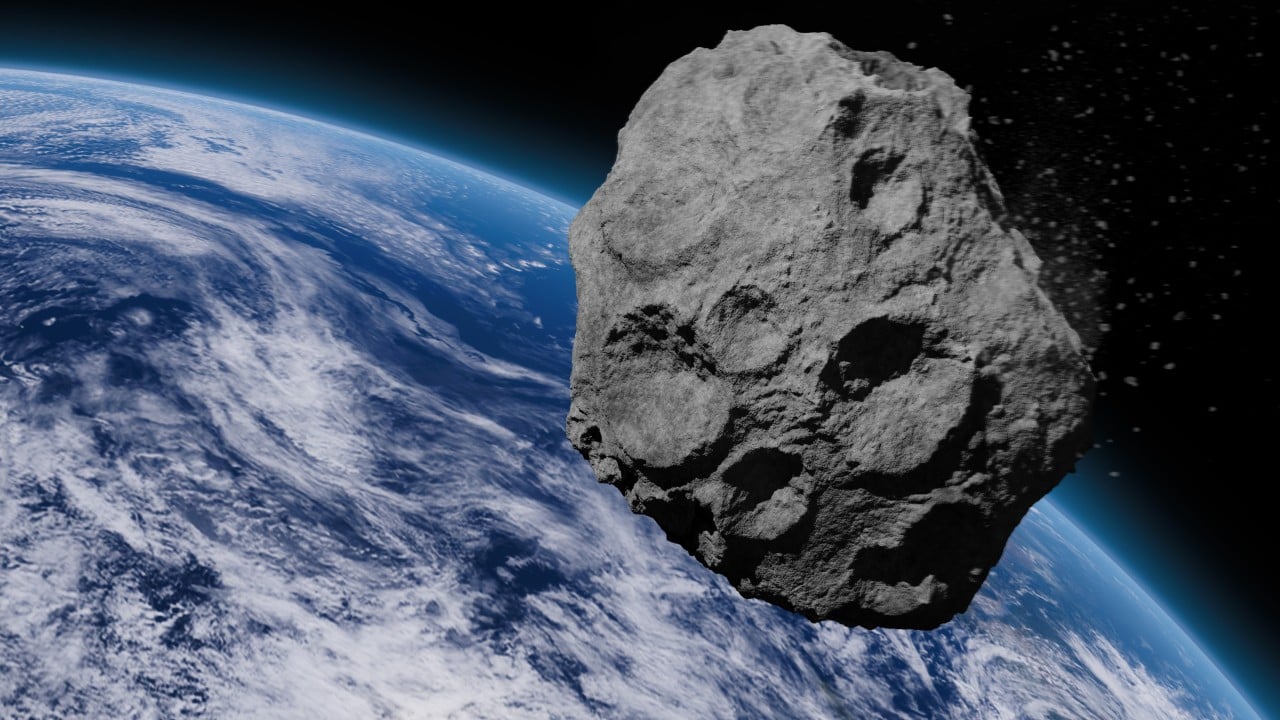
Hollywood loves to tell us that saving the world from a rogue space rock requires a nuclear bomb, a crew of deep-sea oil drillers, and plenty of dramatic slow-motion walks. The reality of planetary defense is far less glamorous, but a whole lot cooler. It looks like a decade-old spacecraft about the size of a household refrigerator whipping past a space rock at 11,000 miles per hour, missing it by just a few football fields on purpose.
On July 5, 2026, the Japan Aerospace Exploration Agency (JAXA) pulled off a jaw-dropping orbital maneuver. Their veteran space probe, Hayabusa2, executed an incredibly tight fly-by of the near-Earth asteroid Torifune. The target distance? A razor-thin 800 meters.
If you think missing an asteroid is easy, you don't understand orbital mechanics. Crashing into something in space is relatively straightforward; we did it with NASA’s DART mission back in 2022. But screaming past a 450-meter-wide rock at blistering speeds, precisely controlling your trajectory without touching it, and scanning its surface under extreme constraints? That takes an entirely different level of engineering mastery.
Here is why this quiet test in deep space is a massive deal for the future of our species.
The Art Of The Near Miss
When JAXA scientists erupted into applause in the control room, they weren't celebrating a collision. They were celebrating precision. The Japanese space probe, size of a fridge, flies near asteroid in planet defence test parameters that would make most navigation systems choke. Moving at more than 18,000 kilometers per hour, the margins for error are non-existent.
Most people don't realize that planetary defense isn't just about kinetic impactors. Yes, slamming a heavy object into an asteroid can nudge its orbit, but you can't hit what you can't accurately track and understand. If you try to deflect an asteroid blindly, you risk breaking it into smaller, equally lethal fragments that are still tracking toward Earth.
By skimming just 800 meters above Torifune, JAXA proved we can steer a miniature probe into the cosmic backyard of an asteroid with pinpoint accuracy. This isn't just a win for Japan; it's a blueprint for how humanity will scout future threats.
Why Asteroid Density Changes Everything
During the fly-by, Hayabusa2 didn't just drift passively. Its onboard cameras and sensors were working overtime, mapping geographical features, measuring surface temperatures, and analyzing textures.
This data addresses a massive blind spot in planetary defense theory. As European Space Agency scientist Patrick Michel pointed out following the event, near-Earth asteroids are incredibly diverse. They aren't uniform blocks of granite floating in the void. Some are solid rock, while others are essentially cosmic rubble piles held together by faint gravity.
"If we want to deflect an asteroid by an impact, the response is not the same if the asteroid is behaving like a sponge or if it behaves like a very solid material." - Patrick Michel, ESA
Think of it this way: if you throw a baseball at a solid brick wall, it bounces off and transfers energy cleanly. If you throw that same baseball into a pile of loose sand, the sand absorbs the impact, dampening the effect. If we ever need to deflect a real threat, knowing whether the target is a brick or a sponge determines exactly how hard we need to hit it. Hayabusa2 is giving us the tools to tell the difference from a distance.
The Little Probe That Refuses To Quit
What makes this mission even more remarkable is the vehicle itself. Hayabusa2 is not new. It launched way back in 2014 and already cemented its place in history by visiting the asteroid Ryugu, blasting a crater into it, grabbing pristine soil samples, and dropping them back to Earth in 2020.
Instead of letting the probe die in the cold dark, JAXA engineers recycled it for an extended mission. Using a spacecraft that has been exposed to harsh cosmic radiation for over a decade to pull off an ultra-close 800-meter fly-by is a testament to Japanese engineering quality. They aren't wasting resources; they're squeezing every drop of science out of existing hardware.
Torifune, which takes 383 days to orbit the sun and currently sits roughly 100 million kilometers from us, was just the first stop on this bonus tour. JAXA plans to keep pushing this fridge-sized marvel until at least 2031, when it's scheduled to attempt a full rendezvous with another tiny space rock called 1998KY26.
Moving Beyond Simple Impacts
NASA proved we can punch an asteroid with the DART mission. JAXA is proving we can scout them, measure them, and dance around them without crashing. Real planetary defense will require a combination of both strategies.
If a true threat is detected decades in advance, a heavy kinetic impactor or even a "gravity tractor"—a heavy probe that flies alongside an asteroid and uses its own tiny gravitational pull to slowly tug it off course—will be deployed. You can't execute a gravity tractor mission if you don't have the autonomous navigation capabilities that Hayabusa2 just demonstrated.
What Needs To Happen Next
We can't just celebrate this fly-by and move on. If humanity wants a reliable shield against cosmic impacts, the global space community needs to take specific steps based on what Hayabusa2 is teaching us.
- Standardize Reconnaissance Platforms: We need a fleet of cheap, mass-produced, fridge-sized probes ready to deploy at a moment's notice when new near-Earth objects are discovered.
- Build a Shared Asteroid Database: The data collected by JAXA on Torifune’s composition needs to be integrated into international physics models so deflection simulations become more accurate.
- Invest in Autonomous Optical Navigation: At 100 million kilometers away, real-time steering from Earth is impossible due to communication lag. Probes must be smart enough to navigate close fly-bys entirely on their own.
Space agencies are quietly doing the heavy lifting to ensure we don't go the way of the dinosaurs. The successful fly-by of Torifune proves that small, efficient tech can yield massive results for global security.