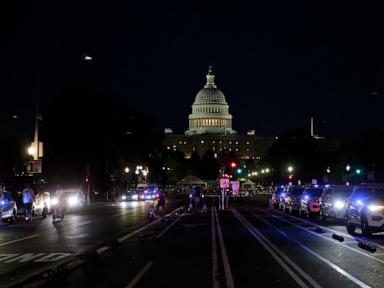
A federal judge just drew a line in the sand that Donald Trump's sweeping presidential pardons cannot cross. For months, defense attorneys for Brian Cole Jr., the man charged with planting pipe bombs on the eve of the Capitol riot, argued that their client should walk away scot-free. They insisted his actions were tied directly to the chaos of early January 2021. U.S. District Judge Amir Ali completely shut that down. Now, a high-stakes federal trial is officially locked in for February 16, and it's shaping up to be one of the most significant legal battles of the year.
This isn't just another standard criminal case winding its way through the Washington D.C. legal system. It represents the ultimate test of executive clemency boundaries and remains one of the final, unresolved mysteries of a day that shook American democracy. The ruling has sent shockwaves through legal circles, proving that even the most expansive executive orders have clear, structural limits.
The Legal Reality for the Man Charged with Planting Pipe Bombs on the Eve of the Capitol Riot
The defense team pinned all their hopes on the blanket pardons issued on Inauguration Day in January 2025. Those orders cleared more than 1,500 people who faced charges related to the events at the Capitol. Cole’s lawyers argued there was no serious dispute that his alleged conduct was inextricably and demonstrably tethered to the political controversy surrounding that week. They expected a quick dismissal.
Judge Ali’s rejection of that argument was cold, precise, and devastatingly simple.
The blanket pardon explicitly applied only to individuals who had already been convicted of offenses or were under active indictment when the proclamation was signed on January 20, 2025. Here is the catch. Investigators didn't actually identify or arrest Cole until December 2025, nearly a year after the pardon was issued.
"The pardon is expressly limited to people who had been 'convicted of offenses' related to those events," Judge Ali wrote in his decision. He noted that Cole hadn't been convicted or even charged until many months after the president's proclamation.
You can't get a pass for a crime the government hadn't even accused you of yet. The alternative defense argument didn't hold water either. They claimed that a directive telling the attorney general to drop pending cases should apply to him. But because his case wasn't pending at the time, the Justice Department maintained that the pipe bomb investigation proceeded entirely unabated.
Inside the Years Long Hunt for the D.C. Pipe Bomber
For nearly five years, the identity of the person who placed improvised explosive devices outside the Republican National Committee and Democratic National Committee headquarters was a massive blind spot for federal law enforcement. The FBI spent years combing through grainy surveillance footage of a masked figure in a grey hoodie carrying a backpack. It was one of the bureau's most prominent cold cases.
The breakthrough didn't come from a sudden tip. It came from the meticulous, grinding aggregation of data.
- Cell Tower Data: Investigators isolated cellphone signals that connected to towers near both political party headquarters on the evening of January 5, 2021.
- License Plate Readers: Traffic cameras and automated readers placed Cole’s vehicle in the immediate vicinity during the exact window the bombs were planted.
- Financial Records: Credit card trails showed the purchase of specific bomb-making components between 2018 and 2020.
U.S. Attorney Jeanine Pirro noted that a close, retrospective examination of the evidence eventually pointed squarely at Cole's home in Woodbridge, Virginia. When federal agents finally executed a search warrant and arrested him, the puzzle pieces came together.
The Wiped Phones and the Mental Health Defense
When the trial begins in February, the jury will have to weigh a highly complex profile of the defendant. Cole’s defense team isn't relying entirely on failed pardon arguments. They're laying the groundwork for a defense centered on his mental health.
Court documents show that Cole has been diagnosed with autism spectrum disorder and obsessive-compulsive disorder. His lawyers are using these diagnoses to explain away some of his highly suspicious behavior following the Capitol riot. Specifically, federal investigators discovered that Cole compulsively factory-reset his cellphones more than 900 times between December 2020 and the day of his arrest.
To a prosecutor, wiping a phone 900 times screams spoliation of evidence and consciousness of guilt. To the defense, it’s a manifestation of severe, unmanaged obsessive-compulsive traits.
But the defense faces a massive hurdle that is incredibly difficult to leap over. Prosecutors hold a full confession.
During a detailed 90-minute interview with FBI agents after his arrest, Cole allegedly walked investigators through the exact construction of the pipe bombs. He told agents he felt completely bewildered by the election conspiracy theories spreading across YouTube and Reddit at the time. He claimed he didn't view himself as a deeply political person, but he felt that someone needed to speak up because both parties were in charge.
What Happens When Jury Selection Begins
The trial will kick off with jury selection during the week of February 15. Judge Ali has set aside roughly two weeks for the entire proceeding, which will be prosecuted by Jocelyn Ballantine, a veteran of dozens of high-profile federal cases.
Cole isn't facing minor trespassing charges. A grand jury hit him with a superseding indictment that carries staggering penalties. The four federal counts include:
- Interstate transportation of explosives
- Malicious intent to use explosives
- An act of terrorism while armed
- Attempting to use weapons of mass destruction
The weapons of mass destruction and terrorism charges mean Cole is looking at the potential for decades in federal prison if convicted. While his defense attorneys told the court that no plea deals are currently on the table, the reality of a looming trial often forces hard conversations behind closed doors. Outside the courtroom, Cole’s mother expressed heartbreak over the denied pardon, signaling that the family knows just how steep the climb is from here.
Your Next Steps for Tracking This Case
If you're following federal criminal law or the lingering legal fallout of the Capitol riot, this trial is the one to watch. Here is how to keep up with the developments as February approaches.
Monitor the clean prose of the D.C. District Court public dockets for upcoming pre-trial evidentiary hearings. These hearings will determine whether Cole's 90-minute confession can be admitted in full or if the defense can successfully suppress parts of it based on his mental health status. Pay close attention to the expert witnesses both sides will call regarding autism spectrum disorder and OCD, as their testimony will likely dictate how the jury interprets the technical evidence and those 900 phone resets.
The legal safety valves the defense counted on are gone. Now, the facts will speak for themselves in open court.