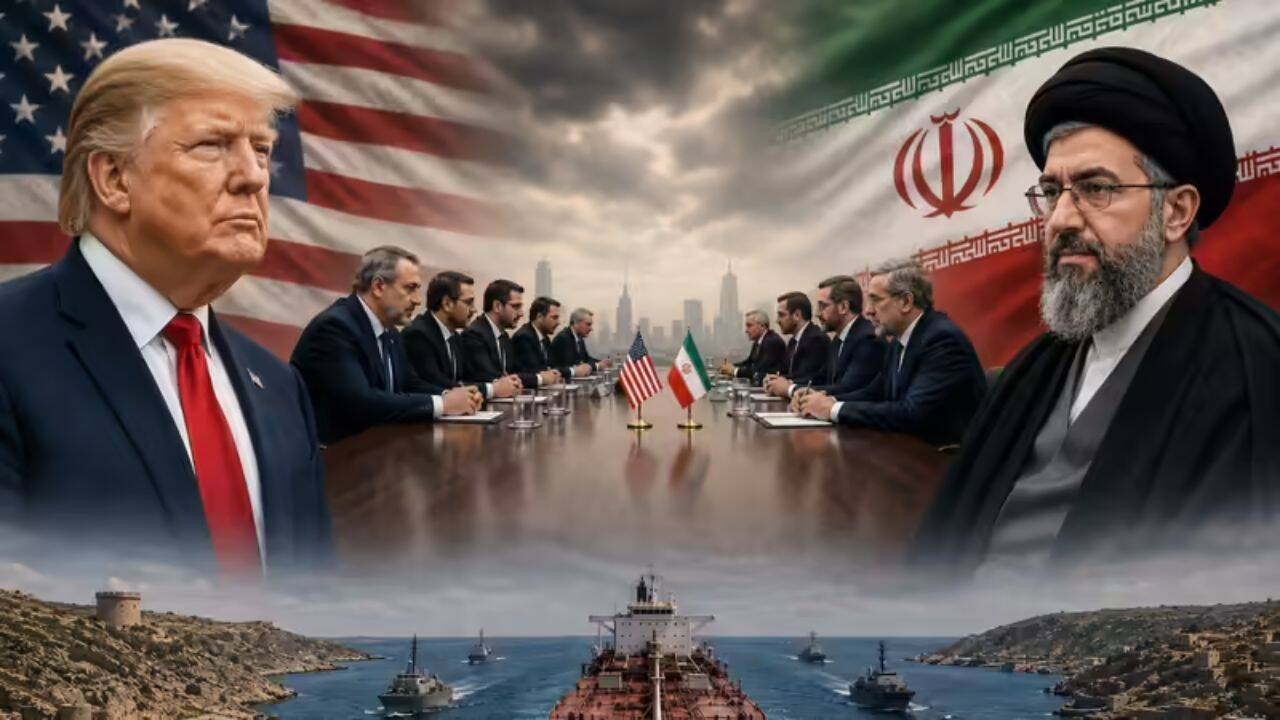
The inked paper between Washington and Tehran wasn't even dry before the internal war broke out. Earlier this month, a surprise diplomatic breakthrough happened. The United States and Iran signed a sweeping draft Memorandum of Understanding. Under this deal, Iran promised to completely freeze its pursuit of nuclear weapons, dilute its highly enriched uranium stockpiles, and welcome back international inspectors. In return, Washington agreed to lift its crushing naval blockade, waive oil sanctions, and release a staggering 25 billion dollars in frozen assets. President Donald Trump immediately took a victory lap, loudly declaring that the Iranian nuclear threat was finished.
He spoke too soon.
Iran's deep-state apparatus just pushed back with terrifying clarity. On Sunday, June 28, 2026, the state-affiliated Fars News Agency—an media outlet explicitly tied to the Islamic Revolutionary Guard Corps—published a shocking commentary. The title screamed everything you need to know about the mood inside Tehran's military elite: "No choice but to build the atomic bomb."
This isn't just a rogue opinion piece. It's an open rebellion against the diplomatic framework. It reveals a massive, dangerous fracture right at the top of the Iranian regime. While diplomats shake hands, the men holding the missiles are openly demanding a nuclear arsenal.
The Secret Strategy Behind the IRGC Nuclear Call
If you want to understand why the Islamic Revolutionary Guard Corps is tanking its own government's deal, you have to look at how they view global power. The Fars commentary makes a raw, unfiltered case for survival. The writers explicitly argue that Iran has no choice but to obtain a nuclear weapon if it wants to survive a transition to what they call a new world order.
The core of their argument relies on historical precedent. Specifically, they point to China.
In the early 1970s, China was isolated, economically struggling, and terrified of American military dominance. The Fars piece notes that the United States threatened China with nuclear strikes twice. Yet, everything changed when Beijing successfully developed its own atomic weapon. The IRGC media asks a pointed question: When did U.S. National Security Advisor Henry Kissinger secretly fly to Beijing to open up historic peace negotiations? It happened only after China became a nuclear power.
To the IRGC, the lesson is clear. You don't negotiate your way to safety from a position of weakness. You get the bomb first, and then you force the superpowers to treat you as an equal. They argue that Donald Trump's recent military threats against Iran mirror those 1970s threats against China. In their eyes, the current agreement is a trap. They believe true calm and security only come when you possess the ultimate deterrent.
What the Nuclear Hardliners Actually Want
Western analysts often assume that hardliners want a bomb so they can immediately use it. The reality outlined in the Fars manifesto is much more calculated. It's about leverage and crisis management.
According to the IRGC-linked media, a nuclear weapon isn't meant to trigger an apocalyptic war. Instead, it is meant to create a cold, stable balance of power against the United States and Israel. The commentary notes that nuclear deterrence doesn't mean a conflict will never happen. It means that when a conflict does break out, the scope remains entirely controllable.
Think about the sheer audacity of that logic. The IRGC wants a bomb so they can engage in regional proxy fights, launch drone strikes, or disrupt shipping lanes without fearing a devastating, regime-ending retaliatory strike from Washington or Jerusalem. They want absolute immunity. They see the draft deal—which demands a 20-year freeze on all uranium enrichment—as an act of strategic surrender that strips them of this immunity.
The Crackup Inside the Islamic Republic
This public messaging exposes an unprecedented rift inside Iran. For decades, the regime managed to project an image of total unity under Supreme Leader Ali Khamenei. That image is completely shattered.
Right now, Tehran is split into two fiercely competing loyalist camps. On one side, you have the pragmatists and survivalists within the state apparatus. They look at the Iranian economy and see disaster. Poverty is deepening. Public anger is boiling over. For them, getting 25 billion dollars back, selling oil legally, and ending the naval blockade is the only way to save the Islamic Republic from collapsing from within. They are willing to park the nuclear program to secure the regime's immediate survival.
On the other side stand the ultra-hardliners and the IRGC elite. This faction is furious. Activists in Tehran report that these hardliners are actively trying to stir up mass unrest inside the Iranian parliament to derail the deal. The political fighting has gotten so ugly that it spilled into a public clash between different state media operations. Raja News, which speaks for the ultra-conservative camp, has been openly attacking other state outlets that try to defend the agreement.
Things are getting tense on the streets too. Authorities recently shut down a prominent mourning site dedicated to the late Ali Khamenei because shroud-wearing hardliners were using the space to launch fierce political attacks against officials accused of compromising with America. The government is even sidelining these ultra-hardliners from state-sponsored nightly rallies to keep the peace.
Why the New Agreement is High Risk
The International Atomic Energy Agency is stuck right in the middle of this political crossfire. IAEA Director General Rafael Grossi hasn't hidden his skepticism. He told reporters that while Tehran keeps claiming it has no intention of building a weapon, words mean nothing without verification.
The logistics of the new agreement show just how fragile the situation is. Look at the timeline and the gaps in the framework:
- The Inspection Gap: Iran agreed to let IAEA inspectors return in September 2026. That leaves a massive window of unmonitored time right now.
- The Blackout Sites: Tehran is still refusing to grant inspectors access to key nuclear facilities that were heavily damaged during selective U.S. military strikes.
- The Missing Stockpile: The actual, physical whereabouts of Iran's highly enriched uranium stockpile remain terrifyingly unclear.
While President Trump continues to tell campaign crowds that Iran is disarmed and its military capability is obliterated, his own intelligence teams know better. The IRGC still controls the physical facilities. They control the scientists. And as their media just proved, they still control the dominant ideological narrative within the armed forces.
Tehran's Internal Divide:

[Pragmatists / State Officials]
  - Want the $25 Billion in frozen assets
  - Need oil sanctions lifted to stop economic collapse
  - Willing to accept a 20-year enrichment freeze

        VS.

[IRGC Factions / Ultra-Hardliners]
  - Demand immediate atomic deterrence
  - Use 1970s China as the historical model
  - Actively subverting the agreement in parliament
The Regional Fallout Has Already Begun
Iran's neighbors aren't buying the sudden promises of peace. The Gulf Cooperation Council—which includes Saudi Arabia, Kuwait, Bahrain, the UAE, Qatar, and Oman—just issued a scathing joint statement. They warned that a simple two-page memorandum focused solely on the Strait of Hormuz and uranium enrichment is dangerously incomplete.
The Gulf nations live within range of the IRGC's conventional weapons. They argue that any lasting peace deal must force Iran to dismantle its entire ballistic missile program, stop exporting attack drones, and cut off funding to its regional proxy armies. They have made it clear that any future Arab trade or investment with Tehran is completely conditional. If Iran violates the nuclear pact or continues its regional aggression, the economic walls go right back up.
Meanwhile, the IRGC navy is already showing signs of insubordination. Even though the agreement explicitly mandates that the Strait of Hormuz must be fully reopened to international commercial shipping, hundreds of vessels remain trapped or stalled. The IRGC navy publicly criticized the maritime reopening plan as completely dangerous, trying to force ships into routes controlled tightly by Iranian forces. They are using physical coercion on the water to maintain their leverage, entirely ignoring the promises made by their own diplomats.
Your Actionable Next Steps for Monitoring the Crisis
This nuclear standoff isn't a distant geopolitical abstract. It directly drives global oil prices, impacts international shipping safety, and shapes the risk of a major war. If you want to keep tabs on where this volatile situation goes next, don't just read the mainstream political headlines. Watch the specific pressure points.
First, track the oil shipping volume through the Strait of Hormuz over the next 30 days. If the IRGC navy continues to harass commercial tankers despite the diplomatic deal, it means the military faction has successfully overridden the civilian government. That scenario will send energy markets into a tailspin.
Second, watch the political space in Tehran as September approaches. The key indicator will be whether the IAEA actually gets unconditional, unannounced access to the damaged nuclear sites. If Tehran delays the inspectors or restricts their movement, the deal is dead, and military escalation will return to the table. Stay locked into direct field reports from the IAEA and regional security feeds rather than vague White House press releases. The real story is happening in the corridors of Tehran, not Washington.