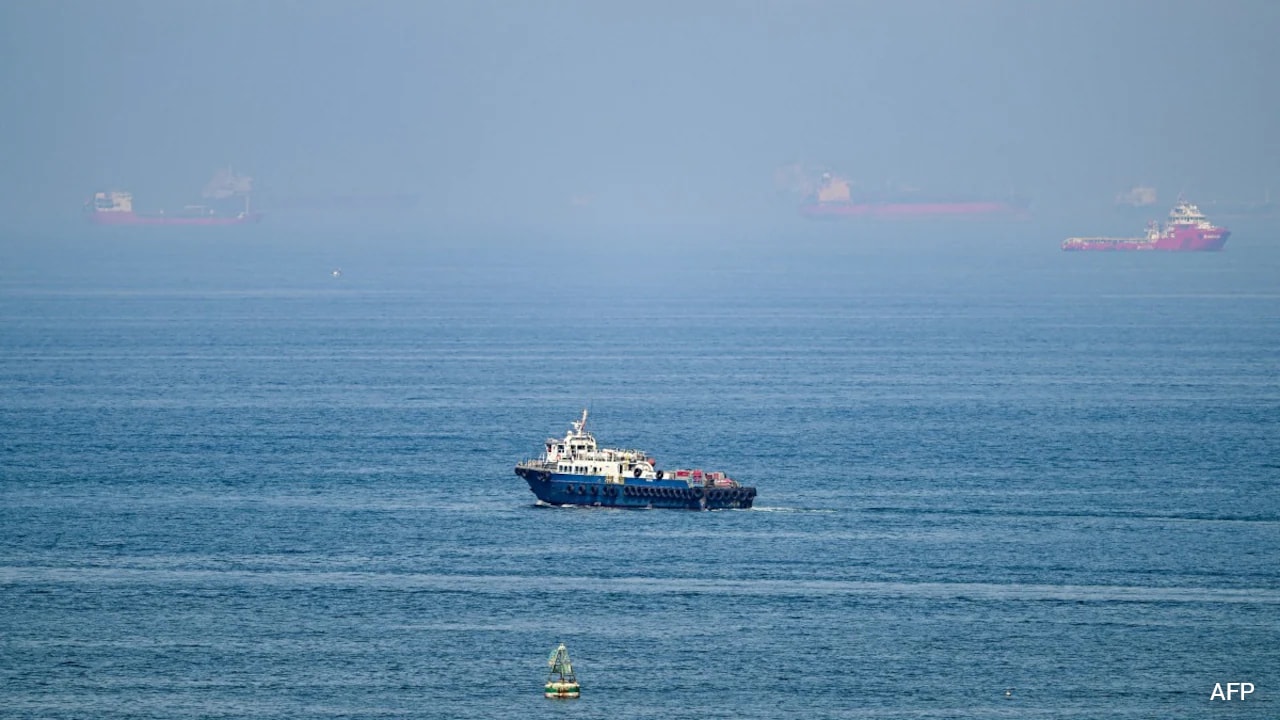
Tehran wants a massive payday, but the rest of the world isn't about to hand over the keys to global energy transit.
Following a bruising 107-day conflict in the Gulf, Iran is trying to rewrite the rules of international shipping. The Islamic Republic has floated an ambitious, highly controversial proposal to extract up to $40 billion annually from commercial vessels passing through the Strait of Hormuz. By pitching this as a collaborative system to charge ships for "security, safety, and environmental services," Iranian officials think they've found a clever way to turn a strategic chokepoint into a permanent cash cow.
They're dreaming. The plan faces an impossible wall of international law, furious pushback from Washington, and outright rejection from the very Gulf neighbors Tehran needs on its side. If you're trying to figure out whether this toll system will actually happen, the short answer is no.
Here is exactly why Iran's $40 billion maritime toll plan is dead on arrival, and how the economic reality on the water has already shifted past Tehran's control.
The Turkey Precedent That Is Not a Precedent
To justify the toll, Iranian Parliament Speaker and chief negotiator Mohammad Bagher Ghalibaf has been making rounds in the region, explicitly pointing to Turkey as a blueprint. Specifically, Iran is eyeing the way Ankara manages the Dardanelles and the Bosporus. Under the 1936 Montreux Convention, Turkey legally collects fees from commercial ships to cover things like lighthouses, maritime rescue operations, and sanitation services.
Tehran looks at those "gold franc" transit taxes and thinks, why not us? But comparing the Strait of Hormuz to the Dardanelles is a massive logical leap that ignores decades of maritime law. Turkey’s right to charge those fees didn't happen overnight or via unilateral decree. It was hammered out in an international treaty signed by major global powers nearly a century ago. The Dardanelles are entirely enclosed within Turkish territory.
The Strait of Hormuz is a completely different animal. It is an international strait connecting the Persian Gulf to the open ocean. Under international maritime law, specifically the United Nations Convention on the Law of the Sea (UNCLOS), ships enjoy the right of transit passage. This means vessels can pass through freely, quickly, and without obstruction.
Even though Iran hasn't ratified UNCLOS, the right of transit passage is widely recognized as customary international law. Coastal states cannot simply slap a toll booth on an international waterway because they need to patch up their economy after a war. To legally enforce a fee system like this, Iran wouldn't just need a few regional handshakes. It would need the explicit backing of all 176 member states of the International Maritime Organization (IMO). That is a statistical impossibility.
Washington and the Gulf States Draw a Hard Line
If Iran hoped its neighbors would jump at the chance to split a $40 billion jackpot, those hopes evaporated quickly.
During a recent diplomatic sweep through the Middle East, U.S. Secretary of State Marco Rubio shut down the proposal in no uncertain terms. Speaking to reporters in Bahrain, Rubio made it clear that Washington views the idea of charging for passage through international waters as an absolute non-starter. He warned that allowing a toll system in Hormuz would set a dangerous precedent that could spread across other vital global shipping lanes, sparking economic chaos.
According to U.S. and regional officials, Gulf Arab nations have also privately and publicly rejected the concept. Take Oman, for example. Oman shares custody of the strait with Iran. Instead of backing Tehran's revenue-sharing pitch, Muscat went in the opposite direction. The Omani government, coordinating directly with the IMO, has proposed setting up a temporary, completely free shipping corridor along its own coastline while broader long-term negotiations play out.
The messaging from the region is loud and clear. Nobody wants to give Iran a permanent financial chokehold over global energy trade.
The Sixty Day Clock is Ticking in Switzerland
Right now, the Strait of Hormuz is technically open, but it's operating under a fragile, temporary truce. A memorandum of understanding signed recently in Switzerland established a 60-day implementation window to end hostilities. Under this specific agreement, Iran is required to clear mines from the shipping lanes and guarantee toll-free navigation.
The problem is what happens on day 61.
The Swiss agreement intentionally left the long-term management framework vague, which is why Iranian officials are aggressively pushing their maximalist rhetoric right now. They want to use the threat of future disruptions to force the toll system onto the negotiating agenda.
We're already seeing the friction play out on the water. The Islamic Revolutionary Guard Corps (IRGC) Navy recently issued warnings telling commercial vessels that they must stick strictly to transit routes designated by Tehran. Iran's preferred map forces ships closer to the Iranian coast than traditional shipping lanes. Meanwhile, a Singapore-registered cargo ship was recently struck by an unknown projectile off the coast of Oman, a stark reminder that the region's security is still on a knife-edge.
While U.S. Vice President JD Vance noted a major diplomatic breakthrough—an agreement in principle to establish a direct military communication channel between the IRGC and CENTCOM in Doha to prevent accidental escalation—the underlying structural dispute over who controls the waterway remains completely unresolved.
Oil Producers Have Already Built a Way Out
Even if Iran somehow managed to bully its way into collecting fees, the economic value of the Strait of Hormuz isn't what it used to be. The biggest miscalculation Tehran is making is assuming the global oil trade has no choice but to crawl back through their waters.
Before the recent conflict, roughly 20 million barrels of oil and petroleum products passed through the strait every single day. That is about a fifth of global consumption. When the war choked off the passage, oil producers didn't just sit around and wait for a ceasefire. They built permanent workarounds.
Saudi Arabia aggressively ramped up the utilization of its massive East-West cross-country pipeline, rerouting crude directly to the Red Sea port of Yanbu. The United Arab Emirates did the same, moving millions of barrels through its pipeline network straight to the port of Fujairah, safely bypassing the Strait of Hormuz altogether.
These alternative routes aren't temporary stopgaps. They are structural changes. Goldman Sachs recently released an analysis forecasting that even with the strait reopening, crude volumes transiting Hormuz will likely plateau at just 70% of pre-war levels. The UAE has gone a step further, announcing a massive capital project to expand its ports along the Gulf of Oman to permanently eliminate its reliance on the strait.
By trying to squeeze shipping companies for $40 billion, Iran is only accelerating its own economic irrelevance. The more difficult Tehran makes it to navigate the strait, the more oil producers will cement these alternative pipelines into their daily operations.
The Next Steps for Global Shipping
If you run a maritime logistics firm or track energy commodities, don't panic about a sudden $40 billion tax hike on your next shipment. Instead, look out for these specific markers over the next few weeks to see how this power struggle settles.
First, watch the vessel tracking data around Oman's proposed coastal corridor. If commercial fleets collectively choose to hug the Omani coast rather than entering the IRGC-monitored lanes, Iran's leverage vanishes.
Second, monitor the insurance markets. War risk premiums for the Gulf have finally started to ease back toward pre-war norms over the last few days. If Iran tries to unilaterally enforce an unauthorized insurance scheme or toll, Lloyd's underwriters will bump those premiums right back up, forcing another international legal showdown at the IMO.
Tehran is playing a weak hand with a lot of noise. The global economy moved on while the guns were firing, and a desperate grab for billions in transit fees won't change the new map of Middle Eastern oil.


.jpg)