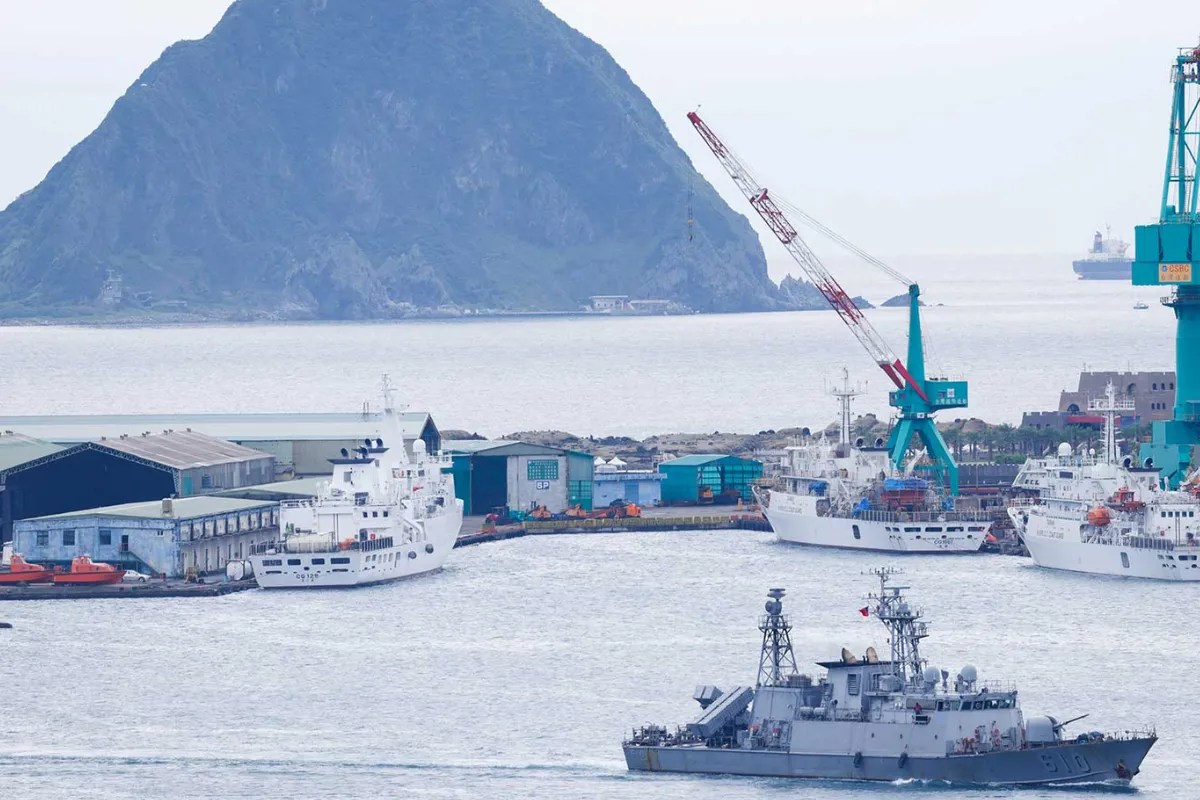
The fragile peace we were promised under the Islamabad Memorandum of Understanding is rapidly turning to dust. Just weeks after the United States and Iran digitally signed a framework to pause their devastating conflict, the Persian Gulf has erupted into a terrifying round of tit-for-tat strikes. If you thought the June ceasefire meant the worst of the 2026 Iran war was behind us, the events of this weekend are a harsh wake-up call.
We have reached Day 121 of a conflict that began back on February 28, and the cycle of violence is tightening. On Sunday, the Islamic Revolutionary Guard Corps launched ballistic missiles and drones directly targeting US military installations in two Gulf neighboring nations. Missiles slammed into the Ali Al Salem airbase in Kuwait, while another swarm targeted the US Fifth Naval Fleet at Port Salman in Bahrain.
This wasn't an unprovoked escalation. It was a direct response to a massive wave of American airstrikes the night before. On Saturday, US Navy and Air Force jets pounded ten Iranian military targets across coastal locations, including Sirik, Bandar-e Lengeh, and Qeshm Island near the Strait of Hormuz.
The core of the issue is simple. The ceasefire was built on a deeply flawed agreement regarding who controls the world's most critical energy transit corridor. Now, both sides are using force to interpret a document that was supposed to replace guns with diplomacy.
The Boiling Point at the Strait of Hormuz
To understand why things fell apart so quickly this weekend, you have to look at what happened on the water over the last 72 hours. The latest spiral began on Thursday when a Singapore-registered container ship called the Ever Lovely was struck by a drone. The UN immediately paused its critical plans to evacuate stranded sailors from the waterway because the environment became too hostile.
The US retaliated on Friday with strikes near the southern port city of Sirik. Iran didn't back down. By early Saturday morning, another commercial vessel, the Panama-flagged oil tanker Kiku, was struck by a drone while transiting near the strait. The Kiku was carrying over two million barrels of crude oil. The blast tore into its bridge, though luckily, the crew survived without injuries.
That was the breaking point for Washington. US Central Command quickly ordered the Saturday night bombardment of Iranian surveillance infrastructure, communication networks, and drone storage sites. CENTCOM stated these operations were necessary to protect the freedom of navigation.
Iran views the situation entirely differently. Tehran maintains that under their interpretation of the Islamabad agreement, vessels transiting the narrow waterway can only use routes specifically designated by the Iranian military. They warned that any ship deviating from these lanes is actively violating the ceasefire. It's a classic trap where both sides claim they're playing defense while executing offensive operations.
Regional Fallout in Kuwait and Bahrain
When Iran decided to retaliate for the Saturday night bombings, they didn't just target US ships at sea. They went after American hubs inside sovereign Arab states, forcing America's regional allies right back into the line of fire.
The attacks on Sunday morning triggered air defense sirens across Bahrain and forced Kuwait to immediately activate its missile interception systems. Both nations issued furious statements condemning the strikes. Bahrain officials stated the missile strikes explicitly violated its national sovereignty and destroyed any lingering opportunities for regional stabilization. Kuwait went a step further, calling the missile barrages a flagrant, heinous aggression.
This isn't the first time these countries have been dragged into the crossfire of the 2026 war. Earlier in the conflict, Iranian strikes hit a public social security building in Kuwait City, damaged a fuel storage facility at Kuwait International Airport, and took out an Amazon Web Services server farm in Bahrain. By striking these locations again, Tehran is sending a clear message to the local monarchies: if the US uses your territory or waters to strike Iran, you will pay a direct physical price.
Trump Warns of Total Destruction
The political rhetoric coming out of Washington suggests the diplomatic track is almost completely dead. Late Saturday night, President Donald Trump made his position clear on social media, accusing Tehran of repeatedly violating the framework agreement signed on June 17.
His warning was characteristically blunt and severe. Trump declared that a point may come where the US is no longer able to be reasonable. He threatened to militarily complete the job that his administration started in February, explicitly writing that if the conflict resumes in full, the Islamic Republic of Iran will no longer exist.
Meanwhile, Iran's Ministry of Foreign Affairs spent Sunday morning fiercely condemning the American attacks on its coastal surveillance and monitoring facilities. Iranian diplomats argued the US strikes were a direct violation of the United Nations charter and the recently signed Memorandum of Understanding. They claim Washington places zero value on its own international commitments, and they vow to defend their territory against what they label as naked American aggression.
What the Islamabad MoU Actually Says
A lot of people are wondering how a ceasefire agreement that was celebrated just two weeks ago could collapse this fast. The problem lies within the vague wording of the text brokered by Pakistan and Qatari mediators.
The Islamabad Memorandum was designed as a 14-point framework. It wasn't a permanent peace treaty, but rather a temporary 60-day window to allow both sides to negotiate a permanent end to the war. The deal required an immediate pause to military strikes on all fronts, including the parallel conflict in Lebanon, and it forced the US to lift its strict naval blockade of Iranian ports.
The fatal flaw sits squarely in Article 5 of the document. That section states that Iran must make arrangements using its best efforts to ensure the safe passage of commercial vessels through the Strait of Hormuz.
- The US Position: "Best efforts" means keeping the lanes completely clear and letting international shipping flow without interference or intimidation.
- The Iranian Position: "Best efforts" means Iran retains full security management over the waterway. They believe they have the right to charge transit fees for services and force ships into specific corridors to protect their own coast.
Because the document failed to explicitly define what "management" meant, both countries left the negotiating table in Islamabad believing they had won the argument. Now we're seeing the reality of that ambiguity. You can't run a global shipping chokepoint when two warring militaries have completely opposite ideas of who holds the keys.
The Economic Realities of a Renewed Conflict
The financial stakes of this weekend's escalation couldn't be higher. Roughly 20 percent of the world's petroleum passes through that tiny body of water between Iran and Oman. When the war initially broke out on February 28, the closure of the strait sent shockwaves through global energy markets. Brent crude spiked by nearly 50 percent, briefly touching $126 a barrel and triggering a massive fuel crisis that hit everyday consumers hard at the pump.
Over the last two weeks, the signing of the ceasefire had managed to calm the markets, dragging oil prices back down to a pre-war average of around $72 per barrel. But markets hate uncertainty. The moment news broke that the Kiku had been hit and that US airbases in Kuwait were under fire, energy traders started panicking again.
Defense contractors and major oil producers are making massive profits off this volatility, but the global economy can't sustain another prolonged blockade. The cost of this war to the US military had already passed $40 billion by mid-June, prompting the White House to request an extra $87 billion from Congress. If the ceasefire completely implodes this week, those numbers will look like pocket change.
What Happens Next
If you're looking for a silver lining, there isn't one right now. The diplomatic channels managed by Pakistan are still open, but it's hard to negotiate when ballistic missiles are actively flying across the Gulf.
We are likely looking at two distinct paths forward over the next 48 hours. Either mediators step in to force a strict, hyper-specific clarification of the shipping lane rules, or we slide right back into a full-scale regional war. Given the language coming out of the White House and the actions of the IRGC, the odds are heavily stacked in favor of escalation.
If you are tracking this conflict, stop looking at the diplomatic statements coming out of Europe or the UN. Watch the shipping data in the Gulf. Watch whether the International Maritime Organization attempts to resume sailor evacuations, and watch the deployment patterns of the US Fifth Fleet. The actions on the water will tell you everything you need to know about where this crisis is heading long before the politicians admit the truth.

:max_bytes(150000):strip_icc()/TAL-nassau-bahamas-BEAUTCARIB0323-4fbfce903e5a4418b895e03717e3de0d.jpg)