Iran is officially back in the global energy game, and its leaders want everyone to think they're holding all the cards.
Just two weeks after the United States lifted its grinding naval blockade on Iranian ports, Tehran claims to have flooded the market with over 40 million barrels of crude oil. According to Iran’s parliament speaker and chief negotiator, Mohammad Bagher Ghalibaf, this massive volume isn't selling at a discount. Instead, he claims Iran is fetching prices roughly 20% higher than what it got before the four-month war broke out. If you found value in this post, you should read: this related article.
If you understand how the global energy trade actually works, that claim should make you pause.
When a heavily sanctioned nation returns to the formal market, it almost always offers deep discounts to steal back market share. Before this recent conflict, Iran had to shave $10 to $15 off every single barrel of Brent crude just to compensate buyers for the legal risks of touching its supply. Suggesting that they've suddenly flipped that dynamic into a massive premium sounds less like sound economics and more like a victory lap for a domestic audience. For another look on this development, see the recent coverage from The Motley Fool.
Let's look past the political theater and unpack what is really happening in the Persian Gulf right now.
The Reality Behind the 40 Million Barrel Flood
The sheer speed of this oil surge is undeniable. Independent tracking data confirms that Tehran’s taps were thrown wide open the moment the naval blockade vanished.
While Ghalibaf boasted about 40 million barrels, data from TankerTrackers.com suggests the real number might be even higher, closing in on 50 million barrels since the mid-June breakthrough. On one single day—Friday, June 19—an astonishing 20 million barrels left Iranian terminals.
That isn't just newly pumped oil. You can't ramp up physical production that fast.
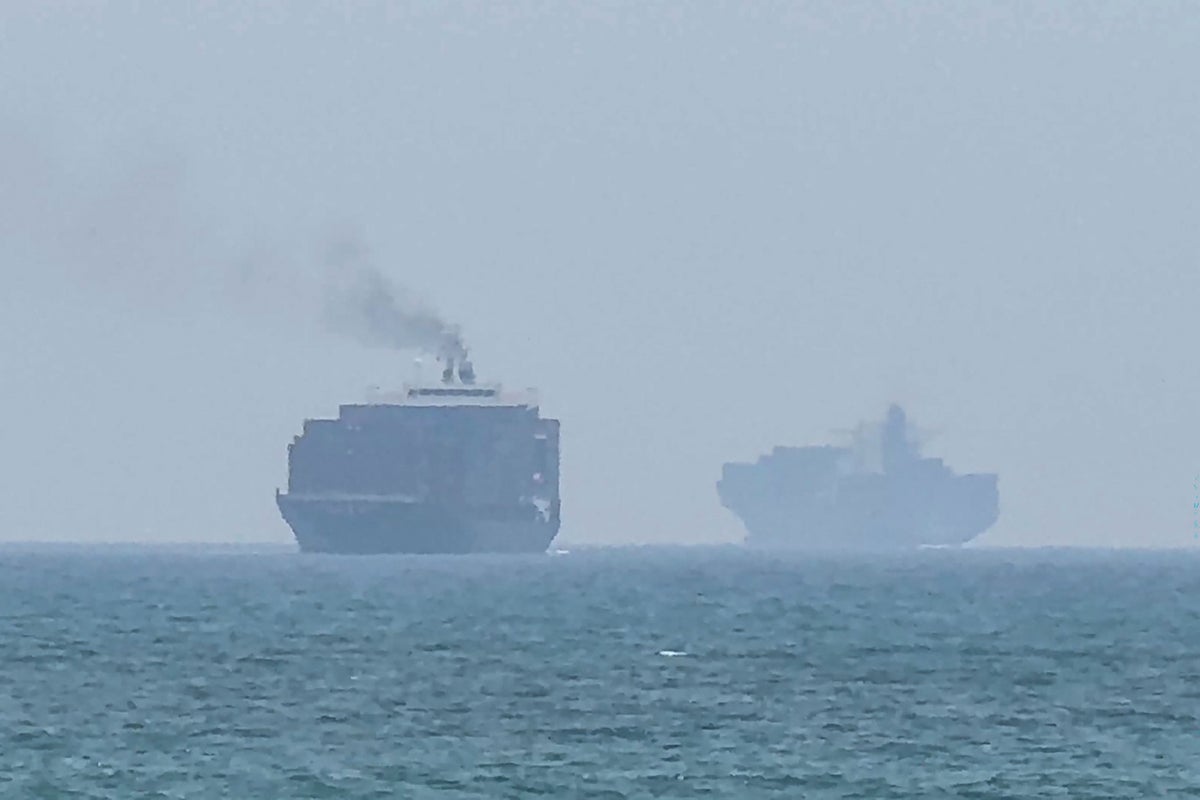
Instead, Iran unleashed its massive floating reserve. For months during the blockade, Iranian tankers sat idle, acting as giant floating storage units packed to the brim with unsold crude. The moment the U.S.-Iran memorandum of understanding (MOU) was signed on June 17, those ships weighed anchor.
This supply shock had an immediate, bruising impact on global markets.
- The War Peak: In April, as conflict flared and the Strait of Hormuz effectively closed, Brent crude skyrocketed to a terrifying $118 a barrel.
- The Post-Blockade Crash: With the blockade lifted and Iranian crude hitting the water, Brent plummeted down near $73 a barrel. That is a massive 40% drop from the wartime highs.
Decoding the 20 Percent Premium Illusion
So how does Ghalibaf claim Iran is making more money per barrel in a crashing market?
It all comes down to baseline comparisons. When Iranian officials talk about a 20% premium, they aren't saying they are selling oil for 20% more than the current global benchmark price of $73. That would mean charging nearly $88 a barrel for crude that buyers can get elsewhere for far less. Nobody is paying that.
Instead, the premium is calculated against the heavily discounted "shadow prices" Iran was forced to accept before the war.
For years, Iran relied on a clandestine shadow fleet using dark tracking routes to sneak oil to specific refining hubs in Asia, primarily China. To make that compliance risk worthwhile, Iran took a massive financial haircut. Now, with the U.S. naval blockade lifted and sanctions temporarily paused under the new peace framework, Iran can sell its oil openly.
By avoiding the logistics of illicit shipping and matching standard market rates, their net revenue per barrel has jumped significantly compared to their old, desperate baseline. Proximity to massive Asian refining hubs also keeps freight costs low, giving Tehran a genuine cash-flow boost—even if calling it a "premium" is a stretch of the definition.
The Fragile 60 Day Clock is Ticking
The broader market isn't celebrating just yet. The current stability relies entirely on a highly volatile, time-sensitive diplomatic truce.
The June 17 agreement is not a permanent peace treaty. It's a temporary patch designed to end four months of active conflict and allow the region to breathe. Under the terms of the MOU, the Strait of Hormuz is open for toll-free commercial transit, but this arrangement only lasts for 60 days.
[June 17: MOU Signed] ---> [60-Day Toll-Free Window] ---> [August 16: Deadline for Permanent Deal]
We are currently ticking through that 60-day window, and the underlying tensions are already cracking through the surface. Over a recent weekend, the U.S. and Iran briefly traded military strikes after two transiting commercial vessels were attacked. While the ceasefire held, it proved how incredibly thin the ice is.
Furthermore, geopolitical control of the waterway remains a massive sticking point. While the U.S. wants international guarantees for shipping lanes, Iran insists it retains total administrative sovereignty over the Strait of Hormuz.
What Happens to Global Energy Markets Next
The next steps for energy traders, logistics companies, and global economies depend entirely on what happens when this 60-day clock expires in August.
If you are trying to navigate this shifting landscape, keep your eyes on these specific pivot points:
Monitor Maritime Insurance Premiums
While Brent prices have fallen to $73, shipping a barrel through the Persian Gulf hasn't gotten much cheaper. Insurance underwriters are keeping war-risk premiums exceptionally high because of the recent weekend skirmishes. Watch the cost of maritime insurance; if those rates don't drop soon, it means the smart money expects the ceasefire to fail.
Watch the Rebound of Neighboring Producers
Iran isn't the only country rushing to take advantage of the open strait. Major regional players like Qatar and the Abu Dhabi National Oil Company (ADNOC) are rapidly accelerating their own outbound shipments. Qatar, in particular, has been sending a steady stream of empty liquefied natural gas (LNG) tankers into the Gulf to lock down cargoes. This broader regional rebound will keep downward pressure on global energy prices through the summer.
Track the Tripartite Peace Committee
The broader stabilization of the market hinges on a newly formed diplomatic committee featuring the U.S., Iran, and Lebanon. Their goal is to turn the current ceasefire into a lasting regional settlement. If negotiations stall as the 60-day mark approaches, expect oil markets to instantly price the geopolitical risk back in, breaking the current $73 floor and sending prices surging back toward the triple digits.